


How to Clean Doors and Light Switches Without Damaging Them
Here is how to clean doors and light switches without damaging them: wipe them with a microfiber cloth that is barely damp with mild dish soap and water, go over them once more with a cloth dampened in plain water, and dry right away. Put the liquid on the cloth, never on the switch or the lock. Most damage to switches, door hardware and painted doors comes from too much water or too strong a cleaner, not from too little scrubbing.
Doors, doorknobs and switches are the spots everyone in the house touches and almost nobody cleans. With holiday guests on the way, they are worth fifteen minutes. Below is the method for each surface, plus what to skip.
What you need
- Two or three clean microfiber cloths
- A bucket or bowl of warm water with a few drops of mild dish soap (about a teaspoon per gallon is plenty)
- A soft sponge for painted door faces
- A dry cloth or duster for the tops of doors and frames
- A flat-head screwdriver, only if you plan to remove switch plates
- Cotton swabs or a soft toothbrush for the grooves around plates and hardware
How do you clean light switches and outlet covers safely?
Turn off the power to that switch at the breaker, wipe the plate and toggle with a cloth that is damp with mild soapy water, then dry it. Never spray anything directly onto a switch, dimmer or outlet. Leviton warns that liquid that seeps inside can damage the device and create a fire hazard.
- Shut off the circuit. Leviton’s care guidance for its smart switches and dimmers says to turn off power to the device, at the breaker or fuse, before cleaning.
- Wring the cloth until it is almost dry. Damp, not dripping. Wipe the plate from the outside edge in toward the switch so you are not pushing water into the opening.
- Get the edges. A cotton swab, barely damp, picks up the grime that collects where the plate meets the switch and along the bottom edge where fingers land.
- Dry everything with a clean cloth and let it air dry for a few minutes before you turn the power back on.
For grimy plates, you can unscrew the plate, wash it in warm soapy water, and let it dry completely before you put it back. Only the cover comes off. Do not touch the wiring or the switch itself, and never put anything into outlet slots. Leviton also advises against chemical-heavy cleaners, foggers and aerosol sprays on its devices, and says to replace a switch or wall plate that shows cracking or discoloration.
Smart switches and touch dimmers have their own instructions. Check the maker’s support page before you use anything stronger than soap and water on them.
How do you clean doorknobs and door handles without ruining the finish?
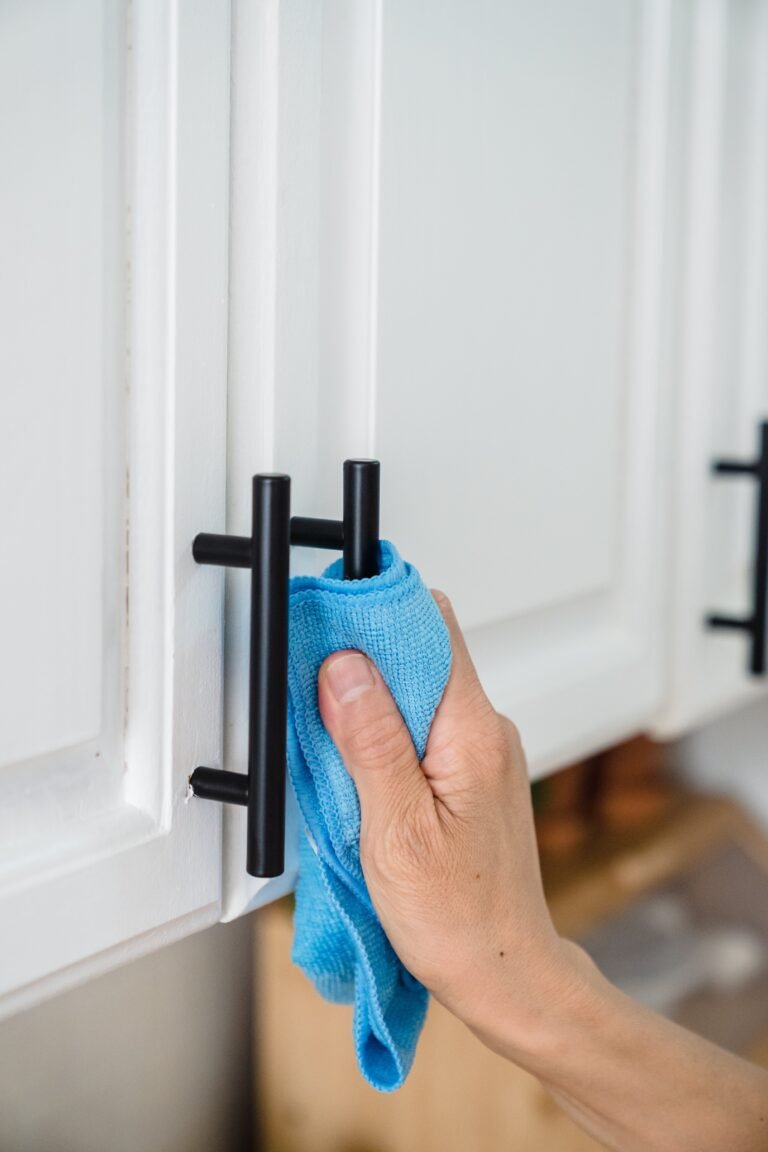
Wipe knobs, levers and pulls with a cloth dampened in mild soapy water, follow with a cloth dampened in plain water to remove the soap, and dry them right away. Schlage, the lock maker, says never to spray or soak door hardware, and to avoid thinners and strong cleaners that can strip the protective coating.
The finish decides how gentle you need to be:
- Coated finishes (satin nickel, polished brass, matte black and similar): mild soap only, buffed with a soft cloth. Schlage notes that strong cleaners and paint thinners can destroy the clear coat and lead to discoloration.
- Chrome: a damp cloth is usually all it needs. Schlage suggests a quality chrome polish, following its directions, only if the shine needs restoring.
- Oil-rubbed bronze: this finish has no clear coat and is meant to change over time. Schlage recommends wiping it with a very small amount of vegetable oil on a soft cloth. Too much leaves a residue on your hands.
Work the cloth into the gap behind the knob or lever and around the rose plate where it meets the door, since that is where grime collects. Keep liquid out of the keyhole. The same soap-and-dry method works for kitchen and bathroom cabinet pulls; our guide to cleaning greasy kitchen cabinets covers the doors around them.
A sticking lock or squeaky hinge is a lubrication job, not a cleaning job. JELD-WEN’s door care guide suggests a light oil on hinges about once a year or when they squeak, and graphite lubricant for keyed locks. Follow your hardware maker’s instructions, and keep oil off painted and wood surfaces.
How do you clean painted interior doors and door frames?
Dust the top edge first, then wash the door from top to bottom with a wrung-out sponge and mild soapy water, using light pressure. Rinse with a clean damp cloth and dry. The dirtiest zone is usually the edge and the area around the knob, where hands push the door open.
- Dust before you wash. Run a dry cloth along the top of the door, the top of the frame and the hinges. Wetting dust first just turns it into a smear.
- Test a hidden spot. Dunn-Edwards, the paint maker, recommends testing any cleaning method on an inconspicuous area first, such as the hinge side of the door.
- Wash with the lightest pressure that works. Dunn-Edwards notes that hard rubbing can burnish paint and leave shiny patches. Gloss and semi-gloss paint, the usual choice for doors and trim, is easier to clean than flat paint.
- Rinse and dry. A second cloth dampened in plain water removes the soap film, and drying prevents drips from running down into the panels.
- Finish the frame and stop. Wipe the casing on both sides, including the strike plate area. Baseboards come last, since anything you knock loose lands there; see our guide on cleaning baseboards without scrubbing off the paint.
Scuff marks and handprints around the door are the same problem as marks on walls. Our guide to cleaning painted walls without damaging the paint covers spot-cleaning flat and eggshell finishes, which are less forgiving than door paint.
Stained or natural wood doors
Use the same mild soap solution with even less water, wipe with the grain, and dry immediately. Skip abrasive pads and scouring powders, which JELD-WEN lists among the products to avoid on door finishes.
How do you clean exterior doors, door glass and weatherstripping?
Wash exterior doors by hand with mild soap and water, a soft sponge or brush, then rinse and dry. JELD-WEN’s care guide says not to power-wash doors or use a garden hose on them, and to avoid metal tools, razor blades and abrasive cleaners.
A few more points from that guide are worth knowing:
- Clean in the shade. Cleaning in direct sun or extreme heat is on JELD-WEN’s list of things to avoid, since the cleaner dries before you can wipe it off.
- Keep glass cleaner on the glass. Vinegar-based cleaners are for the glass only. Do not let any cleaner puddle where the glass meets the door.
- Weatherstripping needs only a damp cloth or mild soap and water. If it is torn, brittle, gummy or no longer springs back, it is due for replacement rather than more cleaning.
- Frequency: JELD-WEN suggests cleaning doors about twice a year, more often near the coast, or whenever they look dirty.
If your back door is a slider, the track is usually the dirtiest part; our guide to cleaning sliding door and window tracks covers it step by step.
Do you need to disinfect door handles and light switches?
Usually not. The CDC says cleaning with soap and water removes most germs, and that disinfecting at home is generally needed only when someone is sick or someone in the home is at higher risk of illness. It recommends cleaning high-touch surfaces like light switches and doorknobs regularly and after you have visitors.
When you do disinfect, the CDC’s steps are: clean the surface with soap and water first, follow the product label, keep the surface wet for the full contact time the label lists, ventilate the room, wear gloves, and never mix products.
Device makers add one more rule: check that the product is safe for the surface. Leviton advises against chemical disinfectants on its switches, and Schlage says to wipe disinfectant on gently rather than spraying it, then let the hardware air dry. Put the product on a cloth, not on the switch or lock, and if the maker’s instructions say no, stick with soap and water on that device.
How often should you clean doors and switches?
Our rule of thumb: wipe the knobs, levers and switches in the kitchen, bathrooms and entry about once a week, and the rest of the house every couple of weeks. Wash door faces and frames when you can see handprints, and give everything a full pass before guests arrive or after a cold has gone through the house.
How our Vetted Cleaning Professionals handle doors and switches
Doors and switches are on our Recurring, Deep and Move-In/Move-Out checklists, at different levels of detail:
- Recurring House Cleaning: light switches, doorknobs and other high-touch points are wiped on every visit.
- Deep Cleaning: detailed cleaning of doors, door frames and trim, handles, light switches, outlet plates, and banisters and railings.
- Move-In/Move-Out Cleaning: doors, frames and switch plates are wiped down, with spot-cleaning of walls and door frames near high-touch areas.
We work from the same principles as this guide: cleaner goes on the cloth, and finishes get light pressure. We clean; we do not repair hardware, rehang doors or do electrical work, so a loose lock, a cracked switch or a sticking door is a job for a handyman or electrician.
Suddenly Clean’s Vetted Cleaning Professionals are thoroughly vetted and held to our service scope and standards. We are licensed and insured, and you can see your exact flat-rate price online before you book. Suddenly Clean serves homes throughout East County and surrounding San Diego communities. If your ZIP code is accepted, we currently service your area. You can check your ZIP code and book online.
Comments are closed