

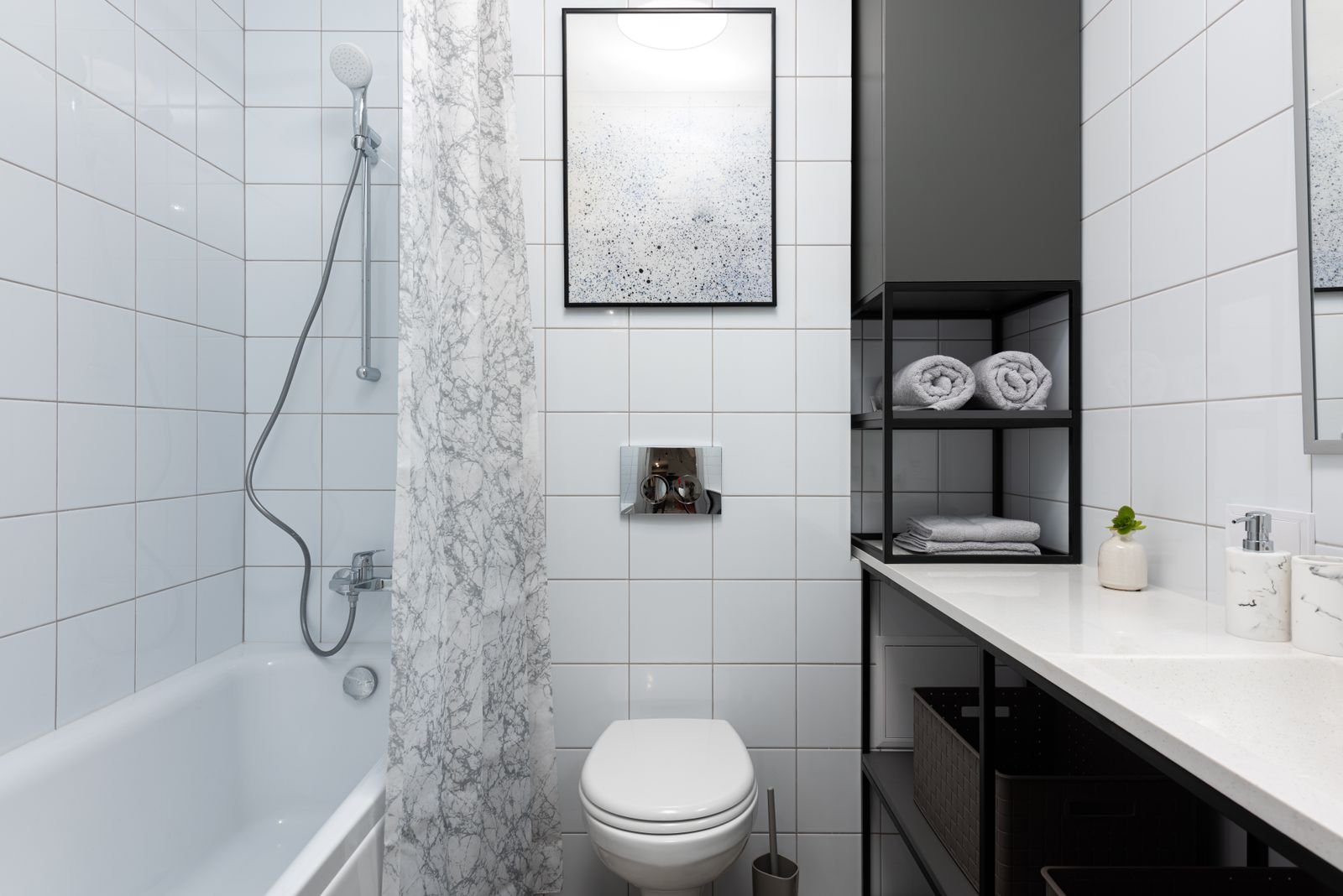
How to Clean a Shower Curtain and Liner (Machine or by Hand)
To clean a shower curtain and liner, take both down, check the care labels, and machine wash them on a gentle cycle in warm or cool water with a little detergent and two bath towels to scrub as they tumble. Use a low spin, then hang the liner back on the rod to air dry. Never put a plastic liner in the dryer. If yours can’t go in the washer, a soak and a soft brush in the bathtub does the same job.
Most people notice the problem before they think about the fix: a pink or orange edge along the bottom of the liner, gray-black speckles in the folds, or a stiff, cloudy film that makes the liner look old. Below is how we’d handle each one, what to keep away from vinyl and fabric, and the simple habits that keep a liner clean for months instead of weeks.
What you’ll need
- Laundry detergent (a small amount)
- Two or three old bath towels
- Distilled white vinegar and a spray bottle, for spot treatment
- A soft-bristle brush or a non-scratch sponge
- Rubber gloves
- Oxygen or chlorine bleach, only if the care label allows it
Check the label first
Shower curtains come in two very different materials, and they don’t get the same treatment. The decorative outer curtain is usually polyester or cotton fabric. The liner, the part that faces the water, is usually plastic: vinyl or PEVA. Some fabric liners are polyester with a water-repellent finish. The care tag on the hem tells you which you have and whether the maker allows machine washing, bleach or the dryer. When the tag and our advice disagree, follow the tag.
How do you wash a plastic shower liner in the washing machine?
Wash a vinyl or PEVA liner on the gentle cycle with warm or cool water, a small amount of detergent, the highest water level and a low spin speed. Add two or three bath towels; they rub soap scum off the liner and keep it from bunching. Whirlpool’s guidance is to avoid hot water, which may damage a liner, and to air dry it only.
- Take it down and shake it out. Unhook the liner and give it a shake over the tub to drop loose grime and hair. Set the hooks or rings aside.
- Pre-treat stubborn spots. Spray pink or speckled areas with a 1:1 mix of white vinegar and water, let it sit about 10 minutes, and rub with a soft brush. Rinse before it goes in the washer.
- Load it with towels. Liner plus towels, nothing else. Use a little detergent; too much leaves its own residue.
- Wash gentle, warm or cool, low spin. If the liner has heavy buildup, let it soak in warm water and detergent in the drum for 30 minutes before the cycle starts.
- Hang it to dry. Rehang it on the rod, spread fully open, and run the bathroom fan. It will be dry in a few hours, and wrinkles relax as it hangs.
How do you wash a fabric shower curtain?
Most polyester and cotton shower curtains are machine washable: gentle cycle, warm water, a small amount of detergent and a couple of towels to balance the load. Hang it to dry, or tumble it on low only if the care label says you can. Iron or steam out wrinkles on the setting the tag recommends.
For a dingy white curtain, Whirlpool notes you can add half a cup of bleach or color-safe bleach to the wash, as long as the fabric’s care label permits it. Colored and printed curtains should only see color-safe (oxygen) bleach, and only after you’ve checked the label.
How to clean a shower curtain by hand
If the tag says hand wash, or you’d rather not machine wash it, use the tub:
- Fill the tub with a few inches of warm water and a squirt of laundry detergent or dish soap.
- Lay the curtain or liner in the water and let it soak for 20 to 30 minutes.
- Scrub both sides with a soft brush or non-scratch sponge, paying attention to the bottom 12 inches, where most of the buildup lives.
- Drain, rinse well with clean water, and rehang it to dry.
Kneeling at the tub is a good moment to give the tub itself a proper cleaning too. Our guide to cleaning a bathtub without scratching it covers each tub material.
What is the pink slime on my shower curtain?
The pink or orange film along the bottom of a liner is usually not mold. Extension experts identify it as a common airborne bacterium, Serratia marcescens, that grows on damp surfaces and feeds on soap residue. It comes back wherever water sits, so the fix is cleaning it off and then letting the liner dry fully between showers.
Spray it with 1:1 white vinegar and water, wait 10 minutes, scrub, and rinse. A machine wash with towels handles the rest. The same film tends to show up on grout and around drains, which our grout cleaning guide covers.
What about black mildew spots?
Gray-black speckles in the folds are mildew, a mold that grows where moisture stays trapped. On a plastic liner, light spots usually wash out with the vinegar pre-treatment and a gentle wash. On a white fabric curtain, a bleach wash (if the label allows) will lift most staining.
If the spots are deeply set, the liner is stiff or cracking, or it smells musty even after washing, replace it. Liners are inexpensive, and a fresh one beats scrubbing a worn one. The same goes for a fabric curtain that keeps coming out of the wash spotted: the U.S. Environmental Protection Agency notes that absorbent materials may have to be thrown away if they become moldy.
What not to do
- Never mix bleach with vinegar or with any other cleaner. Bleach and acids such as vinegar release chlorine gas. If you pre-treated with vinegar, rinse it out completely before a bleach wash, and never add both to the same load.
- No hot water or dryer for plastic liners. Heat can warp, shrink or melt vinyl and PEVA.
- No abrasive pads. Green scouring pads and powdered cleansers scratch plastic, and scratches hold grime.
- Don’t wash a liner alone. Without towels it bunches, and the water and detergent don’t reach the folds.
- Bleach only per the label. Chlorine bleach can yellow some plastics and fade colored fabric.
Don’t forget the hooks and rod
While the curtain is in the wash, drop plastic or stainless hooks into a bowl of warm, soapy water, scrub them with an old toothbrush, rinse and dry them. Wipe the rod with a damp microfiber cloth and dry it. If metal rings or a rod have started to rust, dry them after every cleaning and consider stainless replacements; rust stains transfer to a damp liner.
How often should you wash a shower curtain and liner?
Whirlpool suggests washing shower curtains at least once a month for regular upkeep. In practice, a liner in a daily-use shower benefits from a monthly wash, while the outer fabric curtain, which stays drier, can usually go every two to three months. Wash sooner whenever you see pink film or dark spots starting at the hem.
How to keep your shower curtain clean longer
The goal is simple: don’t let the liner stay wet.
- Spread it closed after every shower. A bunched liner traps water in the folds, which is where pink film and mildew start.
- Run the exhaust fan. The EPA recommends running the bathroom fan or opening a window while showering, and keeping indoor humidity below 60 percent, ideally 30 to 50 percent. Extension guidance suggests leaving the fan on after you shower, up to an hour.
- Squeegee or wipe the walls. Less soap residue on nearby surfaces means less for bacteria to feed on.
- Keep the drain area clean. Hair and soap around the drain hold moisture right where the liner hangs. If the shower head is spraying unevenly and soaking the liner, clean the shower head and aerators so the water goes where it should.
Thinking about a glass door instead? Glass has its own upkeep, mostly mineral spots, which our guide to removing hard water stains from shower glass explains.
Where we fit in
On a recurring visit, our Vetted Cleaning Professionals scrub the tub and shower, including the door and top lip, wash the vanity, sink and faucet, wipe towel bars and clean the floors. Laundering curtains and liners isn’t part of that checklist, so a monthly wash on your end, using the steps above, keeps the whole bathroom looking finished. If you’d like help with the rest of the bathroom on a regular schedule, our recurring house cleaning page shows what each visit covers, and you can see your exact flat-rate price on our booking page.
Comments are closed