


How to Clean Stainless Steel Appliances Without Streaks
The best way to clean stainless steel appliances is also the gentlest: warm water with a little dish soap, a soft microfiber cloth, strokes that follow the grain, and a second dry cloth to buff every surface dry. That handles fingerprints, drips and most streaks on a fridge, dishwasher, oven or range. Before you reach for anything stronger, check whether your appliance has a fingerprint-resistant coating or a black stainless finish, because many of the polishes and sprays sold for regular stainless can harm those coatings.
What you need
- Two or three clean, dry microfiber cloths (one to wash, one to buff dry)
- Dish soap and warm water: KitchenAid suggests about 1 teaspoon of dish soap in a quart of water
- A soft sponge for sticky spots
- Optional, for plain stainless only: a stainless steel cleaner or polish your appliance maker allows
- Optional, for rust spots: baking soda
Leave out steel wool, scouring pads, gritty powders and paper towels. Whirlpool’s care guidance for coated stainless warns that scouring pads, harsh cleaners, chlorine bleach products, steel wool, gritty washcloths and paper towels can scratch or dull the finish.
First, find out which finish you have
Most “stainless” kitchens are one of three finishes, and the safe method depends on which one you have:
- Plain brushed stainless. Bare metal with visible fine grain lines. It shows fingerprints easily. This is the only finish where a stainless cleaner or polish is usually allowed.
- Fingerprint-resistant stainless. Stainless with a clear protective coat. Many newer appliances have it, and the owner’s manual or the maker’s website will say so. KitchenAid says these should get only mild soap, warm water and a microfiber cloth, with no stainless cleaners or polish.
- Black stainless. Stainless with a dark coating on top. Bosch says its black stainless should be cleaned with mild soapy water and a soft cloth, and that stainless cleaners or conditioners may discolor it. KitchenAid allows a brand-approved cleaner on some of its black stainless models, so the manual has the final word.
If you aren’t sure, treat the finish as coated and stick to soap and water. That method is safe on all three.
How do you clean stainless steel appliances without streaks?
Wash with a lightly damp, soapy microfiber cloth, wipe along the grain, then buff the surface completely dry with a second clean cloth. Streaks almost always come from leftover moisture, too much product, or a dirty cloth pushing old residue around, so the drying pass matters as much as the washing pass.
- Find the grain. Look closely for the faint brushed lines. Bosch notes they can run horizontally, vertically or diagonally. Every wipe, wash and buff goes in that direction.
- Dust and dry-wipe first. A quick pass with a dry or barely damp cloth lifts crumbs and grit so you don’t drag them across the metal.
- Wash. Dip a microfiber cloth in the soapy water and wring it until it’s only damp. Wipe one panel at a time, top to bottom, along the grain. Spend a little extra time around handles, where hand oils build up.
- Rinse. Go over the same panel with a cloth dampened in plain water to take off soap film.
- Buff dry. Immediately dry with a clean, dry microfiber cloth, still along the grain, until no damp patches remain. Whirlpool tells owners of coated stainless to make sure all surfaces are thoroughly dry.
Work on controls and touch panels with a cloth that’s barely damp, and spray or wet the cloth, never the panel itself. If a panel has a lock or “clean” mode, turn it on so you don’t change a setting while wiping.
Should you use a stainless steel cleaner or polish?
Only on plain, uncoated stainless, and only one your appliance maker allows. Bosch suggests applying a stainless conditioner along the grain after washing, and keeping it off logos, control labels and black stainless. KitchenAid lists a stainless cleaner as optional for regular stainless, sprayed lightly and wiped with a dry microfiber cloth. On fingerprint-resistant and black stainless finishes, skip them unless your manual specifically approves one.
A light coat of polish can make fingerprints less obvious on bare stainless, but more is not better. Heavy layers attract dust and turn into the streaks you were trying to remove. Our rule of thumb: if the surface feels slick or tacky after buffing, you used too much, and a soapy wipe followed by a dry buff resets it. We’d skip cooking oils as a shine trick for the same reason: they leave a film that holds dust and lint.
Can you use vinegar on stainless steel appliances?
It’s best to avoid it. KitchenAid advises against acidic, vinegar or citrus-based cleaners on stainless, and says prolonged vinegar exposure may damage stainless steel. Its black stainless guidance also lists acidic or vinegar-based cleaners, window sprays and ammonia as products to avoid. Soap and water does the same job without the risk.
The same caution goes for glass cleaner, bleach and oven cleaner on the outside of appliances, and never mix cleaning products. Consumer Reports, citing appliance makers, warns that cleaners containing bleach, ammonia or chlorides can break down the protective surface layer that keeps stainless from rusting. It also notes that Samsung warns fumes from some acid-based cleaners, such as certain grout cleaners, can damage stainless, so keep those well away from the kitchen.
How do you get rust spots off stainless steel?
Small orange spots usually mean the metal’s protective surface has been scratched or worn by harsh cleaners, abrasive pads, or tiny particles left behind by steel wool. For light spots, Consumer Reports describes a gentle approach: a paste of baking soda and water applied with a soft cloth, rubbed lightly in the direction of the grain, then rinsed and dried. Samsung suggests 1 tablespoon of baking soda to 2 cups of water, and some makers suggest a mild stainless brightener.
Two cautions. Test on a hidden spot first, and don’t use any paste or brightener on a fingerprint-resistant or black stainless coating without checking the manual, since abrasives can scratch or dull the clear coat. Watch the spot afterward too: Consumer Reports notes treated areas are more likely to rust again, so keep them dry and avoid whatever caused the damage.
Can you buff out scratches?
Very fine surface marks on bare stainless sometimes soften when you buff along the grain with a soft cloth and an approved stainless cleaner. Deeper scratches are a different job. Sanding or scrubbing to blend them in can make a larger, more visible patch, and it can’t restore a fingerprint-resistant or black stainless coating once it’s damaged. For anything beyond a light mark, contact the appliance maker or an appliance repair professional before trying a fix.
Going appliance by appliance
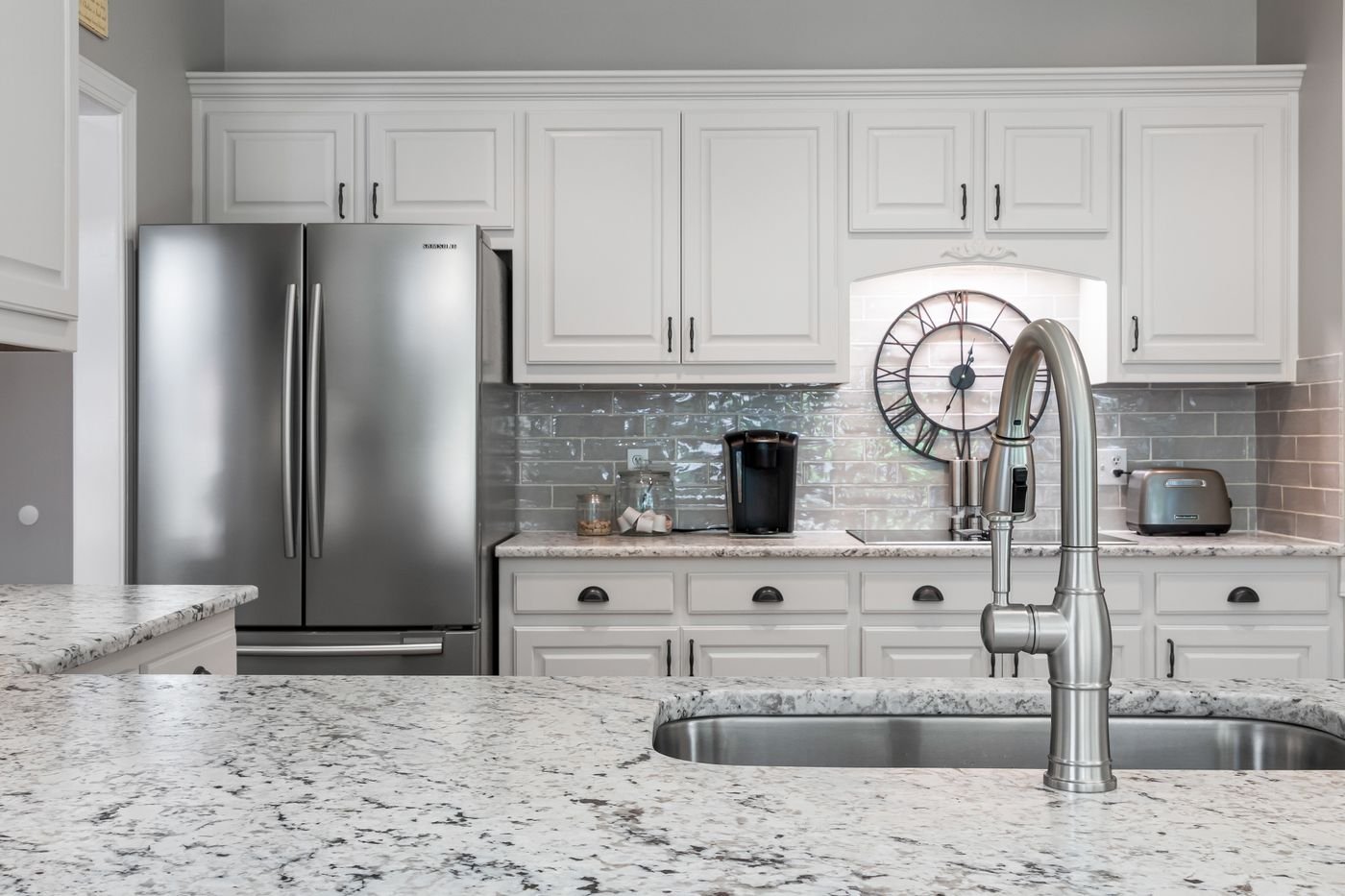
The method above works on every stainless front. A few spots deserve extra attention:
- Refrigerator: handles, the water and ice dispenser area, and the bottom edge of the doors, where drips collect. Our refrigerator cleaning guide covers the inside and the condenser coils.
- Dishwasher: the top edge of the door and the control strip. If the inside smells or leaves film on glasses, see how to clean a dishwasher.
- Range and oven: let everything cool fully first. Grease on stainless near the cooktop may need a second soapy pass. For burners and grates, use our stovetop guide, and for the hood above it, how to clean a range hood filter.
- Microwave: the outside gets the same soap, water and dry buff. The inside has its own rules, in how to clean a microwave.
- Sink: not an appliance, but often the hardest-working stainless surface in the kitchen. It has its own routine for water spots, rust-colored marks and scratches in how to clean a stainless steel sink.
How often should you clean stainless steel appliances?
Our rule of thumb: wipe handles and the busiest door fronts whenever fingerprints or drips show, which in a busy kitchen can be every few days, and give every stainless front a full wash-and-buff once a week or so. Wiping up splatters the same day keeps you from needing anything stronger than soap and water.
When to hand it off
Wiping appliance exteriors is part of every visit in our recurring house cleaning, which covers the fridge, stove and dishwasher fronts, and our Deep Cleaning includes appliance exteriors as well. Our Vetted Cleaning Professionals don’t move or disconnect appliances, so the sides and backs of a fridge or range stay where they are, and rust repair or scratch removal is work for the appliance maker or a repair specialist. If you’d like the kitchen taken care of, you can see your exact flat-rate price and book at our booking page.
Comments are closed