


How to Clean Grout Without Damaging It (Floors and Showers)
The safest way to clean grout is also the simplest: a pH-neutral cleaner, warm water, a stiff nylon brush, a thorough rinse, and a towel to dry the lines. That handles most dingy floor and shower grout. Stubborn problems call for a cleaner matched to the stain (grease, soap scum, minerals or mildew), not a stronger all-purpose product. The most common way people damage grout is by scrubbing it with acids or harsh chemicals week after week.
Here is how we approach it, along with what to avoid and how to tell when grout needs repair rather than cleaning.
Check what kind of grout and tile you have
Before you pick a cleaner, it helps to know what you’re working with:
- Cement-based grout is the most common in homes. It’s porous, so it soaks up dirt, spills and leftover mop water, and it’s the type most sensitive to acids.
- Premixed (ready-to-use) grout comes in a tub and is common in newer remodels. Grout makers give it its own care instructions, so check the product if you know what was used.
- Epoxy grout is dense and stain-resistant. It tolerates stronger cleaning methods, including steam, according to grout manufacturers’ care guides.
- Natural stone tile (marble, travertine, limestone) changes the rules. Acidic cleaners can etch the stone itself, so anything you put on the grout lines also has to be safe for the tile next to them.
If you’re not sure, treat the grout as cement-based and the tile as delicate. That’s the cautious choice.
What you’ll need
- A pH-neutral tile and grout cleaner, or a few drops of mild dish soap in a bucket of warm water
- A stiff nylon grout brush (an old toothbrush works for small areas)
- A white nylon scrub pad for spot stains
- Clean water and a sponge or microfiber cloth for rinsing
- A dry towel
- Gloves, and a fan or open window for anything stronger than soap
How to clean grout, step by step
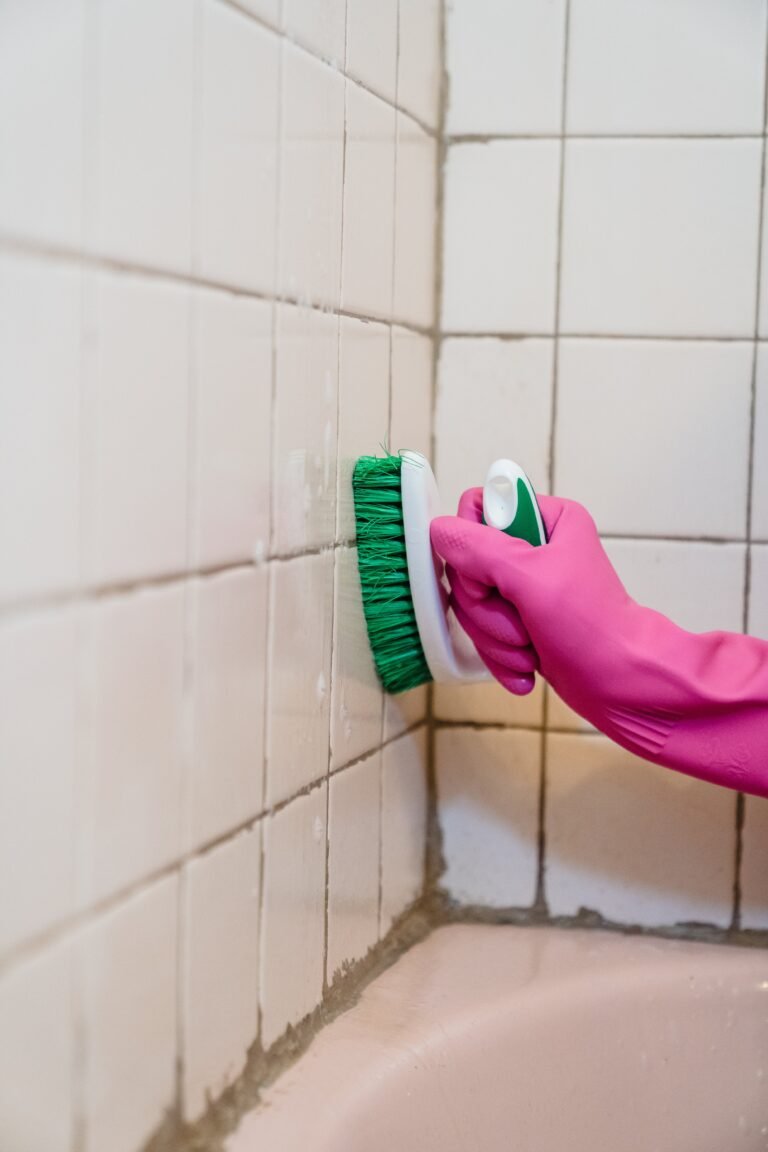
- Remove loose dirt first. On floors, vacuum or sweep the grout lines so you aren’t turning grit into mud. In the shower, rinse the walls with warm water.
- Test a hidden spot. Apply your cleaner somewhere out of sight, such as behind the toilet or low in a shower corner, and let it dry before you judge the result.
- Apply the cleaner and let it sit. Wet the grout lines and give the cleaner a few minutes to loosen the dirt. Don’t let it dry on the surface.
- Scrub along the lines. Work the brush back and forth along each joint in short sections, about an arm’s length at a time. Steady pressure does more than speed.
- Rinse well. Wipe the area with clean water and a fresh sponge or cloth, rinsing the sponge often. Cleaner left in the joints attracts dirt and leaves a film.
- Pick up the dirty water and dry the lines. This is the step most people skip. If dirty rinse water dries in the grout, the lines look gray again almost immediately. Towel the floor dry or squeegee the shower walls.
For routine upkeep, this is all most grout needs. A pass every week or two in the shower, and whenever the floor grout starts to look dull, keeps buildup from settling in.
Matching the cleaner to the stain
When soap and water aren’t enough, choose a product for the specific problem. Grout and tile manufacturers recommend different cleaner types for different stains:
| Problem | Cleaner type | Notes |
|---|---|---|
| Everyday dirt, dull gray lines | pH-neutral tile and grout cleaner | Safe for routine use on most grout and tile, including stone. |
| Kitchen grease, soap scum | Alkaline (degreasing) tile and grout cleaner | Let it dwell a few minutes, scrub with a nylon pad, then rinse thoroughly. |
| Hard water and mineral deposits | Acid-based cleaner labeled for grout | Occasional use only. Never on marble, travertine or other natural stone, and keep it off stainless steel fixtures and appliances. |
| Mildew spots in the shower | Mold and mildew stain remover labeled for tile and grout | Follow the label, ventilate well, and rinse completely. |
A paste of baking soda and water is a gentle option for spot-scrubbing light stains on glazed tile. Scrub with the nylon pad, rinse and dry. Skip powdered abrasives on unsealed grout, unglazed tile and most stone, because they can wear the surface.
If hard water is the main issue in your shower, the glass is probably suffering too. Our guide to removing hard water stains from glass shower doors covers that part of the job. If you use vinegar on the glass, rinse any that runs onto the grout lines.
What to avoid
- Vinegar, lemon juice and acidic all-purpose cleaners as routine grout cleaners. Acids slowly eat away at cement grout and can etch stone tile. One grout manufacturer’s care guide specifically warns against vinegar, bleach, ammonia and general-purpose products that contain lemon, lime or other acids for regular cleaning.
- Mixing products. Never combine bleach with ammonia, vinegar or any acid cleaner. The fumes are dangerous. Use one product, rinse completely, and only then try another.
- Wire brushes, metal scrapers and heavy scouring. They gouge the joints and leave rough grout that gets dirty faster. A stiff nylon brush is enough.
- Wax- or oil-based floor cleaners. They leave a residue that holds onto dirt in the grout lines.
- Steam on everything. Epoxy grout handles steam well, but check the grout or sealer instructions before steaming cement-based grout or stone.
Sealing: when it helps
Sealing cement grout doesn’t make it stain-proof, but it slows down how fast spills and dirt soak in. To check whether yours is protected, put a few drops of water on a grout line. If the water beads up, the sealer is still working. If it soaks in and darkens the grout within a minute or so, the grout is unsealed or the sealer has worn off.
If you seal, deep-clean the grout first and let it dry completely, usually overnight, so you don’t lock stains in. Then follow the sealer’s label for application, cure time and how often to reapply, since products differ. Once grout is sealed, clean it the way the sealer manufacturer recommends.
When cleaning won’t fix it
Some grout problems are repair problems:
- Grout that is cracked, crumbling or missing in spots
- Dark discoloration that comes back right after cleaning, or tiles that sound hollow or feel loose, which can mean moisture behind the tile
- Stains that survive the right cleaner after a few careful attempts
- Mold that covers a large area. The EPA says homeowners can usually handle mold cleanup when the area is less than about 10 square feet; larger areas or water damage call for more help.
Regrouting and tile repair are specialist work for a tile contractor. Catching these signs early usually keeps the repair smaller.
Keeping grout clean between deep cleans

- Squeegee or towel the shower walls after use so soap and minerals don’t dry in the joints.
- Wipe kitchen and bathroom spills right away, especially juice, wine, soda and anything acidic.
- Mop with a pH-neutral cleaner and change the water when it turns cloudy.
- Run the bathroom fan during showers and for a while afterward to help the grout dry.
If you’re getting the house ready for holiday guests, grout is one of those details people notice in a guest bathroom. For a fast weekly routine, our 15-minute bathroom cleaning tips help keep things from building up. If the whole house needs more than a quick pass, a deep cleaning goes further than a routine visit, and recurring cleaning keeps it from getting that far again. You can check your ZIP code and get your price on our booking page.
Comments are closed