

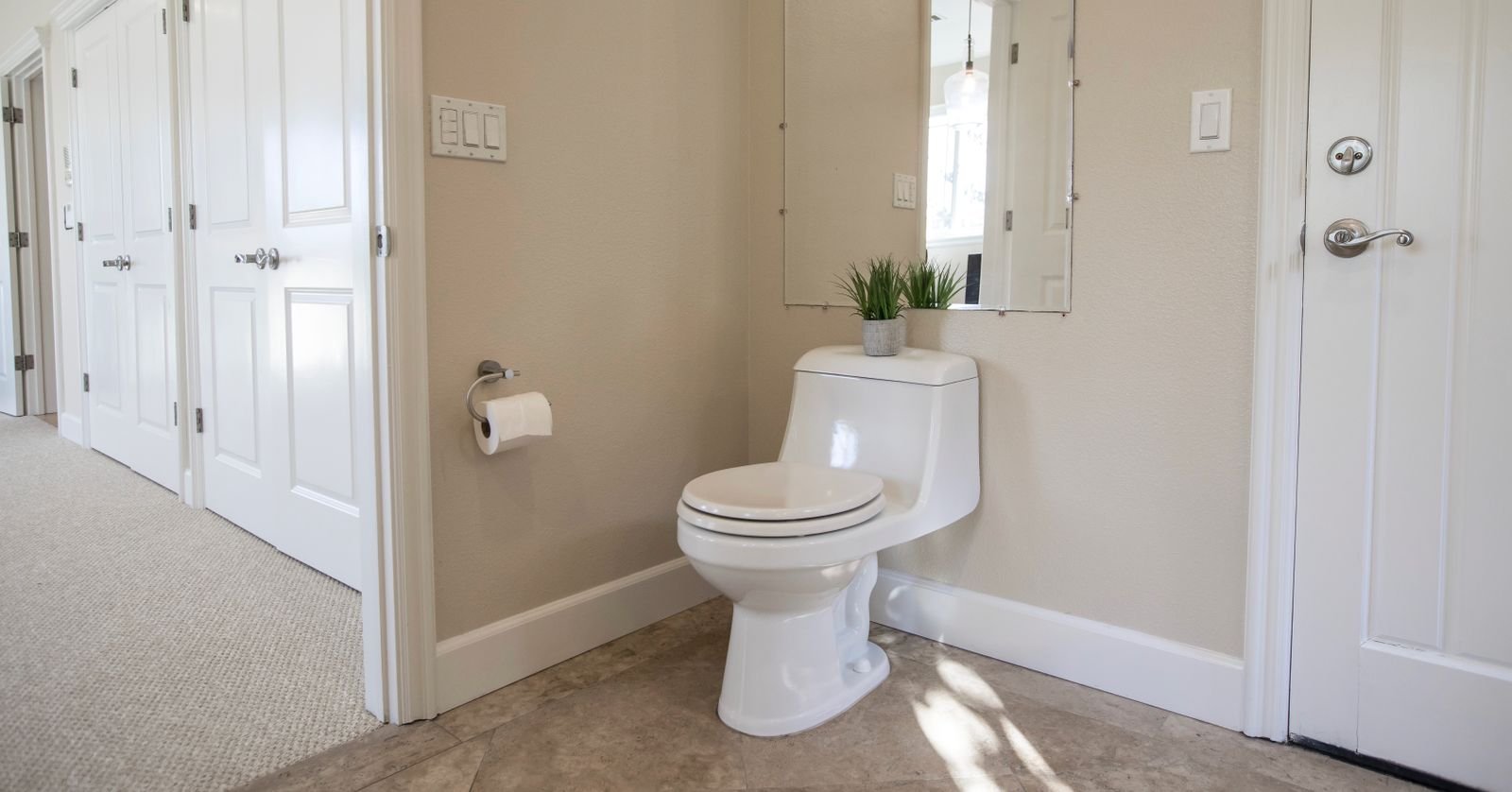
How to Clean a Toilet: Bowl, Rings, Seat Hinges and Base
The fastest way to clean a toilet well is to put bowl cleaner in first so it can sit, wipe the outside from the top down (tank, handle, lid, seat, hinges, base), then scrub the bowl and under the rim last and flush. Use gloves, a dedicated cloth, a toilet brush, and one product at a time. Below is the order we recommend, plus how to deal with rings, pink stains and the smell around the base.
What you need
- Rubber gloves you use only for the bathroom
- A toilet bowl cleaner (read the label: many are acid-based, some contain bleach)
- A toilet brush with a rim-reaching head, or a scrub wand
- Mild dish soap and warm water in a small bucket or spray bottle
- Two or three microfiber cloths or disposable wipes, kept separate from your kitchen cloths
- Optional: a non-scratch nylon scrub sponge and a pumice stone made for toilets (for rings only; see below)
- An old toothbrush for hinges and bolt caps
How to clean a toilet, step by step
Work from the cleanest parts to the dirtiest, so you never drag grime from the bowl up onto the seat or the handle.
- Ventilate and glove up. Turn on the exhaust fan or open a window, and put the lid and seat up.
- Apply the bowl cleaner first. Flush once, then squeeze the cleaner around the inside of the bowl, aiming up under the rim so it runs down the sides. Leave it for the time the label gives while you clean the outside.
- Wipe the tank and handle. With a cloth dampened in warm, soapy water, wipe the top of the tank, the flush handle or buttons, and down the sides of the tank. The handle is one of the most-touched spots in the house, so give it a real wipe, not a pass.
- Clean the lid and seat, both sides. Wipe the top and underside of the lid, then the top and underside of the seat, including the small bumpers underneath.
- Get the hinges. Grime and urine collect around the hinge posts behind the seat. Use the toothbrush and soapy water, then wipe dry. Many newer seats lift off with a quick-release button or a slide-off hinge, which makes this much easier; check your seat before prying anything.
- Wipe the outside of the bowl and the base. Work down the front and sides of the bowl to the floor, then around the base and the bolt caps. Switch to a fresh cloth here.
- Scrub the bowl. Brush under the rim all the way around, then the sides, then down into the drain opening as far as the brush reaches. Flush and check the waterline.
- Disinfect if you want to. Cleaning removes the grime; disinfecting is a separate step. If you use a disinfectant on the seat, handle and rim, the surface has to stay wet for the full contact time on the label (anywhere from seconds to 10 minutes or more, depending on the product) before you wipe or rinse it, or it won’t do what the label says.
- Rinse the brush. Hold the brush over the bowl and flush so clean water runs over the bristles, then let it drip dry under the seat before it goes back in its holder.
How do you get rid of a toilet bowl ring?
Most rings are mineral scale or stains that settle at the waterline. Apply an acid-based toilet bowl cleaner right on the ring, let it sit for the time on the label, and scrub with the brush. If the ring stays, scrub it with a non-scratch nylon sponge, and for an old ring, a wet pumice stone.
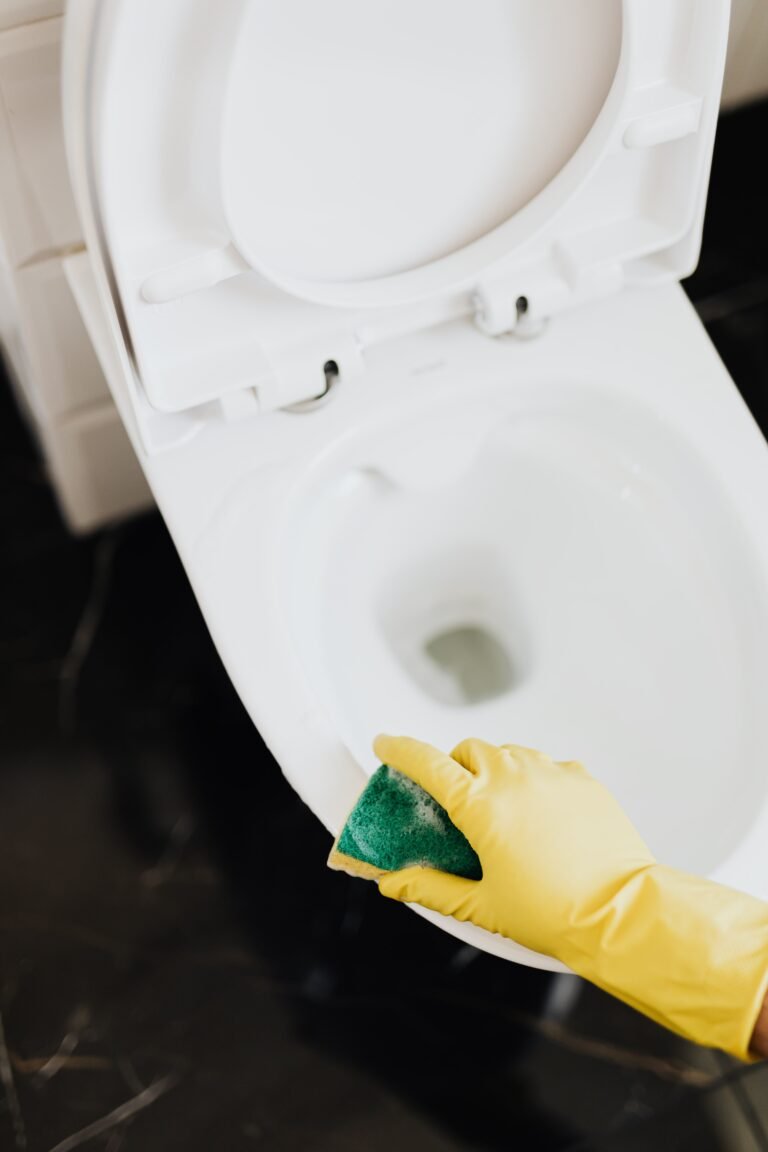
A few cautions make the difference between removing a ring and scratching the bowl:
- Keep a pumice stone wet the entire time. Dip it in the bowl water and rub gently. Merry Maids’ guidance says to keep the stone wet throughout and to use pumice only on vitreous china toilets, never on colored, enamel or plastic fixtures. Scratches matter because, as Gwinnett County’s water department notes, scratched fixtures are more prone to buildup.
- Skip steel wool and abrasive powders. Kohler’s care instructions warn against abrasive cleaners and scouring pads that can scratch or dull the finish.
- Clean regularly afterward. A ring that gets a weekly scrub rarely becomes a crust that needs pumice.
Hard water makes rings come back faster. The City of San Diego’s 2025 drinking water quality report lists average hardness of about 14 grains per gallon (roughly 240 ppm) at each of its three treatment plants, and the U.S. Geological Survey classifies water above 180 mg/L as very hard. East County water districts publish their own annual reports, so check yours for your number. The same white crust shows up on glass, so if you’re fighting it in the shower too, see our guide to removing hard water stains from glass shower doors, and for faucets, tile and appliances, our guide to hard water stains around the house.
What causes a pink ring in a toilet?
A pink or orange film at the waterline is usually not a mineral stain. It is typically a bacterium, Serratia marcescens, that grows in damp spots where soap, food or waste residue builds up. Scrub it off with a brush and cleanser, then clean the bowl regularly. It tends to come back, so control is ongoing.
Gwinnett County’s water department recommends scrubbing the film, applying a chlorine bleach solution to the affected surface for 10 to 20 minutes and then rinsing thoroughly, and keeping surfaces clean and dry. If you use bleach in the bowl, flush away any other bowl cleaner first and use bleach on its own (see the safety section below). The same pink film shows up on shower caulk and tile; our guide to cleaning grout without damaging it covers those surfaces. It collects around tub drains too, and our guide to cleaning a bathtub without scratching it covers safe cleaners for each tub material.
Should you put cleaning tablets or bleach in the tank?
We don’t. Kohler’s toilet care instructions say plainly not to use in-tank cleaners, warning that products containing chlorine (calcium hypochlorite) can seriously damage the fittings in the tank and cause leaks. Some advice suggests a short bleach soak in the tank for pink film, but even that guidance warns that bleach left in the tank damages the rubber valves and seals. A worn flapper is a common cause of a toilet that runs on its own. Clean the bowl, not the tank.
If you already use drop-in tablets and young children are around, Poison Control advises keeping all toilet bowl cleaners up and out of sight of children and keeping the lid closed.
How do you clean around the base when the bathroom still smells?
If the bowl is clean but the room still smells, the odor is usually at the base: urine that has dried on the floor around the toilet, in the caulk line and under the bolt caps. Wipe the floor in a half circle around the base, pop off the plastic bolt caps if they lift easily, and scrub around the bolts with the toothbrush.
A few other things to check:
- The back of the bowl and the floor behind it. This is the spot most quick cleanings miss. A cloth wrapped around a long-handled duster or an old paint stirrer reaches the gap between the toilet and the wall.
- The seat material. Seat care instructions typically call for mild soap and water. One seat maker’s manual, for example, warns that abrasive cleaners scuff and scratch plastic seats and says that if you do use a chemical cleaner, wipe the seat and hinges afterward so no residue is left behind.
- Grout around the toilet. If the floor grout near the base is stained, cleaning it often clears a lingering smell. Our guide to cleaning tile floors covers the rest of the bathroom floor.
Never mix toilet cleaners
This is the part that matters most for safety. Many toilet bowl cleaners are acids, some contain ammonia, and some contain bleach. Poison Control warns not to combine toilet bowl cleaner and bleach: bleach mixed with an acid-based cleaner forms chlorine gas, and mixed with an ammonia-based cleaner it forms chloramine gas. Its prevention advice also warns against mixing bleach with urine.
- Use one product in the bowl at a time, and flush well before switching to another.
- Read the label of every product before you use it, and keep the fan on or a window open.
- Rinse and wring your cloths between products.
- Wipe the seat, rim and floor with plain water first if the toilet hasn’t been cleaned in a while and you plan to use bleach.
How often should you clean a toilet?
For most households, a full clean once a week keeps rings and odors from building up, with a quick wipe of the seat, rim and handle in between. Clean more often when you have guests staying, when someone in the house is sick, or in a bathroom young children use. A guest bath that sits unused still collects dust on the tank and can grow a ring at the waterline, so give it a quick clean before company arrives. If you’re getting the whole house ready for visitors, our guide to cleaning doors, doorknobs and light switches covers the other high-touch spots.
When it’s more than a cleaning job
Some problems look like dirt but aren’t. Call a plumber if water seeps out around the base, the toilet rocks, the tank runs on its own after you’ve cleaned it, or you see cracks in the bowl or tank. Deep scratches or etching that won’t come clean are damage, not grime, and more scrubbing will only make them worse.
How Suddenly Clean handles toilets
Toilets are covered in our standard, deep, move-in/move-out and apartment cleanings. In our recurring house cleaning, the toilet is cleaned inside and out. In a deep cleaning, our Vetted Cleaning Professionals clean and sanitize toilets inside and out, including the base, along with the buildup-prone areas a routine clean doesn’t get to.
Suddenly Clean serves homes throughout East County and surrounding San Diego communities. If your ZIP code is accepted, we currently service your area. You can see your exact flat-rate price online before you book at our booking page.
Comments are closed