

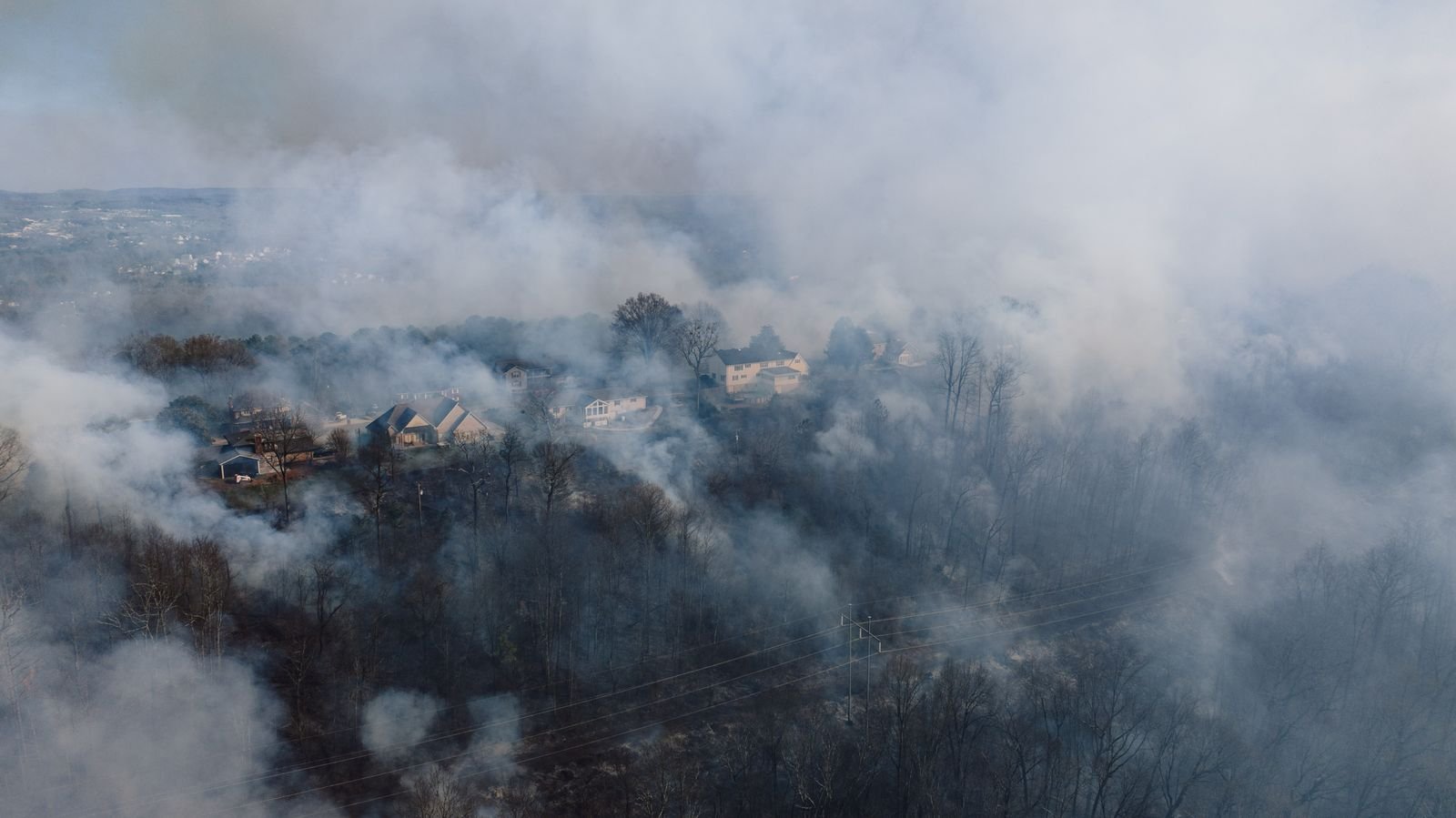
Wildfire Ash Cleanup: How to Clean Ash and Smoke Dust at Home
Safe wildfire ash cleanup comes down to one rule: keep the ash from getting back into the air. That means no dry sweeping, no dusting with a dry cloth, no leaf blowers and no ordinary vacuum. Mist ash before you move it, wipe with damp cloths, wet mop hard floors, use a HEPA vacuum, wear a NIOSH-approved N95 or P100 respirator, and bag what you collect. Below is how to do it room by room, who should sit it out, and when it becomes a job for a restoration specialist.
This guide is for ash and smoke dust that drifts into or onto a home that was not burned. A home with fire damage, or ash from burned buildings on the property, needs the guidance of local authorities and professional help.
Is wildfire ash dangerous to clean up?
It can be, which is why public health agencies treat it carefully. The U.S. EPA notes that ash contains fine particles of dust, dirt and soot, and that ash from burned homes and buildings generally carries more harmful chemicals than ash from burned forest, including metals such as lead and arsenic. It also irritates skin, eyes, nose and throat.
The California Department of Public Health (CDPH) adds that ash can cause breathing difficulty and asthma attacks in people who have asthma, and the EPA warns that wet ash can cause skin irritation or chemical burns. That doesn’t mean a dusting of ash on your patio is an emergency. It means you clean it in a way that keeps it out of your lungs and off your skin.
Who should not clean up wildfire ash?
Children should not help with ash cleanup at all, according to the CDC, the EPA and AirNow. The EPA also says people with heart or lung disease, older adults and pregnant people should not take part, and that anyone with heart or lung disease should talk to a health provider before wearing a respirator or working around ash.
Keep kids and pets away from ash-covered areas until they are cleaned, and wash children’s toys before they’re used again. If ash gets on a pet, CDPH recommends shampooing it off.
What mask should you wear to clean wildfire ash?
Wear a close-fitting respirator labeled “NIOSH” and either “N95” or “P100.” The EPA recommends a two-strap model that seals snugly over your nose and mouth, and says surgical masks and one-strap dust masks will not protect your lungs. AirNow adds that cloth masks don’t protect against ash.
Along with the respirator, the EPA and CDC recommend:
- Gloves, long sleeves, long pants, socks and closed, sturdy shoes
- Goggles and a head covering to keep ash out of your eyes and hair
- Washing ash off your skin as soon as possible
- Changing clothes and shoes before getting into your car, and sealing dirty clothes in a plastic bag
How do you clean wildfire ash inside your house?
Work from the top down with damp methods, and never dry dust or sweep. Wait until ash has stopped falling, air the house out if outdoor air quality allows, mist or damp-wipe surfaces so particles stay put, HEPA vacuum fabrics and carpet, and finish by wet mopping hard floors with as little water as possible.
- Check the air first. The EPA suggests opening windows and doors to air the house out “if conditions allow.” Check current conditions on AirNow.gov; if the outdoor air is still smoky, keep the house closed and run a portable air cleaner instead.
- Close off the area and protect yourself. Put on your respirator, gloves and long sleeves before you start. Keep children and pets in another part of the house or away from home.
- Start high. Wipe shelves, window sills, ledges, light fixtures and tops of furniture with a damp microfiber cloth. Fold the cloth as you go, rinse it often, and throw it away once it is too dirty to reuse, as the County and City of San Diego’s ash guidance suggests.
- Wash hard surfaces. AirNow recommends washing surfaces, walls and floors with water and a mild detergent, and cleaning dishes, counters and cupboards. Don’t mix cleaners, and ventilate if you use anything stronger than soap.
- HEPA vacuum soft surfaces. Vacuum upholstery, mattresses, rugs and carpet with a HEPA vacuum (see the next section).
- Wash fabrics. The EPA notes that clothing, bedding and draperies can generally be washed and kept. Shake nothing out indoors; carry items to the washer folded inward.
- Wet mop hard floors last. The EPA says to mist hard surfaces before sweeping and then wet mop, using as little water as possible. On wood, laminate and vinyl plank, that means a well-wrung microfiber mop, not a soaking one. Our guides to cleaning hardwood floors and laminate and vinyl plank floors explain how damp is too damp.
The EPA also separates light deposits from heavy ones: damp wiping and mopping work for a light film on non-absorbent surfaces, while thick deposits and absorbent materials call for dry methods such as HEPA vacuuming, sticky rollers or dry “soot” sponges before anything gets wet.
Can you vacuum wildfire ash?
Yes, but only with a HEPA vacuum. CDPH says not to use shop vacuums or other ordinary vacuums, because they can blow the finest particles back into the air. If a regular vacuum is all you have, the EPA says to wear a respirator, air out the space and run an air cleaner while you work.
Empty the canister or change the bag outdoors while wearing your respirator, and seal the contents in a plastic bag right away.
How do you clean ash off patios, decks, cars and outdoor furniture?
Mist the ash lightly first, then sweep gently or wipe it up, and never use a leaf blower. The EPA, CDPH and AirNow all warn against anything that puts ash back into the air. Use as little water as possible, and don’t hose ash into the street, because it washes into storm drains.
That last point matters here. After the 2007 wildfires, the County of San Diego, the City of San Diego and the San Diego Regional Water Quality Control Board issued joint guidance to keep ash and wash water out of storm drains, gutters and ditches that flow to creeks, bays and the ocean. Their suggestions still make sense for any household cleanup:
- Point wash water and runoff onto landscaping, not the driveway or street.
- Dampen ash, then scrape or scoop it up instead of rinsing it away.
- Wash cars at a car wash or over a lawn.
- Redirect roof downspouts onto landscaped areas.
Wipe down outdoor furniture and children’s play equipment where ash fell, as AirNow recommends, and wash home-grown fruits and vegetables before eating them.
How do you get rid of the ash once it’s collected?
Bag it and put it in the trash. CDPH and AirNow recommend double bagging ash and debris in plastic and sealing the bags so wind or rain can’t spread it, and the EPA says collected ash can generally go out with regular trash. Never burn it or wash it into a storm drain.
If you suspect hazardous material, such as ash from a burned structure, asbestos, or damaged batteries and chemical containers, contact your local hazardous waste authority before moving it. The EPA specifically flags lithium-ion batteries as needing special precautions.
What about the smoke smell, air filters and the HVAC system?
Keep filtering the air until the smell fades. AirNow recommends replacing HVAC and portable air cleaner filters often during cleanup, and the EPA says to run the HVAC system with a high-efficiency filter if it’s safe to operate. Our rule of thumb: check filters weekly while ash is still around; a gray, loaded filter is doing its job and needs replacing.
- Wipe vent covers and return grilles with a damp cloth once the heavy ash is gone. Our guide to cleaning air vents and return grilles walks through it.
- Don’t try to “deodorize” with an ozone generator. The EPA advises against ozone generators, hydroxyl generators and other oxidizers for smoke odor.
- If ducts are clogged with ash and debris, AirNow suggests considering professional duct cleaning.
When is wildfire ash a job for a restoration professional?
Call a fire and smoke restoration specialist when the problem goes beyond a light layer of drifted ash. The EPA recommends professional help for structural damage, suspected hazardous materials, a contaminated HVAC system, or any cleanup you can’t safely manage yourself, and says local authorities can recommend specialists.
Signs it’s past a do-it-yourself job include thick ash or soot indoors, a smoke smell that persists after cleaning and filtering, ash on the property from burned structures, or water damage from firefighting, which the EPA notes can lead to mold.
Keeping up after the ash is gone
Fine particles keep showing up for a while, especially in window tracks, on sills and in vents. Keep damp-wiping instead of dry dusting, keep changing filters, and keep the house closed on smoky days. Our guide on why houses get dusty and how to keep dust down covers the habits that help in the weeks that follow.
Where Suddenly Clean fits in, and where it doesn’t
We want to be clear about this. Suddenly Clean is a house cleaning company, not a fire or smoke damage restoration company. Our services don’t include ash removal, soot cleanup after a fire, HVAC duct cleaning or carpet shampooing, and it’s best to wait until ash has stopped falling and the air has cleared before booking any cleaning.
Where we can help is afterward. Once the visible ash has been dealt with and air quality is back to normal, a deep cleaning covers the detail work where fine dust lingers: vents, ledges and reachable shelves, light fixtures, wall plates, doors and frames, baseboards and blinds, along with vacuuming carpets and area rugs and mopping hard floors.
Every visit is handled by our Vetted Cleaning Professionals, thoroughly vetted and held to Suddenly Clean’s service scope and standards. We’re licensed and insured, and you can see your exact flat-rate price online before you book. Suddenly Clean serves homes throughout East County and surrounding San Diego communities. If your ZIP code is accepted, we currently service your area. See your price and book here.
Comments are closed