

How to Clean a Fabric Couch Without Leaving Water Rings
To clean a fabric couch, start by finding its cleaning code on the tag under the cushions, then vacuum every surface, treat spots with only the cleaner that code allows, and use as little liquid as possible. Most damage people see after cleaning a couch, such as water rings, shrunken cushion covers and faded patches, comes from too much water or the wrong cleaner, not from too little effort.
This guide covers fabric upholstery: cotton, linen, polyester, microfiber and blends. Leather and suede need different care.
What do the cleaning codes on a couch tag mean?
The code tells you which kind of cleaner the fabric tolerates. W means water-based cleaners, S means solvent-based cleaners only, W/S (sometimes SW) means either, and X means vacuum or brush only, with no liquid of any kind. The tag is usually under a seat cushion or on the deck or underside of the frame.
- W: spot clean with the foam of a mild water-based cleaner, not with a soaked cloth.
- S: use a solvent-based upholstery cleaner sparingly, in a well-ventilated room. Water can leave rings or spots on this fabric.
- W/S: either method works. On a light or delicate fabric, start with the gentler, drier option.
- X: vacuum and brush only. Any liquid, including plain water, risks permanent marks.
If there is no tag or the code has worn off, treat the couch as unknown: test any cleaner on a hidden spot first, such as the back of the skirt or the underside of a cushion, and let it dry fully before you judge the result.
What you need
- A vacuum with an upholstery tool and a crevice tool
- A soft brush (an upholstery brush or a clean, soft clothes brush)
- White microfiber cloths or white towels, so no dye transfers to the fabric
- For W fabric: a bowl of lukewarm water with a small squirt of clear dish soap or a mild upholstery shampoo
- For S fabric: a solvent-based upholstery spot cleaner labeled for S-code fabric
- Baking soda or cornstarch for odors and fresh grease
- A fan, or an open window, for drying
How to clean a fabric couch, step by step
- Clear and check. Take off throws and pillows, pull out the seat and back cushions, and check the code tag. Look for anything stuck to the fabric, such as gum, wax or dried food, and lift off what you can with a dull plastic edge.
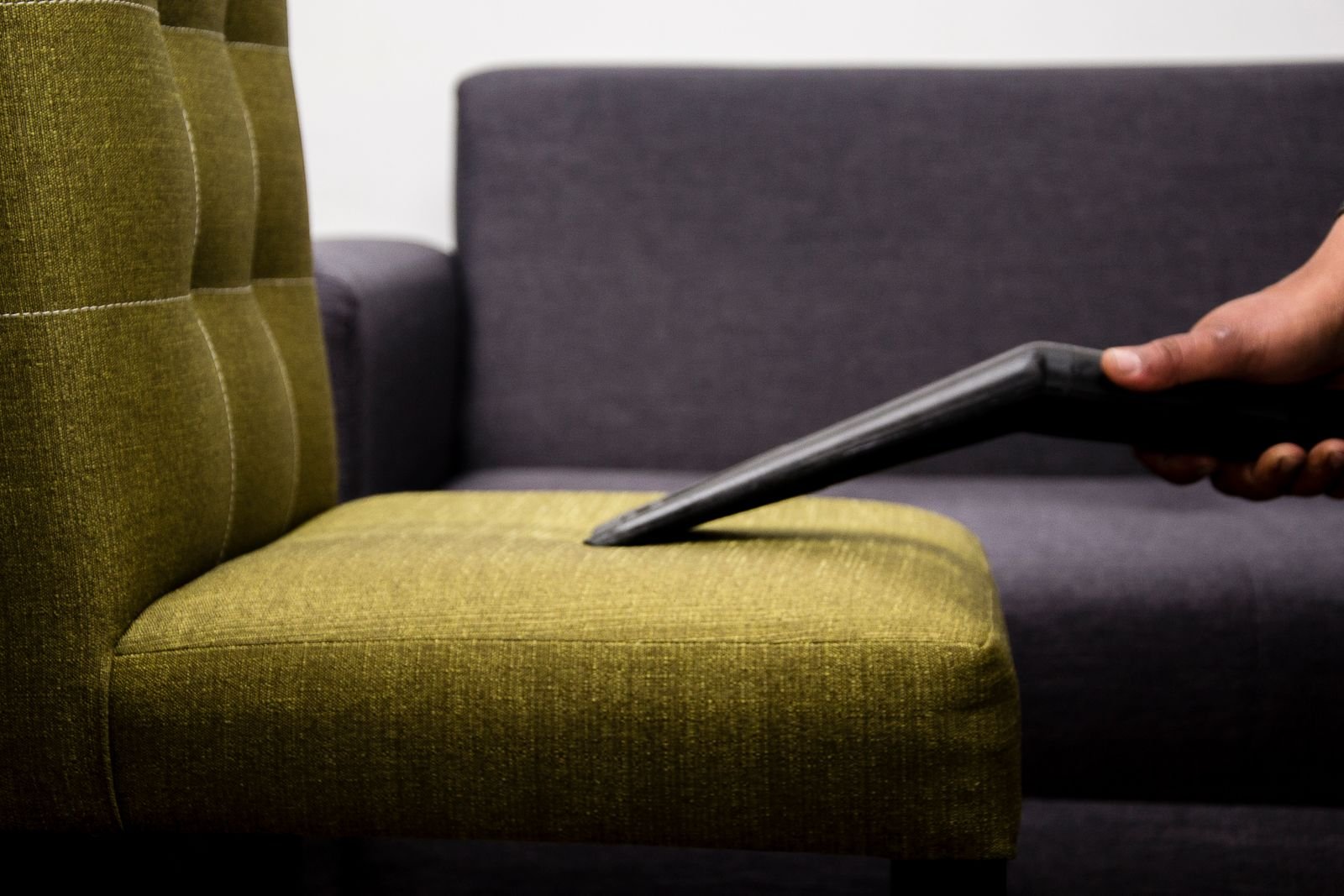
- Vacuum everything. Use the crevice tool along the seams, under the cushions and in the gap where the back meets the deck, where crumbs and grit collect. Then go over the arms, back, skirt and both sides of every cushion with the upholstery tool, using slow, overlapping passes. Grit that stays in the fabric acts like sandpaper every time someone sits down.
- Brush the fabric. A soft brush lifts flattened pile and loosens dust the vacuum missed. Vacuum once more after brushing.
- Test your cleaner. Apply a small amount on a hidden spot, blot, and let it dry completely. If the color shifts, the texture changes or a ring forms, stop and call an upholstery cleaner.
- Spot clean with the right method for your code (see the next two sections). Work on one spot at a time, from the outside edge of the stain toward the center so it doesn’t spread.
- Blot, don’t rub. Press a dry white cloth into the spot to pull out moisture and loosened soil. Rubbing frays the fibers and pushes the stain deeper into the padding.
- Dry it fast. Point a fan at the damp area, keep the room ventilated, and wait until the fabric is completely dry before anyone sits on it or you put cushions back.
- Brush and vacuum again once it is dry, to reset the nap so the cleaned area matches the rest of the couch.
How do you spot clean a W-code couch without water rings?
Use foam, not liquid. Whisk lukewarm water and a little mild dish soap until you have a bowl of suds, then apply only the suds with a white cloth and blot. Follow with a cloth barely dampened in plain water to lift the soap, then blot dry and run a fan.
Water rings form when a spot gets wet enough for moisture to wick outward, carrying dissolved soil and sizing to the edge of the wet area, where it dries as a tide line. Natural fibers such as cotton and linen can also brown as they dry slowly. Too much water also soaks into the cushion foam, which is slow to dry and can grow mildew. Small amounts, light blotting and quick drying prevent all three.
If a faint ring does appear, dampen the whole panel evenly, seam to seam, with a barely damp cloth so it dries without a hard edge, then dry it quickly with a fan. If it persists, leave it to a professional rather than adding more water.
How do you clean an S-code couch?
Use a solvent-based upholstery cleaner made for S-code fabric, applied sparingly to a white cloth rather than poured onto the couch. Blot the spot, let it evaporate in a ventilated room, then brush the fabric to soften it. Keep water off S-code upholstery entirely, including damp cloths.
Many S-coded couches are polyester microfiber, and many owners clean them with isopropyl (rubbing) alcohol, which evaporates before it can leave a water mark. If you try it, test a hidden spot first, use only a light mist on a white sponge or cloth, open a window, and keep it away from candles, pilot lights and other flames. Once the area is dry, brush it in one direction to restore the nap.
How do you get common stains out of a fabric couch?
Act quickly and match the method to the stain: blot liquids immediately, absorb grease with a dry powder before using any cleaner, and treat food and drink spills with the method your cleaning code allows. Fresh stains lift far more easily than ones that have dried or been heat-set.
- Grease and body oil (headrest and armrest marks, pizza drips): sprinkle baking soda or cornstarch on the spot, leave it for about an hour to absorb the oil, vacuum it off, then spot clean with your code’s method.
- Coffee, juice and wine: blot up as much as you can with a dry white cloth right away. On W fabric, follow with foam and a plain-water blot. On S fabric, use your solvent cleaner.
- Mud: let it dry completely, then break it up with a soft brush and vacuum before you treat any remaining mark.
- Ink: ink spreads easily and often needs a specialist product. Test carefully, and on a light or valuable fabric, call an upholstery cleaner.
Never mix cleaning products, and never combine bleach with ammonia, vinegar or other acids. Avoid bleach on upholstery altogether: it can remove color and weaken fibers.
How do you get a smell out of a fabric couch?
Vacuum thoroughly, then sprinkle baking soda evenly over the seat, back and cushions, leave it for at least a few hours or overnight, and vacuum it up completely. Baking soda absorbs everyday odors without adding moisture, so it is safe on most fabrics, including S-code upholstery.
For lasting odors, look for the source. Smells from pets, spilled milk or sweat often come from the cushion foam rather than the fabric surface. If an odor returns after cleaning, the padding underneath is probably affected, and that calls for a professional upholstery cleaner with extraction equipment. For dog and cat hair on the couch, our guide to keeping pet hair under control between cleanings covers the tools that work best on fabric.
Can you wash couch cushion covers in the washing machine?
Only if the manufacturer’s care label says the covers are washable. A zipper doesn’t make a cover machine-washable: many zippers exist only so the cover can be fitted at the factory. Washing a cover that isn’t meant to be washed can shrink it, fade it, or damage its backing so it no longer fits the cushion.
If the label does allow washing:
- Wash all the covers at the same time, so they fade evenly and still match the frame and back.
- Use cold or cool water, a gentle cycle and a mild detergent.
- Skip the dryer unless the label allows it. Air dry instead.
- Put covers back on while they are still slightly damp, which makes them easier to stretch over the foam, then stand the cushions up to finish drying.
If the label says dry clean only, or there is no label, spot clean the covers on the cushions instead.
How often should you clean a fabric couch?
Vacuum a couch that gets daily use about once a week, and more often with pets or kids. Spot clean spills as soon as they happen. Give it a full vacuum, brush and spot treatment every few months, and consider a professional upholstery cleaning when the fabric looks dull overall or smells even after cleaning.
A few habits keep it cleaner in between: flip and rotate reversible cushions every week or two so they wear evenly, use a washable throw where people or pets lounge most, and keep the couch out of strong direct sun, which fades fabric. Dust settles on upholstery like everywhere else in the house, so if you’re vacuuming a lot of fine dust off the couch, our article on why your house gets so dusty explains where it comes from. If your couch has exposed wood arms or legs, the method in how to clean wood furniture keeps the finish safe while you work.
When to call a professional upholstery cleaner
- The couch is coded X, or the fabric is silk, velvet or another delicate weave.
- Your hidden-spot test changes the color or texture.
- The stain is large, old, or has soaked into the cushion, such as pet urine.
- You see or smell mildew, or the couch has been wet for a long time.
- A water ring or watermark won’t come out with an even, light dampening.
Upholstery shampooing and hot-water extraction are specialist work. They aren’t part of our house cleaning services, so for that, look for a dedicated upholstery cleaner and tell them your couch’s cleaning code.
Getting the rest of the house guest-ready
A clean couch goes a long way before holiday guests arrive, and the rest of the house usually needs attention too. During a Deep Cleaning, our Vetted Cleaning Professionals dust furniture surfaces and decor, wipe high-touch areas such as switches and door handles, vacuum carpets and area rugs, and mop hard floors throughout the home. If you’d rather keep the house in shape week to week, Recurring House Cleaning uses our Standard Cleaning to keep up with routine dusting, high-touch spots and floors on a schedule. Suddenly Clean is licensed and insured, and you can see your exact flat-rate price online before you book at our booking page.
Suddenly Clean serves homes throughout East County and surrounding San Diego communities. If your ZIP code is accepted, we currently service your area.
Comments are closed