

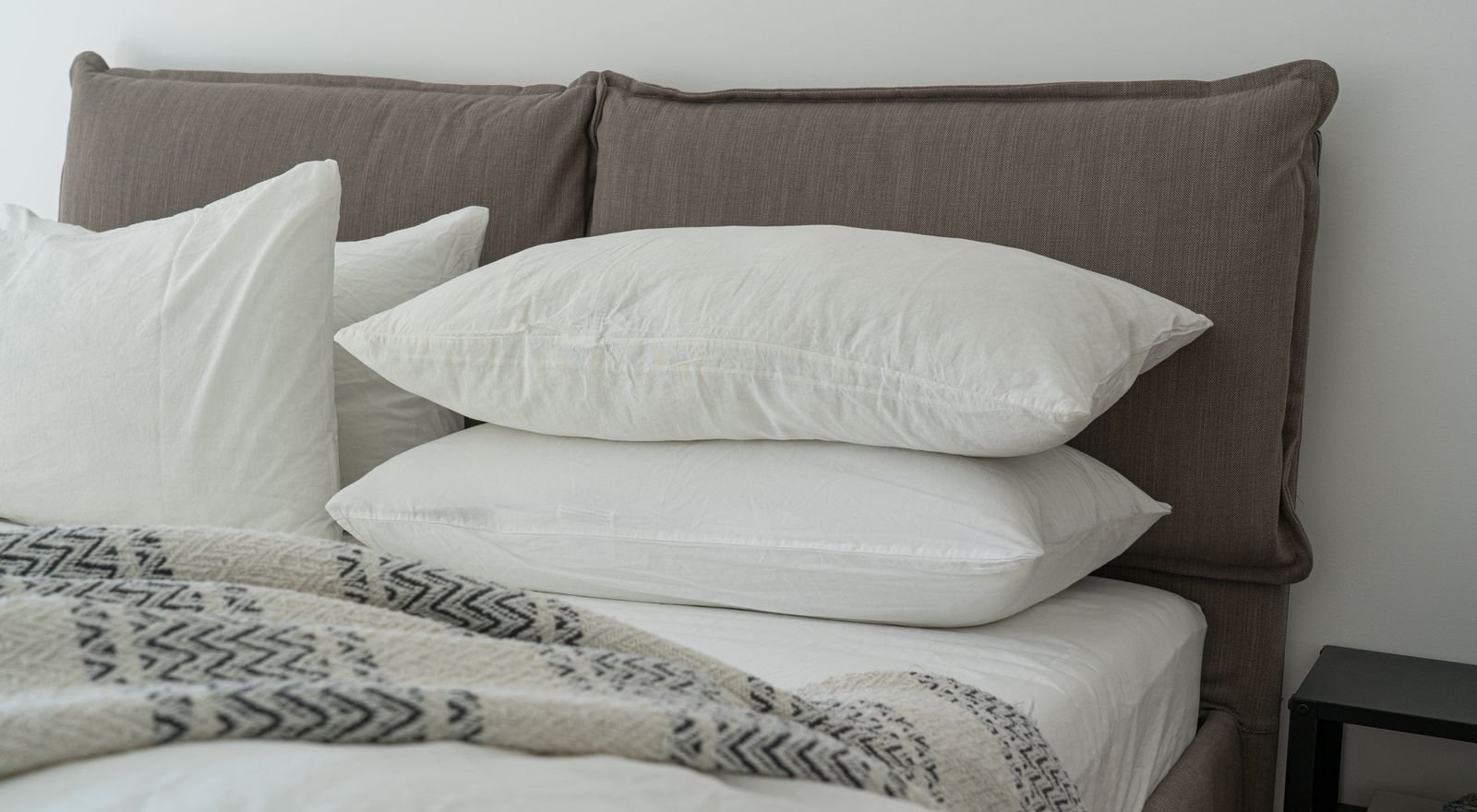
How to Wash Pillows: Down, Polyester, Memory Foam and More
To wash pillows, start with the care label: most polyester (fiberfill) and down or feather pillows can go in the washing machine, while memory foam and latex pillows should never go in a washer or dryer. Wash two machine-safe pillows at a time on a gentle cycle with a small amount of mild detergent, add an extra rinse and spin, then dry them on low heat until the filling is dry all the way through. Here is how to do each step, how to handle foam and specialty pillows, and how often to bother.
Can you put pillows in the washing machine?
Usually, yes, if the filling is polyester, down alternative, down or feather and the care label doesn’t say otherwise. Memory foam, shredded foam, latex and buckwheat pillows are the exceptions: foam and latex break apart when they’re soaked and tumbled, so they get spot cleaning and a washed cover instead. When the label and a general guide disagree, follow the label.
Two practical checks before you start: look for open seams or thin spots in the shell (a small tear becomes a washer full of fluff), and check the size of your machine. A front-loader or a top-loader without a center agitator is gentlest on pillows. If your washer is small or has an agitator, a large-capacity machine at a laundromat is a reasonable option.
How do you wash pillows in a washing machine?
Strip off the pillowcase and any protector, wash two pillows together so the drum stays balanced, and use a gentle or delicate cycle with cool or warm water. Use very little detergent, about a tablespoon or half your usual amount, because extra soap is hard to rinse out of dense filling and leaves it stiff and sticky.
- Remove covers and check stains. Take off the pillowcase and protector and wash them with your sheets. Pre-treat any spots on the pillow shell with a little laundry stain remover and give it a few minutes to work.
- Load two pillows. Two pillows balance each other in the drum. In a top-loader, stand them upright on either side of the agitator rather than laying them flat across it.
- Use a small amount of mild, low-sudsing detergent. About a tablespoon of liquid detergent, or half the normal dose, is enough.
- Pick a gentle cycle with cool or warm water. Avoid hot water for down and feather pillows; it is hard on the fill. Polyester pillows are fine in cool or warm water.
- Add an extra rinse and an extra spin. The rinse clears leftover soap. The spin pulls out water so the pillows dry faster, which matters more than anything else in this process.
- Skip chlorine bleach. Pillow care guides advise against it. If you use any other laundry additive, use it on its own and never combine products.
A clean machine helps, too. If your washer smells musty, our guide to cleaning a washing machine covers the gasket, dispenser and clean cycle.
How do you dry pillows without clumps?
Dry pillows on low heat, or on the air-only setting for down, with two or three wool dryer balls or clean tennis balls in the drum to break up clumps. Expect two or three cycles; down can take much longer than polyester. Take the pillows out between cycles, fluff them by hand and squeeze the middle to check for damp spots.
Don’t trust the dryer’s automatic sensor on its own. It reads moisture at the surface, and a pillow can feel dry outside while the center is still damp. A damp core can grow mildew and start to smell, which defeats the purpose of washing it. When you think the pillows are done, let them cool for a few minutes and feel deep into the filling and along the seams. If anything feels cool or heavy, run another low cycle.
Air drying works too, but plan on a day or two: lay the pillows flat in a warm, airy spot or in shade outdoors, and turn and fluff them every couple of hours. Pillows shed a lot of lint, so clean the dryer’s lint screen when you finish. Our dryer vent and lint trap guide explains why that matters.
How do you clean memory foam and latex pillows?
Never put memory foam or latex in the washer or dryer. Wash the removable cover according to its label, then clean the foam itself by vacuuming it with an upholstery tool, spot-cleaning stains with a cloth dampened in water and a drop of mild dish soap, and letting it air dry completely before you put the cover back on.
- Unzip and wash the cover on its own, usually cold and gentle, and let it dry flat or as the label directs.
- Vacuum both sides of the foam with an upholstery attachment.
- For a spot, dab with a barely damp cloth and a drop of mild dish soap. Don’t scrub and don’t soak; wet foam tears easily and takes a long time to dry.
- Blot with a dry towel, then air dry the pillow in a well-ventilated room or near a fan, away from direct heat.
Some manufacturers allow a gentle hand wash for solid foam every few months. If yours does, use lukewarm water and very little soap, press the water out without wringing or twisting, and give it plenty of time to dry. Shredded foam pillows vary a lot by brand, so read the label before washing.
How do you clean buckwheat pillows?
Buckwheat pillows are cleaned in two parts: the hulls and the casing. Pour the hulls into a large bowl or bag, wash the empty casing according to its label, and freshen the hulls by spreading them out in the sun for a few hours. Never wet the hulls, and refill only once the casing is completely dry.
How do you get yellow stains out of pillows?
Yellowing comes mostly from sweat and skin oils soaking through the pillowcase over time. For a machine-washable pillow, soak it before washing in hot water with an oxygen bleach (a powdered sodium percarbonate product), following the product’s directions, then wash and dry it as above. Check the care label first, and don’t use chlorine bleach or mix the soak with any other cleaner.
Some old yellowing won’t come out completely. If the pillow is also flat or lumpy, that is usually a sign to replace it rather than keep treating it.
How often should you wash pillows?
Wash pillows at least twice a year, roughly every six months. Wash them more often, about every three months, if you eat in bed, sweat at night or share the bed with a pet. Pillowcases are different: wash them every week with your sheets, and wash pillow protectors every time you notice stains or odor.
A zippered pillow protector under the pillowcase is the easiest way to keep the pillow itself clean between washes. It takes the sweat and spills, and it goes in the laundry far more easily than a pillow does. If you’re cleaning the rest of the bed too, our guide to cleaning a mattress covers stains, odors and mattress protectors.
When should you replace a pillow instead of washing it?
Most pillows need replacing every one to two years, though better foam and latex pillows can last longer. Try the fold test: fold the pillow in half and let go. If it doesn’t spring back, or stays folded, it has lost its support. Persistent lumps, odors that survive a wash, and stains that won’t lift are other signs to replace it.
Washing can freshen a pillow, but it can’t bring back filling that has broken down. If a pillow has been through several washes and still sags, washing it again won’t fix that.
Getting guest pillows ready for the holidays
If you’re hosting overnight guests, wash guest-room pillows at least two or three days ahead. Drying takes longer than most people expect, especially for down, and you’ll want time to confirm the centers are fully dry before the bed is made. Put fresh pillowcases and protectors on the day before guests arrive, and set out a spare pillow or two in a closet for anyone who likes a firmer or flatter one.
How Suddenly Clean helps with bedrooms
When you book a Standard or Deep Cleaning, our Vetted Cleaning Professionals dust and wipe accessible bedroom furniture and surfaces, clean mirrors and window sills, dust reachable ceiling fans, vacuum and mop the floors, and make beds when requested and practical, using the bedding you have available. Washing and drying pillows isn’t on our Standard or Deep Cleaning checklists, so that part stays with you. You can see each service’s full list on our cleaning checklists page, and if you’d like the rest of the house handled on a regular schedule, start with our recurring house cleaning service.
We’re licensed and insured, and you see your exact flat-rate price online before you book. Suddenly Clean serves homes throughout East County and surrounding San Diego communities. If your ZIP code is accepted, we currently service your area. Check your price and book online.
Comments are closed