


How to Remove Hard Water Stains From Glass Shower Doors
The most reliable way to remove hard water stains from glass shower doors is to soak the glass with warm white vinegar, let it sit for 10 to 30 minutes so the acid can loosen the mineral film, scrub with a non-scratch pad, then rinse and squeegee dry. Light spots come off in one round. Heavy, crusty buildup may take two or three. Below is the method we use, what to avoid so you don’t damage the glass or the surfaces around it, and how to keep the film from coming back.
Why shower glass gets cloudy
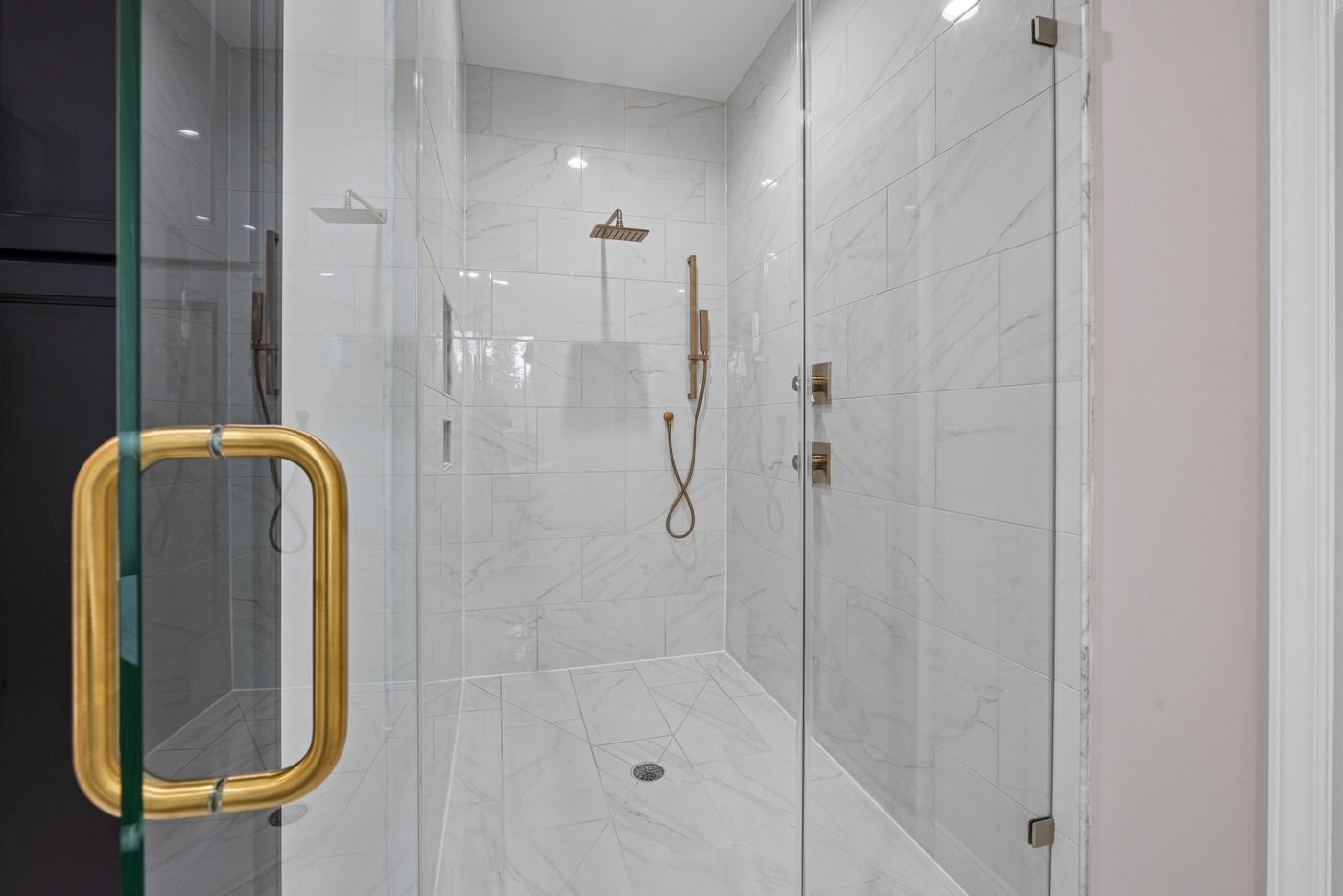
Hard water carries dissolved calcium and magnesium. When droplets dry on the glass, the water evaporates and the minerals stay behind as white spots. Over weeks, those spots bond with soap residue and body oils into a dull, cloudy film that ordinary glass cleaner barely touches.
This is a real issue locally. The City of San Diego reports that its drinking water averages about 16 grains per gallon of hardness (roughly 276 parts per million), and the U.S. Geological Survey classifies anything above 180 milligrams per liter as very hard. Many East County homes are served by other water districts, so your number may differ; your district’s annual water quality report lists it. Either way, if your glass clouds up within days of cleaning, mineral buildup is the likely cause.
What you’ll need
- Distilled white vinegar (the standard 5% kind)
- A spray bottle
- A non-scratch scrub pad or soft sponge (avoid green scouring pads)
- Paper towels or an old microfiber cloth for soaking
- Baking soda, for stubborn spots on uncoated glass only
- A squeegee and two clean microfiber cloths
- Rubber gloves
Before you start: check two things
Is your glass coated?
Many newer shower doors have a factory-applied protective coating. Cleaning instructions vary by manufacturer, so check the installer or manufacturer’s care guidance before using vinegar or any abrasive product. If you’re not sure whether the glass is coated, use the least aggressive method first and avoid abrasive cleansers, razor blades and sharp scrapers.
What’s around the glass?
Vinegar is an acid, and acids etch natural stone such as marble, travertine and limestone. If your shower has a stone threshold, bench or walls, protect them with a towel, wipe up any drips right away and rinse the area with plain water when you finish. The same goes for brass or specialty-finish hardware: keep vinegar off it, or rinse it promptly.
Step by step: removing hard water stains
- Ventilate and rinse. Turn on the exhaust fan or open a window, then rinse the glass with warm water to wash off loose soap scum.
- Warm the vinegar. Heat it until it’s warm to the touch, not boiling. Warm vinegar works faster on mineral deposits. Use it full strength for visible buildup, or diluted 1:1 with water for light spotting.
- Apply and keep it wet. Spray the glass generously. Vertical glass dries fast, so press vinegar-soaked paper towels or a soaked cloth flat against the worst areas. They’ll cling and keep the acid in contact.
- Let it sit. Give light spots about 10 minutes and heavy film up to 30. Re-spray anything that starts to dry.
- Scrub in overlapping passes. Remove the towels and work the glass with a non-scratch pad, using small circles and moderate pressure. Pay extra attention to the bottom third of the door and the edges near the frame, where water sits longest.
- Rinse thoroughly. Flush the glass with clean water so no vinegar is left on the glass, frame, grout or floor.
- Squeegee and dry. Pull a squeegee from top to bottom, wiping the blade after each stroke, then buff with a dry microfiber cloth. Check the glass in good light. If cloudiness remains, repeat steps 3 through 7.
For stubborn spots on uncoated glass
After rinsing off the vinegar, mix baking soda with a little water into a thick paste, rub it onto the remaining spots with a damp soft sponge, and rinse well. Baking soda is a mild abrasive, so use light pressure and skip this on coated glass. Don’t mix baking soda and vinegar together in a bottle or bowl; they neutralize each other and you lose the cleaning power of both.
Using a store-bought hard water remover
Lime and scale removers work well on heavy buildup. Read the label to confirm it’s safe for glass and for any stone or metal nearby, follow the stated dwell time, and wear gloves. Never combine a descaler with another cleaner, and never use any acid-based product near bleach: the combination releases toxic chlorine gas. If you switch products, rinse the surface completely with water first.
How to tell buildup from permanent etching
| What you see | Likely cause | What to do |
|---|---|---|
| White dots that feel slightly raised | Fresh mineral spots | One round of diluted vinegar, then squeegee |
| Even, dull haze that feels rough | Built-up mineral and soap film | Full-strength vinegar with a 20 to 30 minute soak; repeat if needed |
| Cloudiness that hasn’t changed after two or three full rounds and feels smooth | Likely etching (the glass surface itself is damaged) | Cleaning won’t reverse it; see below |
Long-term mineral buildup can contribute to permanent surface damage or etching. It’s damage to the glass, not dirt on it, so no cleaner will fix it. A glass restoration specialist may be able to improve light etching, and severe cases usually mean replacing the panel. If you’re not sure what you’re looking at, stop scrubbing harder. More pressure won’t help and can scratch the glass.
How to keep hard water stains from coming back
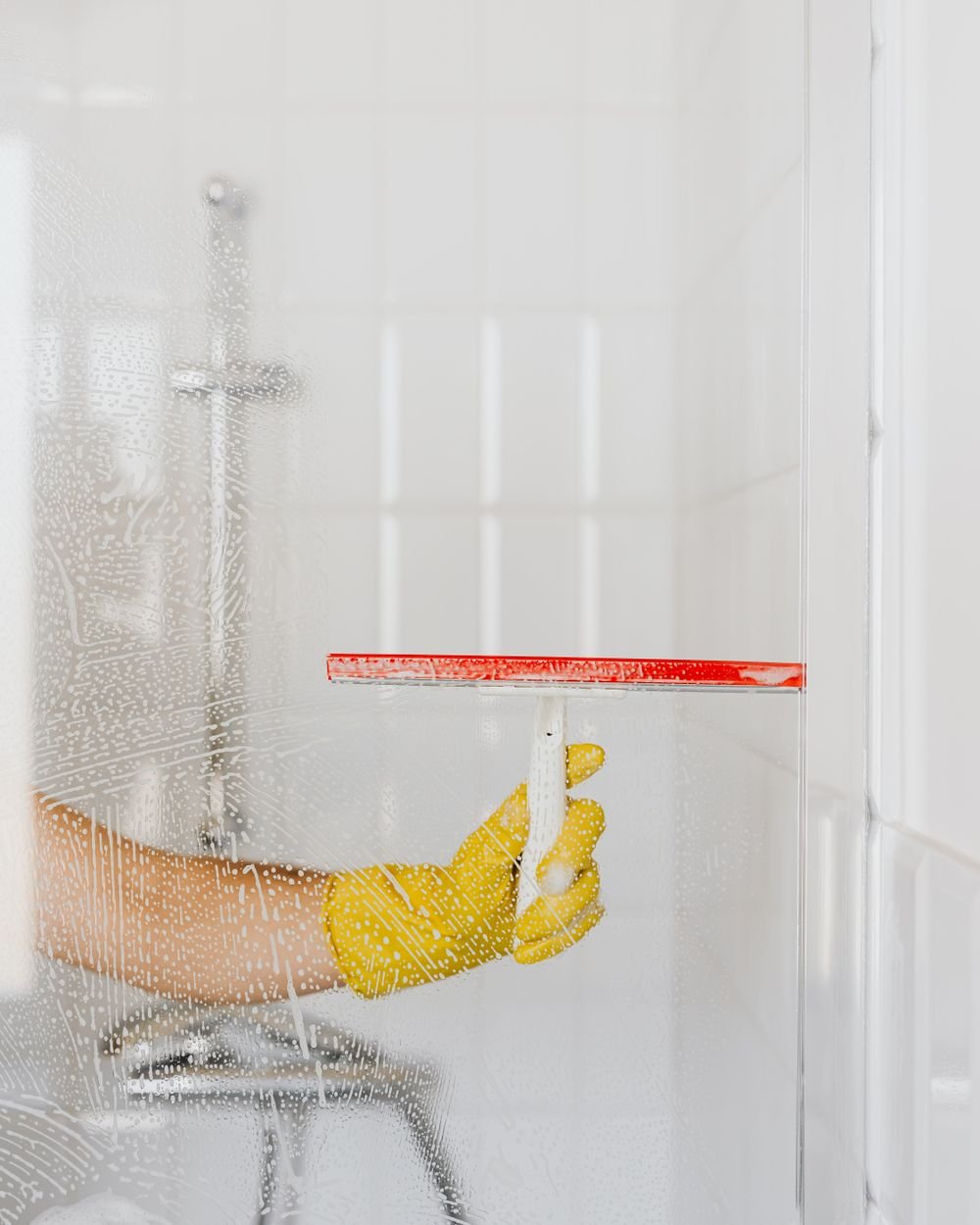
- Squeegee after every shower. It takes under a minute and it’s the single most effective habit. Minerals can’t deposit if the water doesn’t dry on the glass.
- Run the fan. Leave the exhaust fan on for 15 to 20 minutes after showering so the room dries faster.
- Do a weekly quick wipe. A light spray of 1:1 vinegar and water, a short wait and a squeegee keeps film from building up.
- Consider a water-repellent glass treatment. These help water bead and run off. Check that the product is compatible with your glass, especially if it’s already coated, and reapply as the label directs.
- Look at the source. If hard water is affecting your fixtures, dishes and laundry too, a whole-home water softener is worth discussing with a licensed plumber.
For the rest of the bathroom, our quick bathroom cleaning routine pairs well with the weekly glass wipe. The same minerals clog shower heads and faucet aerators, which our guide to cleaning a shower head covers, and cleaning grout without damaging it takes care of the tile around the glass.
When it helps to have a professional
If the glass hasn’t been properly cleaned in months, the first reset is the hardest part. A deep cleaning gives the bathroom, glass included, a thorough starting point. After that, recurring cleaning keeps buildup from getting a foothold between visits. Suddenly Clean serves homes throughout East County and surrounding San Diego communities. You can check availability and pricing for your home through our online booking page.
Comments are closed