

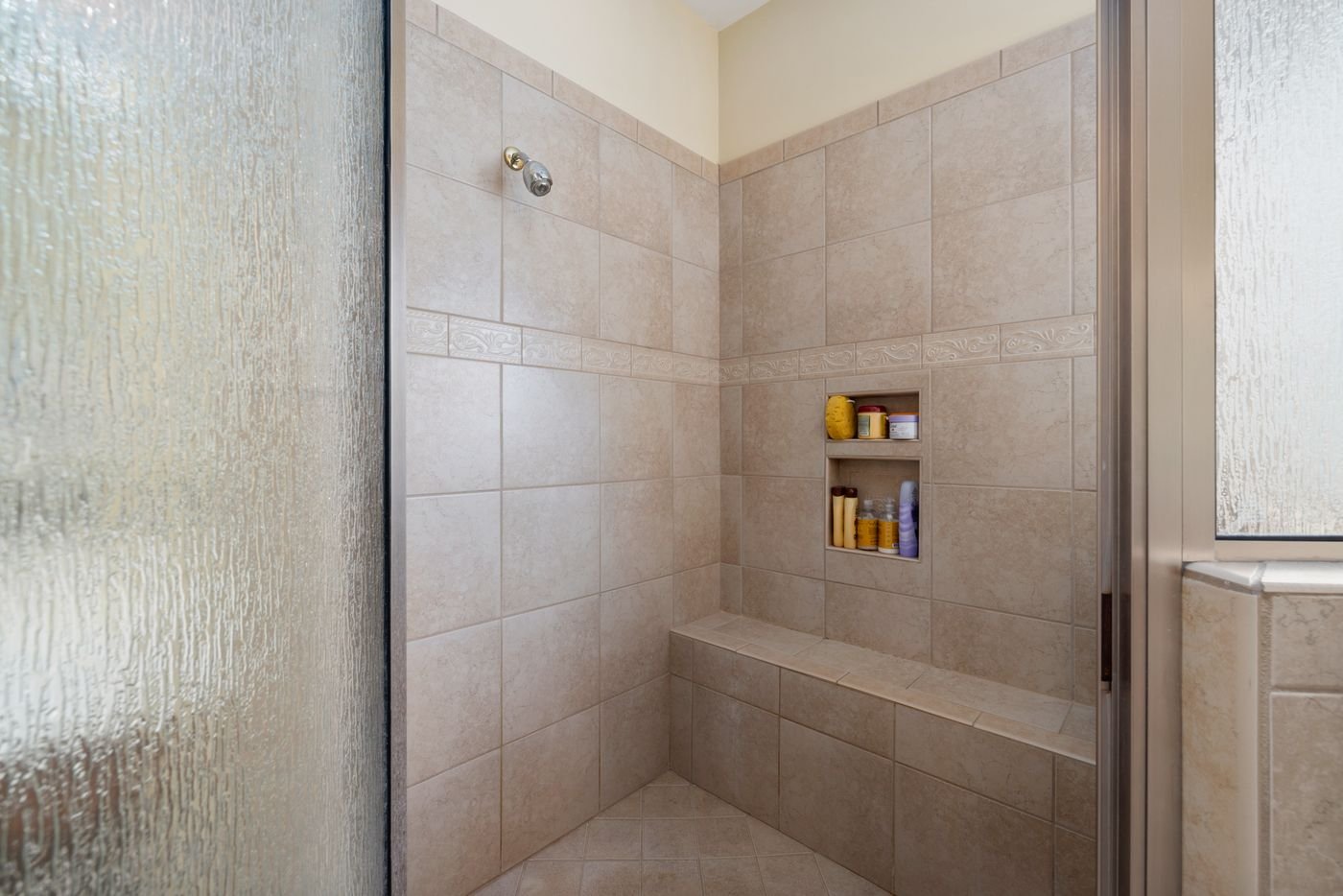
How to Clean a Shower Head (and Faucet Aerators)
A shower head that sprays sideways, dribbles or splits into weak streams is almost always clogged with mineral scale. The fix is usually simple: rub the soft nozzles to break the scale loose, soak the head in white vinegar diluted 1:1 with water for about 30 minutes if your finish allows it, rinse, and clean the small screen where the head meets the pipe. Faucet aerators clog the same way and take the same approach. The one thing to get right first is your finish, because the wrong product or a long soak can damage it.
Why shower heads clog so fast in hard-water areas
Every time water dries on a fixture, it leaves behind the minerals it was carrying. Inside a shower head, that scale builds up in the tiny nozzles until the spray pattern breaks down. The harder your water, the faster it happens.
San Diego water is hard by any measure. The City of San Diego reports an average of about 16 grains per gallon (roughly 276 ppm), and the U.S. Geological Survey classifies anything above 180 mg/L as very hard. If you live in East County, your water may come from a different district, so check its annual water quality report for your exact number. Either way, plan on cleaning shower heads and aerators more often than the generic advice suggests.
What you’ll need
- Distilled white vinegar and water (mixed 1:1)
- A bowl or container deep enough to cover the shower head’s face
- A soft toothbrush and a soft microfiber cloth
- A towel to cover the drain so small parts can’t fall in
- An adjustable wrench or pliers and a rag to protect the finish (only if the head is stuck)
- Thread seal tape, in case the connection drips when you reinstall
Check your finish before you start

Manufacturers don’t all agree on vinegar, so look up the care guide for your brand before soaking anything. A few examples of how much the advice varies:
- Delta recommends a 50/50 mix of distilled white vinegar and water with about a 30-minute soak, and warns that abrasive cleaners, sponges and brushes can damage the finish.
- Moen, in its guidance for Nebia shower heads, lists mild soap first and a 50% white vinegar solution as an option, and says to avoid cleaners with abrasives, ammonia, chlorine or bleach.
- Kohler says not to let cleaners sit or soak on the surface, and to rinse right after cleaning.
Specialty finishes such as matte black, brushed gold or bronze tones deserve extra caution. If you can’t find your model’s guide, start with the gentlest method below and keep any vinegar contact short.
Step 1: Rub the nozzles
Many modern shower heads have soft rubber nozzles designed to be cleaned by hand. Turn the water on, then firmly rub your finger or a soft toothbrush back and forth across the spray holes. Scale often flakes right out. If the spray evens out, you’re done, and you’ve used no cleaner at all.
Avoid poking the holes with pins, needles or wire. Metal can tear rubber nozzles or scratch the face, and a damaged nozzle will spray crooked for good.
Step 2: Soak the head in diluted vinegar
If rubbing doesn’t fix it and your finish allows vinegar, a soak dissolves the scale you can’t reach.
- Protect the drain. Lay a towel over the drain and tub or shower floor.
- Remove the head. Turn the connecting nut counterclockwise by hand. If it won’t budge, wrap it in a rag, grip it with a wrench, and hold the shower arm steady with your other hand so the pipe doesn’t twist in the wall.
- Keep track of small parts. There is usually a rubber washer and a small screen inside the nut. Set them aside.
- Soak. Set the head face-down in a 1:1 mix of distilled white vinegar and water, deep enough to cover the nozzles, for about 30 minutes. Soaking only the face keeps the rest of the finish out of the solution.
- Brush and rinse. Gently brush the face with a soft toothbrush, then rinse it well with plain water. Repeat the soak if scale remains.
- Dry and reinstall. Wipe the head dry, put the washer and screen back, and hand-tighten the head. If the connection drips, wrap the shower arm threads clockwise with two or three turns of thread seal tape and reinstall.
Use vinegar and water only. Never add bleach or any other cleaner to the vinegar: mixing bleach with acids releases toxic gas.
If the head won’t come off
You can fill a plastic bag with the same 1:1 solution, slip it over the head so the nozzles are submerged, and secure it with a rubber band. Keep the soak short, check it every 10 to 15 minutes, and rinse the head and arm with plain water afterward. Skip this method if your manufacturer says not to let cleaners sit on the finish.
Step 3: Clean the screen at the connection
If the spray is still weak after the nozzles are clear, the problem may be the small screen washer inside the connection nut. Remove it, rinse it under running water, and brush off debris with a soft toothbrush. Kohler’s instructions note that you should not try to remove the flow control inside the head. That part limits water use and isn’t meant to come out.
Don’t forget the faucet aerators
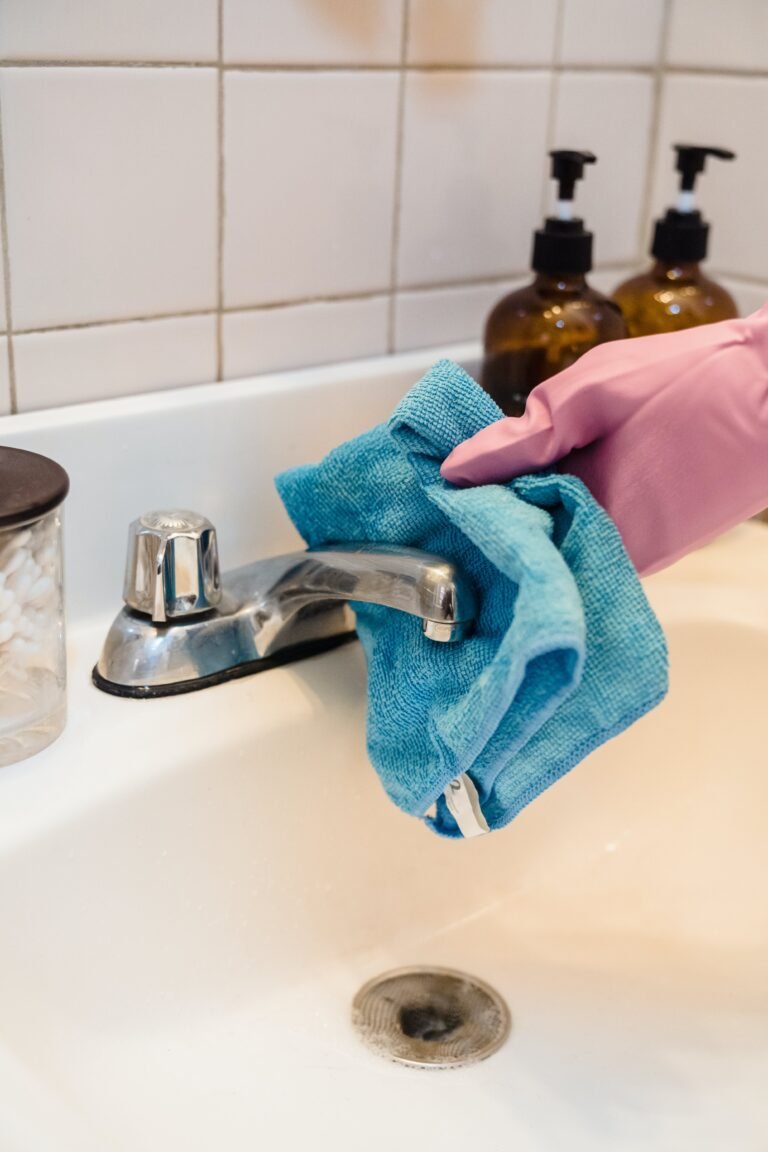
The aerator is the small screened cap at the tip of a kitchen or bathroom faucet. When it scales up, the stream sputters or sprays off to one side.
- Put a rag in the sink so nothing falls down the drain.
- Unscrew the aerator counterclockwise by hand. If it’s tight, wrap it in tape or a cloth before using pliers. Some faucets have a recessed aerator that needs a small aerator key, usually supplied by the manufacturer.
- Take a photo of the parts before you separate them so they go back in the same order.
- Rinse out loose debris, then soak the plastic insert in a 1:1 vinegar and water mix for 15 to 30 minutes.
- Brush the screen gently with a soft toothbrush, rinse, reassemble, and screw it back on hand-tight.
- Run hot and cold water for about a minute to flush out loosened debris.
Health Canada recommends checking aerators for debris monthly and cleaning them every six months, or after construction work that affects your water service, because the screens catch debris and can trap lead particles.
What not to use
- Scouring pads, steel wool or stiff brushes on the finish
- Bleach-based or “all-purpose bathroom” cleaners on fixtures (Delta specifically lists these to avoid)
- Toilet bowl cleaners, rust or tarnish removers, or polishes
- Strong acid descalers on finishes the maker hasn’t approved them for
- Any combination of cleaners. One product at a time, rinsed off before the next.
How often to clean shower heads and aerators
There’s no single schedule. In hard water, a quick nozzle rub every week or two keeps scale from setting, and a soak is worth doing whenever the spray starts to scatter. Wiping the shower head dry after use, which Delta suggests, helps slow buildup. Aerators can follow Health Canada’s every-six-months guideline, or sooner if the stream changes.
The same minerals that clog nozzles also leave white film on glass and tile. Our guides to removing hard water stains from glass shower doors and cleaning grout without damaging it cover the rest of the shower, and if you just need the bathroom guest-ready fast, start with our quick bathroom cleaning routine.
When to call a plumber or replace the head
Cleaning won’t fix everything. Call a plumber if the shower arm feels loose in the wall, the connection keeps leaking after new thread tape, or the nut is corroded tight and won’t turn without force. Replace the shower head if nozzles are torn, the face is cracked, or the finish is flaking.
Keeping it from coming back
Scale builds slowly, so a little routine attention beats an occasional battle. If keeping up with bathrooms is the part that keeps slipping, recurring house cleaning keeps the regular wipe-downs on schedule, and a deep cleaning is a good reset before holiday guests arrive. You can check your price and book online.
Comments are closed