

How to Clean an Oven and Racks Before Holiday Cooking
The safest way to clean most ovens is a slow one: wipe out loose debris, spread a paste of baking soda and water over the dirty surfaces, let it sit overnight, then scrape and wipe it away. Soak the racks separately. If your oven has a self-clean cycle, it can do the heavy lifting, but only after you prepare the oven properly and open a window. A week or two before you start holiday cooking is a good time to do it, so the first roast doesn’t fill the house with smoke from last year’s spills.
First, check what kind of oven you have
Take a minute with the owner’s manual (or the model number and the manufacturer’s website) before you start. It tells you three things that change the method:
- Whether the oven has a self-clean or steam-clean setting. These ovens have interiors designed for those cycles, and manufacturers often warn against using commercial oven cleaner on them.
- What the racks are made of. Some gray, porcelain-coated racks are designed to stay in during self-clean. Shiny chrome-finish racks usually are not.
- Anything you shouldn’t touch. Most manuals tell you not to clean or rub the door gasket, the woven seal around the door opening, because it keeps heat in.
What you’ll need
- Baking soda and water
- A small bowl and a silicone spatula or old paintbrush for spreading paste
- A plastic scraper or old plastic card
- Non-scratch scrub pads and microfiber cloths
- Dish soap
- Rubber gloves
- A razor scraper (for the glass door only)
How to clean an oven with baking soda
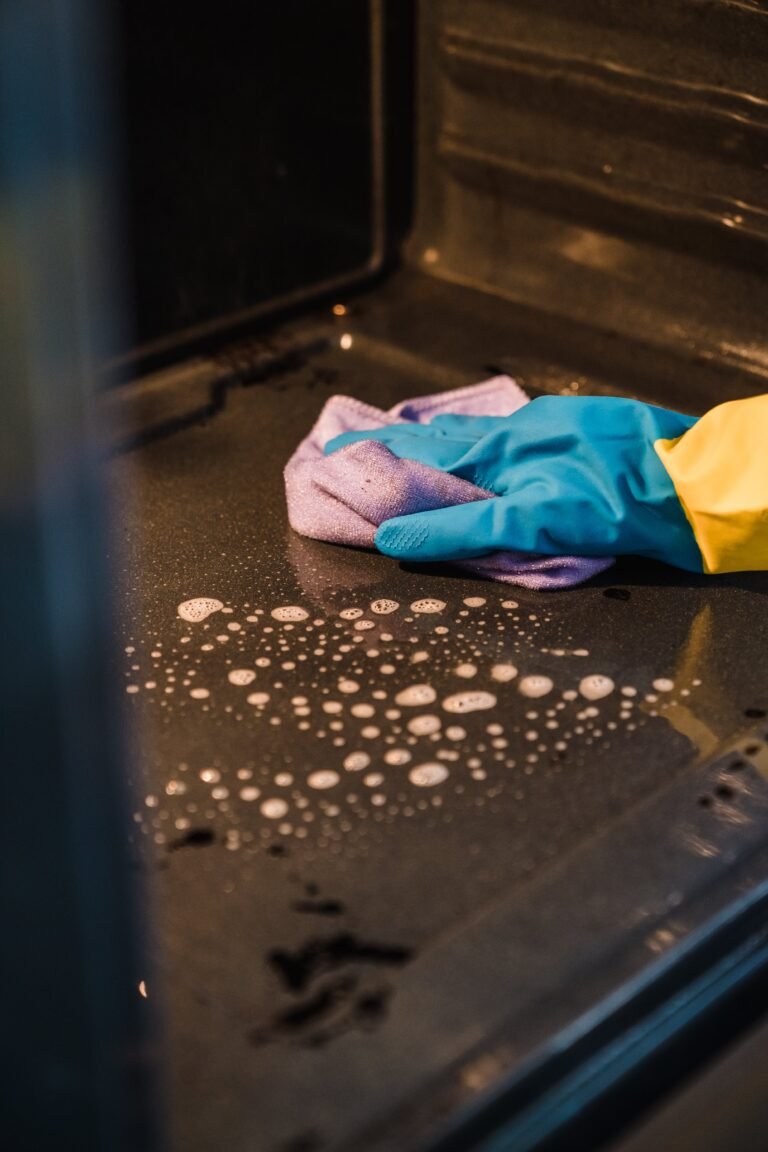
This method takes little effort but needs time, so start it in the evening and finish the next morning.
- Make sure the oven is off and completely cool. Take out the racks, any thermometer, and pans.
- Remove loose debris. Brush or vacuum out crumbs and flakes of burnt food. Scrape off anything raised with a plastic scraper.
- Mix the paste. Stir about half a cup of baking soda with a few tablespoons of water until it’s like frosting: thick enough to stay on a vertical wall.
- Coat the dirty areas. Spread the paste over the oven floor, the walls and the inside of the door. Keep it off heating elements, the fan cover, and the door gasket. Brown, greasy spots should be well covered.
- Let it sit for at least 8 hours or overnight. The paste softens baked-on grease so it lifts instead of smearing.
- Scrape, then wipe. Use the plastic scraper to lift the paste and grime, then a damp microfiber cloth to remove the rest. Rinse the cloth often. A non-scratch pad helps on stubborn spots.
- Do a final wipe with plain water until no white film remains, and leave the door open for a while to let it dry.
The glass door
Cover the inside of the glass with the same paste and give it 20 to 30 minutes. Wipe it off, then shave away any remaining baked spots with a razor scraper held nearly flat against the glass. Use the razor on the glass only, never on enamel walls or painted trim. Grime trapped between the panes of a double-glass door usually means taking the door apart; check your manual or leave that to an appliance technician.
How to clean oven racks
Racks are easiest to clean by soaking, not scrubbing.
- Lay an old towel in the bottom of a bathtub or utility sink to protect the surface from scratches.
- Set the racks on the towel and fill with enough hot water to cover them. Add a generous squeeze of dish soap.
- Soak for several hours, or overnight for heavy buildup.
- Scrub the bars with a non-scratch pad or a stiff brush, paying attention to the joints where grease collects.
- Rinse well, dry completely, and put them back.
If the racks stick when you slide them afterward, a very thin wipe of cooking oil on the side rails helps. Check your manual first, since some manufacturers recommend their own product.
Using the self-clean cycle safely
A self-clean cycle heats the oven high enough to burn residue down to ash. It works, but it produces smoke and odor, and the oven stays locked for hours. To use it well:
- Wipe up loose spills and grease first. Heavy spills are what create most of the smoke.
- Remove racks unless your manual says they can stay in. Racks not designed for the cycle can discolor and stop sliding smoothly.
- Don’t use commercial oven cleaner or foil liners. Manufacturers warn that cleaner residue can damage a self-cleaning oven’s interior, and foil on the oven floor can block airflow.
- Ventilate. Open a window, run the range hood, or both.
- Move pet birds away. Some birds are extremely sensitive to self-clean fumes. Keep them in a well-ventilated room far from the kitchen while the cycle runs.
- Protect nearby cabinets. The cycle’s heat can damage cabinet finishes, especially thermofoil and laminate doors. Cabinet makers recommend opening or removing the doors and drawers right next to the oven before the cycle starts. Our guide to cleaning greasy kitchen cabinets covers the rest of their care.
- Plan the timing. Run it on a day you’ll be home, and not right before you need the oven. Once it cools, wipe out the ash with a damp cloth.
About commercial oven cleaners
Heavy-duty oven cleaners work quickly on standard (non-self-cleaning) ovens, but many are caustic. If you use one, follow the label exactly: wear gloves and eye protection, ventilate the room, keep it off heating elements, the gasket and any aluminum, and never combine it with other cleaners. For a self-cleaning or steam-cleaning oven, follow your manual instead.
Keep it from getting this bad again
- Set a sheet pan on the rack below anything likely to bubble over, like pies, casseroles and roasts.
- Wipe fresh spills once the oven has cooled, before they bake on during the next use.
- Give the door glass a quick wipe every few weeks during heavy cooking season.
When the whole kitchen needs help
An oven is one job; getting the house ready for holiday guests is many. If you’d rather spend that time cooking, a deep cleaning covers far more ground than a routine visit. Not sure which one you need? Our guide to standard cleaning vs. deep cleaning explains the difference. Suddenly Clean serves homes throughout East County and surrounding San Diego communities, and you can see your exact price on our booking page.
Comments are closed