

How to Clean Greasy Kitchen Cabinets Without Damaging the Finish
The safest way to clean greasy kitchen cabinets is warm water with a little mild dish soap, a soft microfiber cloth wrung out until it’s barely damp, and a dry cloth right behind it. That handles most kitchen grease on wood, painted and laminate cabinets without harming the finish. The finish is the thing to protect: cabinet doors don’t usually wear out from grease, they wear out from scrubbing, harsh products and water left sitting on them.
Check your cabinet finish first
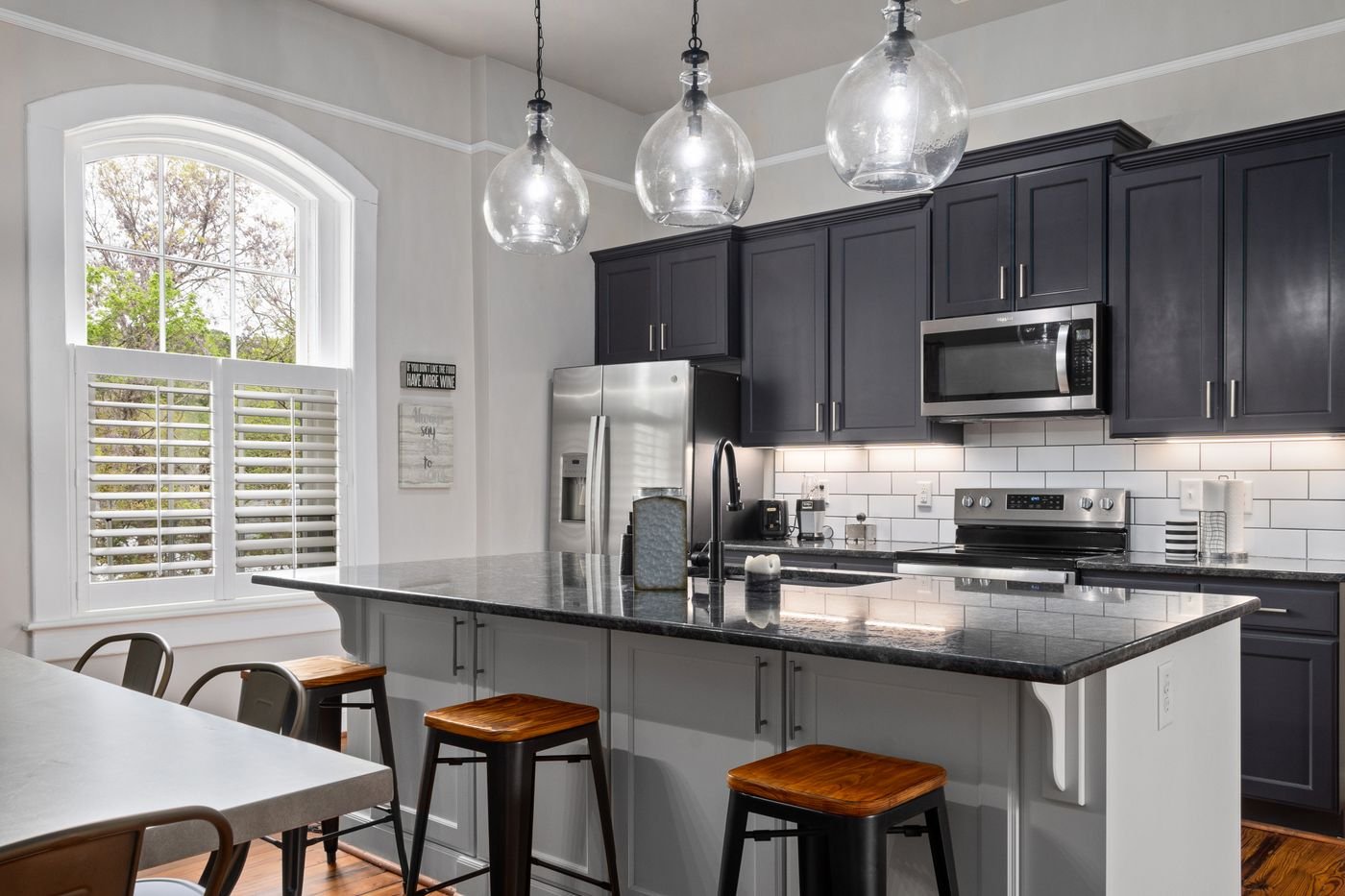
Most kitchen cabinets fall into one of three groups, and each tolerates slightly different things:
- Stained or natural wood with a clear protective topcoat. Sensitive to standing water and to wax or silicone polish building up on the surface.
- Painted wood or MDF. Sensitive to anything abrasive, which can dull the sheen or wear through to the primer on edges.
- Thermofoil, laminate or melamine: a smooth, plastic-like skin over a pressed-wood core. Sensitive to heat, harsh solvents and abrasives, and the edges can start to peel if water or solvent works under them.
If you still have the care sheet from your cabinet maker, follow it. Manufacturers don’t all agree on what’s acceptable, and their instructions also protect your warranty. The method below sits inside what the major cabinet makers recommend for routine cleaning.
What you’ll need
- Two or three soft microfiber cloths (one damp for washing, one dry for drying, a spare for rinsing)
- Mild liquid dish soap (the kind for hand-washing dishes, not dishwasher detergent)
- A bowl or bucket of warm water
- A soft-bristle toothbrush for door grooves and around hardware
- A step stool for upper cabinets
Skip the kitchen sponge and the dishcloth. They hold onto grit and food grease and can leave a film or fine scratches behind.
How to clean greasy kitchen cabinets, step by step
- Mix the solution. One cabinet maker’s guideline is about one part dish soap to twenty parts warm water, which works out to a little over three tablespoons in a quart. More soap doesn’t clean better; it just leaves residue that attracts the next layer of grease.
- Test a hidden spot. Wipe the inside edge of a door, let it dry and check that the color and sheen look unchanged.
- Start at the top and near the stove. Grease settles heaviest on the doors beside and above the cooktop and on the cabinet tops. Work from the top down so drips land on areas you haven’t cleaned yet.
- Wash a small area at a time. Dip the cloth, wring it until it’s only damp, and wipe one door or drawer front. Follow the direction of the wood grain on wood cabinets.
- Let the soap work on tacky spots. Where the surface feels sticky, hold the damp cloth against it for about a minute, then wipe. Warmth and time loosen grease better than pressure does.
- Get the grooves. Run the toothbrush, lightly dampened with the same solution, along the inside edges of shaker or raised-panel doors where grease and dust collect.
- Rinse. Wipe the same area with a second cloth dampened in plain water to lift the soap.
- Dry right away. Go over every surface with a dry microfiber cloth before moving on. Water left in seams and along edges is what causes swelling, white marks and peeling over time.
When dish soap isn’t enough
Old, layered grease that has turned dark and gummy may take a few passes. Repeat the soap-and-dwell step rather than scrubbing harder; each pass softens the next layer. If it still won’t budge:
- Give it more time: a longer dwell with the same mix and a fresh cloth, then rinse and dry well.
- Consider a diluted all-purpose cleaner or degreaser, but only if your cabinet maker allows it. Some manufacturers approve specific diluted degreasers for their finishes; others say to use nothing but mild dish soap. Dilute it, test it on a hidden spot, keep the dwell short and rinse thoroughly.
- On sealed wood, some manufacturers approve an oil-based wood soap that contains no wax or silicone. Others don’t. Check yours before switching.
Never mix cleaning products, including “boosting” dish soap with another cleaner. If a finish is already flaking, peeling or sticky even after cleaning, the problem is the finish itself, and more cleaning will make it worse.
Don’t forget the handles, edges and tops
The spots people miss are the ones that collect the most grease:
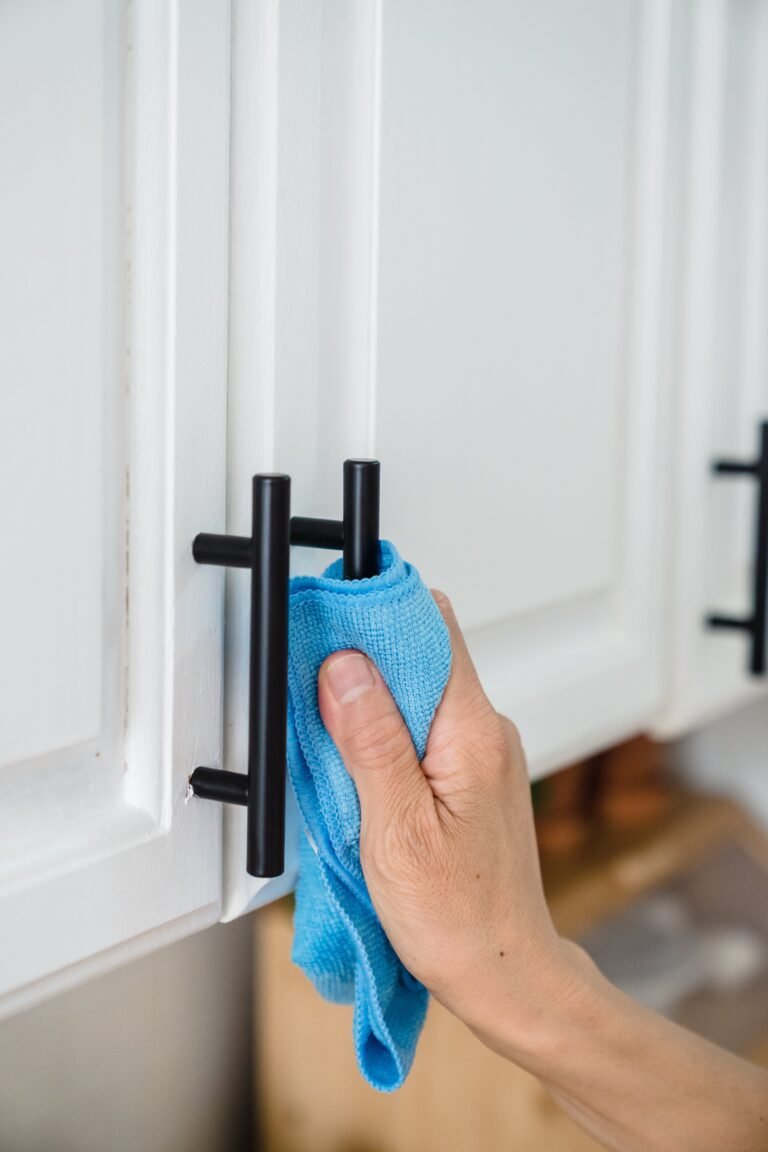
- Knobs and pulls. Every hand that touches them adds a little oil. Wash with the soap solution, dry, then buff with a dry cloth. Skip brass or silver polishes, which cabinet makers warn against.
- The area around each handle. Use the toothbrush where the pull meets the door.
- Bottom edges of upper doors and top edges of drawer fronts. Steam and cooking vapor rise and settle here.
- Cabinet tops. If your uppers don’t reach the ceiling, the tops are often coated in a mix of dust and grease. Lay down a dry cloth first to catch loose dust, then wash.
- The sink base. Wipe drips and water marks under the sink and beside the dishwasher promptly, and don’t hang damp dish towels over the door. Moisture there causes lasting damage.
What to avoid on kitchen cabinets
- Abrasive powders, scouring pads, steel wool and melamine foam erasers, all of which can scuff or dull a finish
- Undiluted ammonia or bleach, and harsh solvents such as acetone or paint thinner
- Oven cleaner anywhere on a cabinet
- Silicone sprays and wax polishes, which build up into a hazy, sticky film that traps more grease
- Paper towels on high-gloss surfaces, which can leave fine scratches
- Spraying cleaner straight onto the cabinet; put it on the cloth so it doesn’t run into seams
Heat matters too. Thermofoil and laminate doors can warp or peel from heat, so pull toasters and coffee makers out from under the uppers when they’re running. If you run a self-cleaning oven cycle, cabinet makers advise opening or removing the nearby doors and drawers first. Our guide to cleaning an oven before holiday cooking covers the self-clean cycle in more detail.
Keeping grease from building back up
Run the range hood every time you cook, not just when something smokes, and keep its filter clean so it can actually pull grease out of the air. Our guide to cleaning a range hood filter walks through that. A quick wipe of the doors beside the stove once a week, with a damp microfiber cloth and a dry one behind it, keeps grease from ever reaching the sticky stage. If you’re hosting this season, do a full cabinet wipe-down a week or two before the big cooking days, then a quick touch-up afterward.
When to bring in help
Cabinet faces are a slow, detail-heavy job, especially in a large kitchen. Our recurring cleaning includes spot-cleaning cabinet fronts on every visit, and a deep cleaning includes a full wipe-down of cabinet and drawer faces. If you’re moving, our move-in/move-out cleaning covers cabinets inside and out. Damaged finishes, peeling thermofoil or worn paint are a job for a cabinet refinisher, not a cleaner.
Comments are closed