

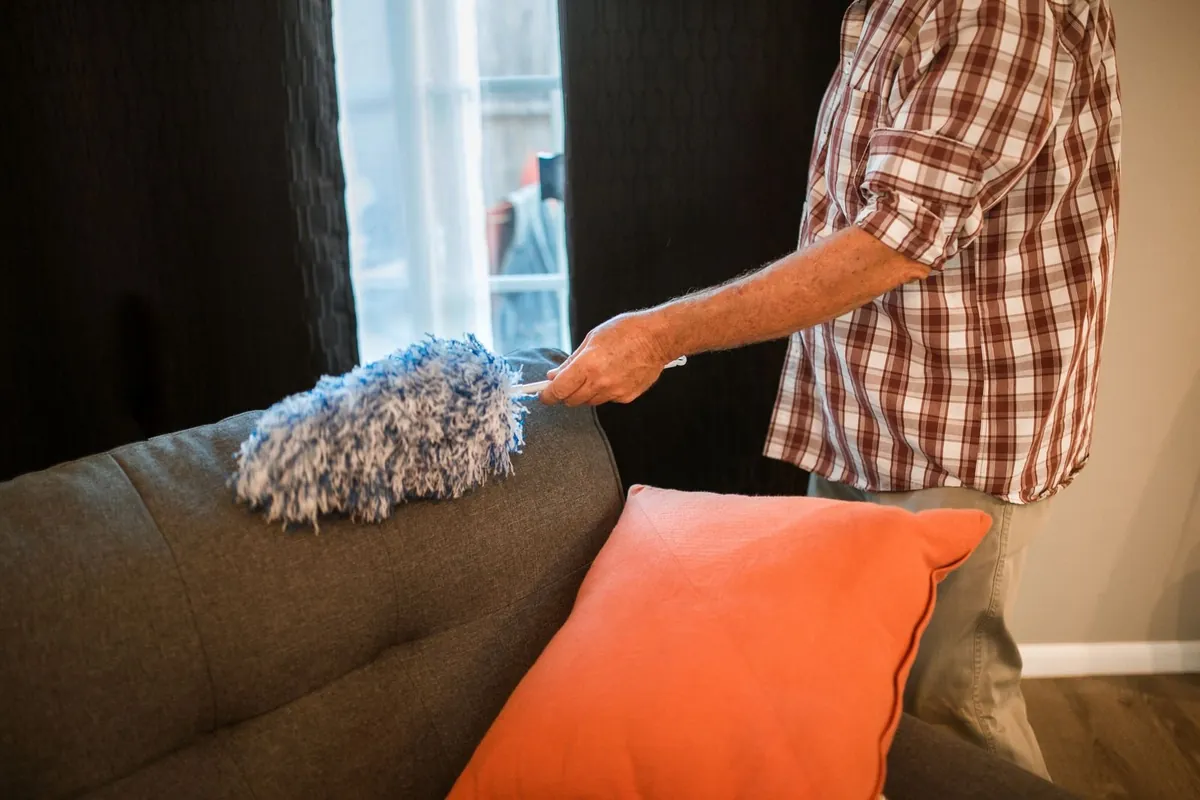
Why is my house so dusty? In East County, the short answer is dry air, dry ground and wind. Most of the year’s rain falls between November and March, Santa Ana winds can lift dust and soil into the air, and every open door, window and gap lets some of it in. Inside, daily life adds its own particles. You cannot stop dust entirely, but you can cut how much gets in, catch more of it in your filter, and dust in a way that removes it instead of moving it around.
Why do East County homes get dusty so fast?
Inland San Diego has a long dry season. According to the National Weather Service’s climate study of San Diego, about 85 percent of the year’s rain falls from November through March and only about 10 percent from May through October. With little rain to settle it, dust from dry soil, roads and yards stays loose and easily blown indoors.
Then there is the wind. The same NWS study describes Santa Ana winds as warm, dry winds from the east or northeast, strongest through and below passes and canyons, and most common in the cooler months. It notes they bring very low humidity, and records a 1963 event when El Cajon measured 12 percent relative humidity. Dry air and gusty wind together are what move dust.
Do Santa Ana winds make your house dustier?
They can. The South Coast Air Quality Management District, the air agency for the counties north of us, has issued windblown dust advisories explaining that gusty Santa Ana winds can lift dust and soil into the air. That dust settles on patios, window sills and screens, and some of it comes inside on the breeze and on shoes.
The same advisory has practical advice for windy days: keep windows and doors closed, use air conditioning or an air purifier, and avoid swamp coolers and whole-house fans, which pull outside air in. If you rely on a whole-house fan in the evenings, skip it on high-wind days.
Where does dust get into the house?

Outdoor air enters through open windows and doors and through small cracks in walls and foundations, according to the U.S. Environmental Protection Agency, carrying road dust, pollen, smoke and soil. The EPA also lists sources that start indoors: cooking, candles and fireplaces, pet dander, and settled dust that walking, cleaning and vacuuming stir back into the air. If you have pets, our guide to keeping pet hair under control covers the hair and dander side; if you use a fireplace or wood stove, our guide on how to clean fireplace glass covers the soot and film it leaves on the glass.
In practice, dust shows up first in the places closest to those entry points and air paths:
- Window sills and sliding door and window tracks, where wind pushes grit against the frame
- Window screens and blinds, which act like filters for whatever blows in
- Supply vents and return grilles, where the air system moves dust around the house
- Ceiling fan blades and the tops of shelves and door frames, where nobody looks
- Entry floors and rugs, where shoes drop what they picked up outside
How do you reduce dust in your house?
Reduce dust in three ways: keep more of it outside, catch more of it in your air system, and remove what settles before it gets kicked back up. Closing up on windy days, upgrading and changing your HVAC filter, using doormats, and dusting top to bottom with a damp microfiber cloth make the biggest difference.
Keep it out
- Close up on wind days. Shut windows and doors when the forecast calls for Santa Ana winds, and check AirNow.gov, which the EPA points to for local air quality.
- Seal the gaps. ENERGY STAR lists weather stripping on doors and caulking around windows as simple air-sealing fixes. Their stated aim is comfort and energy savings, but the same gaps are where outside air gets in.
- Stop it at the door. Use a mat outside and another inside each entry, shake them out often, and take shoes off at the door if your household is willing.
- Clean the screens and tracks after windy stretches. A soft brush and a low-pressure rinse clear screens without damaging the mesh.
Catch it in the air
- Upgrade the HVAC filter if your system allows. The EPA suggests a MERV 13 filter, or the highest rating your system’s fan and filter slot can handle. Check your HVAC manual or ask an HVAC professional first, and make sure the filter is seated correctly.
- Run the fan. The system only filters while the fan is running. The EPA notes that many systems can run the fan without heating or cooling.
- Use the range hood. Cooking adds particles. The EPA recommends running a vented range hood while you cook and for 10 to 20 minutes afterward.
Remove what settles
- Dust damp, not dry. The EPA recommends dusting with a damp cloth. A lightly damp microfiber cloth traps dust instead of flicking it into the air.
- Vacuum with a HEPA filter. The EPA suggests vacuuming carpets and upholstered furniture at least weekly, ideally with a HEPA-filter vacuum. On a fabric sofa, our guide to cleaning a fabric couch covers the vacuum-and-brush routine.
- Keep humidity in range. The EPA advises keeping indoor humidity below 60 percent, ideally 30 to 50 percent. In our dry season that is rarely the problem, but it matters in bathrooms and after rain.
What is the best way to dust so it doesn’t just move around?
Work from the top of the room down and finish with the floor. Dust high surfaces first with a damp microfiber cloth, fold the cloth to a clean side often, and vacuum last so anything that falls gets picked up. Feather dusters and dry cloths mostly relocate dust into the air and onto lower surfaces.
- Start high. Ceiling fan blades, light fixtures, the tops of door frames and tall shelves.
- Do the windows next. Blinds first, then the sills, so anything that falls from the blinds gets wiped up.
- Then the middle. Furniture tops, shelves, picture frames, lamps and electronics (dry cloth only on screens and electronics, following the maker’s instructions). For wood tables and dressers, how to clean wood furniture explains what is safe on the finish.
- Then the low surfaces. Baseboards and vent covers and return grilles.
- Floors last. Vacuum, then mop hard floors.
Rinse or swap microfiber cloths as they load up. A cloth that is already gray pushes dust around rather than lifting it.
How often should you dust in a dry, windy climate?
Most homes do well with weekly dusting of the surfaces people see and use, and a monthly pass on high and low spots such as fan blades, vents and baseboards. After a Santa Ana wind event, give sills, tracks, screens and entry floors an extra cleaning. Homes with pets or open windows may need more.
The weekly rhythm also lines up with the EPA’s suggestion to vacuum at least once a week. If you cannot keep up with that on your own, the gap between visits is where recurring cleaning helps most, because dust never gets weeks to build up.
What should you clean after a windy day?
After a Santa Ana wind event, clean the places the wind loaded first: patios and entries, doormats, window and door tracks, sills, and your HVAC filter, then dust and vacuum the rooms that had windows open. Wait until the wind has died down so you are not cleaning twice, and work from the outside in:
- Sweep or rinse patios and entry walks so the dust is not tracked straight back in.
- Shake out doormats.
- Vacuum window and sliding door tracks, then wipe them with a damp cloth.
- Wipe window sills and the ledges right inside each door.
- Check your HVAC filter. If it looks gray and loaded, change it.
- Damp-dust and vacuum the rooms that had windows open.
Ash from a wildfire is a different job with its own safety steps, so treat it separately from ordinary wind-blown dust; our wildfire ash cleanup guide walks through it.
How Suddenly Clean handles dust
Our Vetted Cleaning Professionals work from the top of each room down, so dust from fans, shelves and sills lands on floors that are vacuumed and mopped last. Here is what our services cover, as listed on our service pages:
- Standard Cleaning (one-time or recurring): dusting of accessible furniture, surfaces and shelving, window sills, baseboards and reachable ceiling fans, plus vacuuming and mopping floors, at every visit.
- Deep Cleaning: everything above with more detail, including baseboards dusted and wiped, detailed cleaning of reachable ceiling fans, and vents, light fixtures, wall plates, doors and frames. It is a good reset after a dusty season.
- Not included: interior windows and tracks are an add-on, wood blinds and plantation shutters are a quoted add-on, and we do not clean metal or vertical blinds or move large furniture or appliances to clean behind them.
Our Vetted Cleaning Professionals are thoroughly vetted and held to Suddenly Clean’s service scope and standards. We are licensed and insured, and you see your exact flat-rate price online before you book.
Suddenly Clean serves homes throughout East County and surrounding San Diego communities. If your ZIP code is accepted, we currently service your area. You can check your ZIP and see your price on our booking page.