

How to Clean a Mirror Without Streaks (and Protect the Edges)
To clean a mirror without streaks, dust it first with a dry microfiber cloth, wipe it with a second cloth barely dampened with warm water (or an ammonia-free glass cleaner sprayed onto the cloth, not the glass), and buff it dry right away with a clean, dry microfiber. Keep liquid away from the edges. Cleaner that seeps behind the glass is what causes the dark, creeping “black edge” that no amount of cleaning will fix.
Mirror manufacturers are more cautious than most cleaning tips you’ll find online. The Glass Association of North America’s mirror bulletin on cleaning flat glass mirrors calls clean, warm water and a soft, lint-free cloth the safest cleaner, and it advises against commercial mirror cleaners that contain ammonia or vinegar. Here is how to get a clear, streak-free finish while protecting the mirror itself.
What you need
- Two or three clean microfiber cloths: one for dusting, one for washing, one for buffing dry. Wash them without fabric softener, which leaves a film that smears.
- Warm water in a small bowl or a spray bottle (you’ll spray the cloth, not the mirror).
- Optional: an ammonia-free glass cleaner. AGC, a major glass and mirror maker, lists standard glass cleaners containing alcohol as suitable for its household mirrors.
- Optional for large mirrors: a squeegee with a rubber blade. AGC’s guide rules out metal squeegees.
How do you clean a mirror without streaks?
Dust the mirror first, then wipe it with a microfiber cloth that’s barely damp with warm water, working from top to bottom. Buff it dry right away with a second dry cloth, finishing at the edges. Put any cleaner on the cloth, never on the mirror. Use very little product: most streaks are leftover residue.
- Dust first. Run a dry microfiber over the glass and the frame. Dust plus water turns into muddy smears, which is a common reason a “clean” mirror looks worse.
- Soften spots before wiping. Hold a warm, damp cloth against toothpaste flecks or dried splashes for 30 seconds to a minute, then wipe. Don’t scrape with a fingernail, a razor blade or the rough side of a sponge.
- Dampen the cloth, not the mirror. Wring the cloth until it’s barely damp. If you use glass cleaner, mist one or two sprays onto the cloth.
- Wipe top to bottom. Use overlapping horizontal passes, starting at the top, so you aren’t dragging dirt back across glass you’ve already cleaned.
- Buff dry immediately. Switch to the dry cloth before the water evaporates. Finish by drying the edges and corners, where moisture likes to sit.
- Check at an angle. Look at the mirror from the side, in good light. Buff out any haze with the dry cloth instead of adding more cleaner.
Why does my mirror still streak?
Streaks are almost always residue. Too much cleaner, a cloth carrying fabric softener or grime, or water left to air-dry will leave a film or spots. The fix is less product, a fresh cloth and buffing dry before the surface dries on its own. Plain warm water often streaks less than a heavy spray.
- Too much product. More cleaner means more to remove. Start with water and add cleaner only for greasy film.
- A dirty or treated cloth. A cloth that has wiped a counter or come out of a dryer sheet load will smear. Use a clean one for every mirror session.
- Paper towels. They shed lint and tend to push residue around rather than lift it.
- Letting it air-dry. Water left on glass dries into spots, especially with hard tap water. Always finish with a dry buff.
- Heat and direct sun. A warm mirror in afternoon sun dries the cleaner before you can buff it. Clean it when it’s out of direct light.
Can you use vinegar or ammonia on a mirror?
Mirror makers say no. The Glass Association of North America advises against mirror cleaners containing ammonia or vinegar, and Bobrick’s mirror care bulletin (revised July 2024) lists ammonia, vinegar, acid and alkali cleaners as prohibited because they can attack the mirror’s edges and reflective backing. Warm water or an ammonia-free glass cleaner is the safer choice.
AGC’s household mirror guide adds a longer list of things to keep off a mirror: anti-limescale bathroom products, chlorine, strong acids and alkaline detergents, abrasive cleansers, steel wool, razor blades and melamine “magic eraser” sponges. Those can scratch the glass or damage the edges and backing. As always, never mix cleaning products, and keep the room ventilated when you use any spray.
What causes black edges on a mirror, and can you fix it?
Black edge is the mirror’s reflective backing corroding where moisture or cleaner reaches it. It starts at the edges or corners and creeps inward as dark spots or a gray band. AGC’s guide warns that many detergents left on the edge can cause it. It can’t be cleaned off, so prevention matters.
To protect the edges:
- Spray the cloth, not the mirror, so cleaner doesn’t run down the glass and pool at the bottom.
- Dry the edges and any joints last and thoroughly. Bobrick and the Glass Association both call for edges and joints to be completely dry after cleaning.
- If the bottom of a bathroom mirror sits on a backsplash or ledge, wipe that ledge dry after you clean the sink so water doesn’t sit against the edge.
- Run the bathroom exhaust fan during and after showers to cut the humidity in the room. A dusty fan cover moves less air; our guide to cleaning vents, registers and bathroom fan covers shows how to clean it.
If black edge has already appeared, the spots are in the backing, not on the surface, so no cleaner will remove them. Replacing the mirror or having it re-silvered is work for a glass shop.
How do you get toothpaste and hairspray off a bathroom mirror?
Soften the spots first: press a warm, damp microfiber against them for 30 to 60 seconds, then wipe. For the sticky haze hairspray leaves, mist an ammonia-free, alcohol-based glass cleaner onto the cloth and wipe, then buff dry. Repeat a gentle pass rather than scrubbing, which risks scratches.
Bathroom mirrors take the most splatter, so they’re worth a quick buff whenever you clean the sink. Our guide to cleaning a bathroom sink and vanity covers the rest of that area. If you’re fighting mineral spots on a glass shower door, that’s a different job: our shower glass hard water guide is written for clear shower glass, and its stronger treatments aren’t meant for mirrors.
Lighted, framed, antique and mirrored-door mirrors
Lighted, LED and anti-fog mirrors
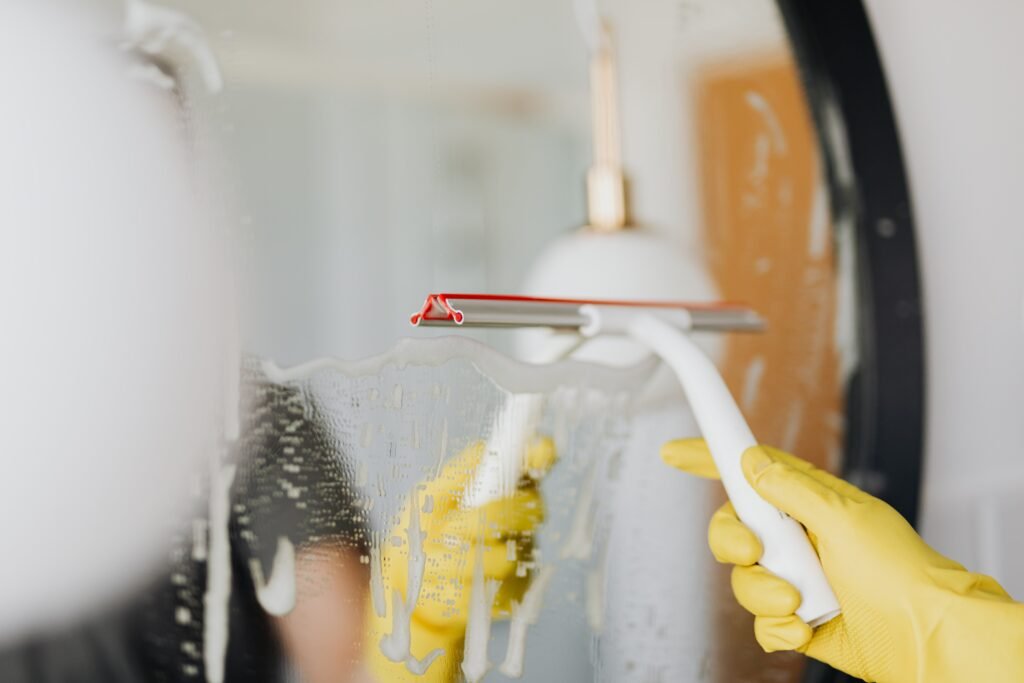
Switch the mirror off first and follow the manufacturer’s care sheet. Bobrick’s bulletin warns that liquid applied directly to an LED mirror can wick between the layers at the edge, so use only warm water or a mild cleaner on the cloth, and no ammonia or vinegar products. Keep moisture away from switches and touch sensors.
Framed mirrors
Wood, painted and gilded frames don’t like water. Dust the frame with a dry cloth, and when you wash the glass, fold the damp cloth so you can wipe right up to the frame without soaking it.
Antique and older mirrors
Older backings are often already fragile. Our caution: use only a barely damp cloth with water, light pressure and a thorough dry. Cloudy patches or dark spots on an antique mirror are usually in the backing and won’t wipe off.
Large wall mirrors and mirrored closet doors
A rubber-bladed squeegee makes big panels faster. Keep the solution light, pull the squeegee in overlapping strokes, and wipe the blade after each pass. Where two panels meet, the Glass Association advises wiping along the joint rather than across both faces at once, and drying the joint well.
How often should you clean mirrors?
Our rule of thumb: clean bathroom mirrors weekly, since they collect toothpaste, hairspray and water spots fastest, and give them a quick dry buff in between when they look spotted. Mirrors in bedrooms, hallways and entries usually need cleaning every couple of weeks, or whenever fingerprints show. Dust them more often if your home gets dusty quickly.
When mirrors are part of a bigger clean
Mirrors are on every Suddenly Clean checklist. Our recurring house cleaning includes mirrors cleaned streak-free and glass surfaces wiped. Our deep cleaning adds polishing mirrors and fixtures, and Move-In/Move-Out Cleaning includes mirrors and fixtures throughout the home. Our Vetted Cleaning Professionals work the way this guide describes: cleaner on the cloth, not the glass, and edges dried last. Interior windows aren’t part of the standard recurring scope, but you can add them when you need them. We don’t repair, replace or re-silver mirrors.
Our Vetted Cleaning Professionals are thoroughly vetted and held to Suddenly Clean’s service scope and standards. We’re licensed and insured, and you can see your exact flat-rate price online before you book. Suddenly Clean serves homes throughout East County and surrounding San Diego communities. If your ZIP code is accepted, we currently service your area. You can check your ZIP code and price on our booking page.
Comments are closed