

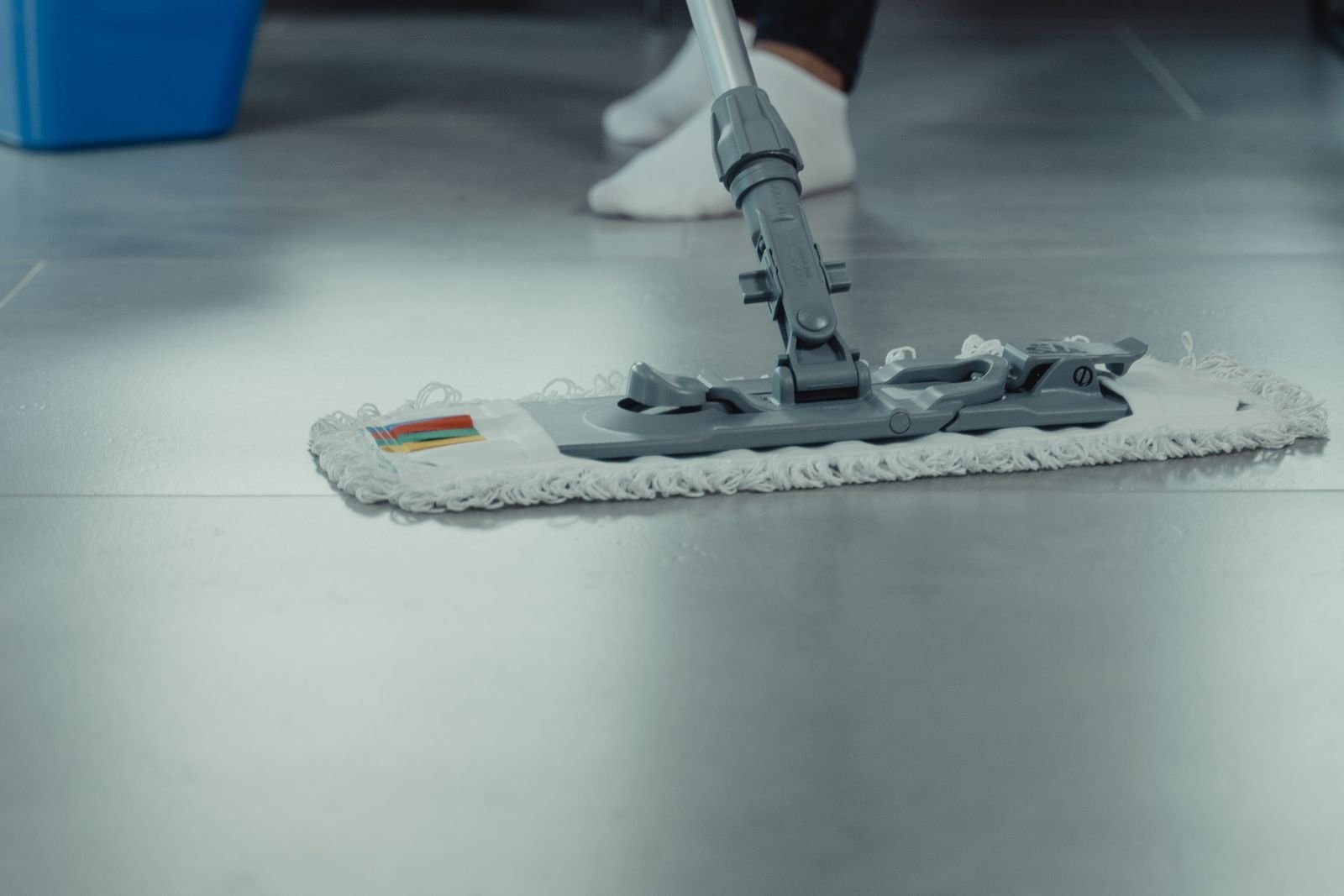
How to Clean Tile Floors: Ceramic, Porcelain and Natural Stone
The best way to clean tile floors is simple: remove the grit first, mop with warm water and a pH-neutral cleaner mixed at the label’s dilution, rinse with clean water, and dry the floor. Most dull, hazy or sticky tile isn’t dirty tile at all. It’s leftover cleaner, dirty mop water or the wrong product for the surface. Below is how we approach ceramic, porcelain and natural stone tile, what to avoid, and how to fix a floor that looks worse after you mop it.
What kind of tile floor do you have?
Tile looks alike from across the room, but the surfaces don’t all tolerate the same cleaners. Before you pick a product, figure out which of these you’re working with:
- Glazed ceramic: the most common kitchen and bathroom floor. The glaze is tough and doesn’t need sealing, so most of the work is about removing residue from the surface and the grout.
- Porcelain: denser than ceramic and very stain resistant. Matte and textured porcelain is made with a slightly rough surface for slip resistance, which holds onto dirt. Polished porcelain is glossy and shows fine scratches, spots and haze more easily.
- Natural stone: marble, travertine, limestone, slate and similar. Marble, travertine and limestone are calcium-based and react with acids, so vinegar and lemon cleaners can dull or etch them. If you aren’t sure whether your floor is stone or a stone-look porcelain, treat it as stone until you know.
- Unglazed tile: quarry tile, terracotta and Saltillo. These are porous and usually sealed. Follow the installer’s or sealer manufacturer’s care directions, because the sealer is what you’re really cleaning.
What you’ll need
- A vacuum with a hard-floor setting (beater bar off) or a soft broom and dustpan
- A flat microfiber mop with at least two clean pads, or a sponge mop you can rinse often
- Two buckets: one for cleaning solution, one for clean rinse water
- A pH-neutral floor cleaner labeled for tile (or a neutral stone cleaner for natural stone)
- A soft-bristle scrub brush for textured tile and corners
- Old towels or a dry microfiber pad for drying
How do you clean tile floors, step by step?
Work in sections, from the far side of the room toward the doorway, so you never walk across the wet floor.
- Remove loose grit. Vacuum or sweep the whole floor, including along the baseboards and under the toe kicks. Sand and grit are abrasive, and mopping over them just pushes them into the grout lines. The Natural Stone Institute points out that grit is what scratches stone floors, and a vacuum with worn metal or plastic edges can scratch some stone too.
- Mix the cleaner at the label’s ratio. More cleaner is not better. Extra concentrate is what leaves a film that attracts dirt.
- Mop a small section. Wring the mop until it’s damp, not dripping. For heavily soiled spots, let the solution sit a few minutes before you wipe; Daltile’s care guide suggests about 3 to 5 minutes of dwell time in heavily soiled areas.
- Change the water or the pad often. Daltile’s guide is blunt about this: never mop with dirty water, because it just spreads the dirt across the whole floor. With a microfiber mop, swap to a clean pad when the one you’re using looks gray.
- Rinse with clean water. Go over each section again with a mop or pad wrung out in plain warm water. This is the step most people skip, and it’s the one that prevents haze.
- Dry the floor. Wipe with a dry microfiber pad or towels, or let a fan help. Drying prevents water spots and makes the floor safe to walk on sooner. Wet tile is slippery, so keep kids and pets out until it’s dry.
What should you never use on tile floors?
- Oil soaps and wax-based cleaners. Guidance from a Tile Council of North America standards manager on WhyTile.com warns that these leave a residue that attracts dirt. That’s often the source of a dingy, sticky floor.
- No-rinse cleaners left to dry. Daltile doesn’t recommend cleaners that skip rinsing, because the residue can reduce slip resistance.
- Bleach as a routine cleaner. Bleach and strong alkaline cleaners are hard to rinse away and can take several rinses to remove. Save them for specific problems on glazed tile, never for regular mopping.
- Vinegar, lemon or other acids on stone. They can dull or etch marble, travertine and limestone. Daltile also cautions against acid-based and solvent-based products on polished porcelain. Stone has its own rules; our guide to cleaning granite and quartz countertops covers the same acid problem on counters.
- Rust removers and some toilet bowl cleaners on the floor. Some contain hydrofluoric acid or other fluorine compounds, which can damage ceramic, glass and every type of stone. Wipe up drips right away.
- Scouring powders and steel wool. They can scratch stone and polished tile and wear down glossy glazes.
- Mixing cleaners. Never combine bleach with ammonia or acids, and don’t layer one product on top of another. Use one cleaner, rinse it off completely, and keep the room ventilated.
Dish soap is a gray area. The Natural Stone Institute lists a mild dishwashing liquid in warm water as an option for stone, while the WhyTile guidance discourages dish detergent because it’s hard to rinse completely. If you use it, use a few drops, not a squirt, and rinse well.
Why do my tile floors look hazy or feel sticky after mopping?
Almost always, it’s residue. Too much cleaner, a cleaner that was never rinsed off, or mop water that got dirty halfway through all leave a thin film that dries cloudy and catches footprints. The fix is to strip the film with plain water: mop with clean warm water, change it often, and dry each section. Two passes usually clear it. Then go back to a pH-neutral cleaner at the correct dilution and always rinse.
If the haze is white and spotty rather than a smeary film, it may be mineral spots from hard water. On glazed ceramic and porcelain, our guide to removing hard water stains around the house explains safe options. Don’t use acidic mineral removers on natural stone. And if a newly installed floor has had a haze since day one, it may be grout haze from installation, which is a question for the installer.
How do you clean textured or slip-resistant tile?
Textured and matte tile has tiny ridges that a flat mop glides over, so dirt builds up in the low spots and the floor looks gray even after mopping. Apply your cleaning solution, let it sit a few minutes, then scrub in two directions with a soft-bristle brush or a deck brush. Pick up the dirty solution with a damp mop, towels or a wet vacuum before it dries, then rinse and dry as usual. Skip wire brushes and harsh pads, which can wear the surface.
What about the grout lines?
Grout is more porous than the tile around it, so it holds onto the dirt your mop leaves behind. Regular rinsing keeps it from darkening, but once grout is stained it needs its own method. Our step-by-step guide to cleaning grout without damaging it covers matching the cleaner to the stain, what to avoid on colored grout, and when sealing helps.
How often should you clean tile floors?
For busy areas like kitchens and entryways, sweep or vacuum every day or two and mop weekly. The WhyTile guidance recommends sweeping daily and wiping with clean water at least weekly, or as needed. Bathrooms usually need a weekly mop as well. Wipe spills right away, and on stone, blot rather than wipe so the spill doesn’t spread. Entry mats inside and outside your doors cut down on the grit that dulls and scratches floors, which matters if your home sees a lot of tracked-in dust. Our guide to why houses get dusty covers where that dust comes from.
If you have wood or wood-look floors in other rooms, those need different care: see our guides to cleaning hardwood floors and cleaning laminate and vinyl plank floors.
How our Vetted Cleaning Professionals handle tile floors
Mopping hard floors is part of each of our main home services. With recurring house cleaning, floors are vacuumed and mopped room to room. A deep cleaning adds detail work like cleaning bathroom tile, grout and edges, and Move-In/Move-Out and apartment cleanings include mopping hard floors throughout the home. Our practice follows the same order described above: grit first, the right cleaner for the surface, clean water, and a dry floor at the end.
Our cleaning services don’t include sealing, regrouting, stripping old wax, or polishing and honing stone. That’s restoration work for a tile or stone specialist.
Suddenly Clean serves homes throughout East County and surrounding San Diego communities. If your ZIP code is accepted, we currently service your area. You can see your exact flat-rate price online before you book a cleaning.
When to call a tile or stone professional
- Stone that is dull, etched or scratched in patches. Etching is surface damage, not dirt, and usually needs professional honing or polishing.
- Grout that is cracked, crumbling or missing, or tiles that sound hollow or move underfoot.
- Stains in unsealed or porous tile that come back after cleaning.
- A haze that has been there since installation and doesn’t change with rinsing.
- Old wax or sealer buildup that needs stripping. Daltile recommends testing any sealer or adhesive remover in a small area first and following the manufacturer’s instructions.
For everything else, a clean mop, the right cleaner and a thorough rinse will keep tile floors looking good for years.
Comments are closed