


How to Clean a Range Hood Filter (and the Hood Itself)
Most range hood filters are metal, and a metal filter comes clean with a soak in hot, soapy water, a gentle scrub with a soft brush, a rinse, and a full dry before it goes back in. Many all-metal filters can also go through the dishwasher. The exception is the charcoal (carbon) filter found in hoods that recirculate air instead of venting outside: those can’t be washed and need to be replaced. Below is how to tell which kind you have, how to clean it without damaging it, and how often to do it.
First, figure out which filter you have

Pop the filter out (most release with a tab, latch or finger pull on the underside of the hood) and look at it. Your owner’s manual has the final word, but most hoods use one or more of these:
- Aluminum mesh filters: flat panels with layers of fine metal mesh. The most common type in home hoods. Washable.
- Stainless steel baffle filters: heavier panels made of angled, overlapping metal channels. Washable, and generally the easiest to get clean.
- Charcoal or carbon filters: found in non-ducted (recirculating) hoods, usually behind or alongside a metal grease filter. They look like a pad, cartridge or mesh holding dark granules. Not washable.
If your hood vents outside, you probably only have metal grease filters. If it blows air back into the kitchen, you likely have both a metal filter and a charcoal filter.
What you’ll need
- A sink, or a plastic tub big enough to lay the filter flat
- Regular liquid dish soap (a grease-cutting one works well)
- A soft nylon brush, such as a dish brush or an old soft toothbrush for corners
- Rubber gloves, since the water should be as hot as your tap allows
- A couple of old towels for drying
How to clean a metal range hood filter by hand
- Turn everything off and let it cool. Switch off the fan and light and make sure the cooktop and hood are cool to the touch. Some manufacturers, GE among them, say to switch off the circuit breaker before servicing any part of the hood. For anything beyond lifting the filter out, that’s the safe habit.
- Remove the filter and note how it sits. A quick phone photo saves guessing about which way it faces when you put it back.
- Fill the sink with very hot water and dish soap. Use enough water to submerge the filter completely. Swish the water to work up suds.
- Soak for 10 to 15 minutes. Hot water softens the grease so it releases from the mesh instead of smearing. Swish the filter around a few times while it soaks. A very heavy buildup may need a second round of fresh hot water.
- Brush gently. Work a soft brush over both sides, following the direction of the mesh or baffles. Let the soap do the work; scrubbing hard can bend aluminum mesh.
- Rinse with hot water. Run water through the filter from both sides until it runs clear and no suds remain.
- Shake it off and let it dry completely. Set it on a towel or stand it on edge in a dish rack. Put it back only when it’s fully dry.
Can range hood filters go in the dishwasher?
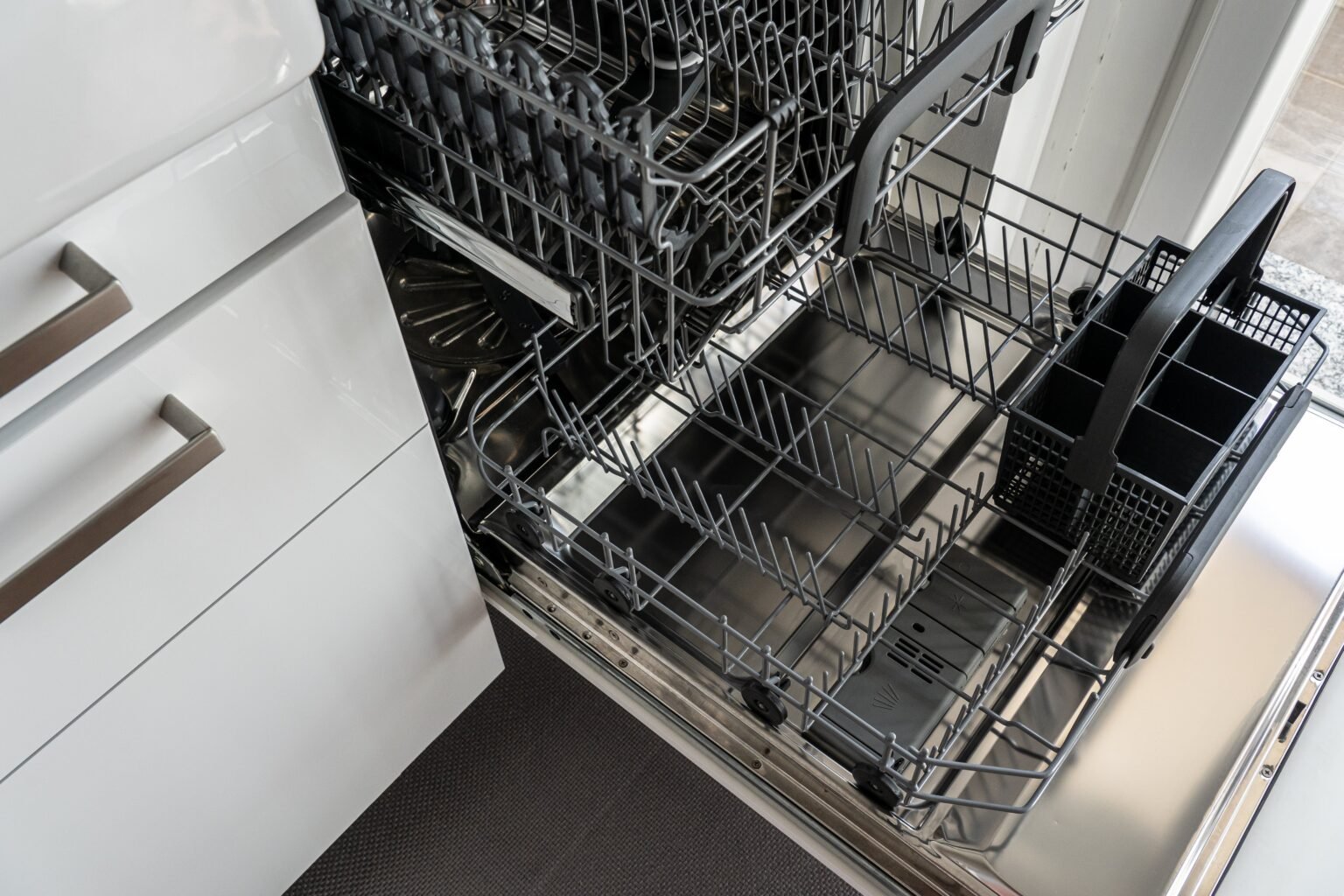
Often, yes, but check your manual first. Broan-NuTone says its all-metal filters can be washed in the dishwasher with a non-phosphate detergent, and Samsung says the same for the stainless steel baffle filters and grease tray on its hoods.
The trade-off is appearance. Aluminum filters can darken or discolor in the dishwasher, especially with phosphate detergents or hard water. Broan notes this doesn’t affect how the filter works, but it isn’t covered by warranty. If you want the filter to keep its original look, wash it by hand. Scrape loose globs of grease into the trash first so they don’t end up in your dishwasher filter.
What not to use on a hood filter
- Oven cleaner and abrasive cleaners. GE’s hood instructions say not to use them on grease filters. Heavy-duty oven cleaners are built for baked-on oven soil, and they can damage or discolor aluminum.
- Ammonia. GE also warns that ammonia and ammonia products will darken the metal.
- Steel wool and scouring pads. They scratch stainless steel and can tear aluminum mesh.
- Mixed cleaners. Never combine cleaning products, in the sink or on the hood. Some combinations release toxic gases. Hot water and dish soap are all a metal filter needs.
Charcoal filters: replace, don’t wash
Charcoal filters trap odors, not grease, and washing ruins them. Both Broan-NuTone and Samsung say their charcoal filters can’t be washed and must be replaced. Replacement intervals vary by manufacturer and by how much you cook: Broan suggests every three to six months, and Samsung says every six months to a year for its hoods. Some filters have an indicator that tells you when it’s time. Check your manual or the model number on the hood for the right replacement part.
Cleaning the rest of the range hood

A clean filter in a greasy hood won’t stay clean for long, so wipe the hood while the filter is drying.
- Underside and interior: Wipe the area around the filter opening and the fan housing you can reach with a soft cloth dipped in warm, soapy water and wrung out well. Don’t spray liquid up into the hood, near the light, or into the controls.
- Exterior: Use the same damp, soapy cloth. On stainless steel, wipe in the direction of the grain to avoid streaks and fine scratches. Samsung advises against abrasive pads and harsh cleaners, including chlorine-based ones, on its hood surfaces.
- Rinse and dry: Wipe again with a cloth dampened in plain water, then dry with a soft, dry towel so you don’t leave water spots.
The cabinet doors on either side of the hood collect the same airborne grease, but wood, painted and thermofoil finishes need a gentler approach than a metal filter. Our guide to cleaning greasy kitchen cabinets covers how to do it without dulling the finish.
How often to clean range hood filters
For metal grease filters, about once a month is a good baseline. GE recommends monthly or as needed, and Broan-NuTone suggests roughly monthly depending on use. Clean more often if you fry, sear or use a wok regularly. Signs it’s overdue: the filter feels sticky, grease is dripping from it, or you can’t see light through the mesh.
The weeks before the holidays are a good time to do it. A clean filter is ready for heavy roasting and frying, and you’re not pulling a greasy panel out of the hood while guests are arriving. If you’re working through the kitchen anyway, our guide on cleaning the oven and racks before holiday cooking covers the next job down.
When to call a professional
A filter that still won’t come clean after a couple of soaks, or one with bent or torn mesh, is usually cheaper to replace than to fight. Call an appliance technician if the fan is noisy, weak or not running, or if you see grease dripping from the duct or the inside of the hood housing. Ductwork and fan repairs are a job for that kind of specialist, not for a cleaning service.
If the hood is one item on a long pre-holiday list, a deep cleaning can take care of much of the rest of the house, and recurring cleaning keeps it there afterward. Suddenly Clean serves homes throughout East County and surrounding San Diego communities, and you can check your ZIP code and see your price on our booking page.
Comments are closed