

Move-Out Cleaning Checklist: Get Your Security Deposit Back in California
A good move-out cleaning checklist has one goal: return the rental to the same level of cleanliness it was in on the day you moved in. In California, that is the legal standard. A landlord can deduct only the cleaning needed to get the unit back to its move-in condition, and never for ordinary wear and tear. So the job is specific: empty the place, clean every room to its starting point, pay extra attention to the spots landlords check, and leave a record that you did.
Below you will find what the law says about cleaning charges, a printable room-by-room checklist, how to handle the problem areas, and how to decide whether to clean it yourself or book a move-out cleaning. This is general information, not legal advice. If you are in a dispute over a deposit, the California Attorney General’s guide to security deposits is a good place to start.
What can a California landlord charge for cleaning?
A California landlord can use your deposit only for the cleaning needed to return the unit to the level of cleanliness it had when your tenancy began. Ordinary wear and tear is excluded. The landlord also cannot require you to pay for professional carpet cleaning or other professional cleaning unless it is reasonably necessary to restore that move-in condition.
The rules are in California Civil Code section 1950.5. The parts that matter for cleaning:
- The move-in condition is the standard. Not spotless beyond that, and not cleaner than the unit was when you got the keys.
- No automatic professional cleaning fee. A 2024 amendment (AB 2801) bars a landlord from requiring a tenant to pay for professional carpet cleaning or other professional cleaning services unless they are reasonably necessary to return the unit to its move-in condition, exclusive of ordinary wear and tear.
- You can ask for a pre-move-out inspection. The landlord has to tell you in writing that you may request one. It happens no earlier than two weeks before your tenancy ends, you can be there, and afterward the landlord gives you an itemized list of the cleaning or repairs they plan to deduct for, so you have a chance to take care of them first.
- Deductions must be itemized and documented. Within 21 days after you move out, the landlord must send an itemized statement with copies of the bills, invoices or receipts for cleaning or repair charges (or, for work done by the landlord, a description of the work, the time spent and the hourly rate).
- Photos are part of the process. Since April 1, 2025, landlords must photograph the unit after you return possession and before any cleaning or repairs they deduct for, and include those photos with the itemized statement. For tenancies that began on or after July 1, 2025, they must also photograph the unit at move-in.
- Electronic refunds. Since January 1, 2026, if you paid rent or your deposit electronically, the landlord generally has to return the deposit electronically unless you both agree in writing to another method.
Two practical takeaways. First, find your move-in checklist and any move-in photos, because they define “as clean as when you moved in.” Second, request the pre-move-out inspection. It turns a guessing game into a written list.
How clean does a rental need to be to get your deposit back?
It needs to be as clean as it was when you moved in. Dirt, grease, soap scum, food residue, trash and debris you leave behind are cleaning issues a landlord can deduct for. Changes that come from normal living, such as faded paint or carpet worn thin in a hallway, are ordinary wear and tear and generally are not.
In practice, landlords look first at the places that show neglect in a photo: inside the oven and refrigerator, the stovetop and range hood, shower glass and grout, toilets, the insides of cabinets and closets, window tracks, baseboards and floors. Those are where this checklist puts the most detail.
When should you do the move-out cleaning?
Clean after everything is out and before your final walk-through or key handoff. Cleaning around boxes and furniture means cleaning twice. If you can, leave a day of buffer between the clean and the walk-through for touch-ups, and start slow jobs, like a self-cleaning oven cycle, a few days early so there is time to wipe out the ash.
If you requested a pre-move-out inspection, it happens up to two weeks before your tenancy ends, so you will have the landlord’s list in hand before the final clean. End-of-month dates are when most leases end, so if you plan to hire help, book as soon as you know your move-out date.
Your printable move-out cleaning checklist
Work through the rooms in this order, top to bottom in each room and from the back of the unit toward the front door, so you are not walking across finished floors. To print it, use your browser’s Print option (or save it as a PDF) and check items off as you go. If you would like to compare it with the scope our team works from, our cleaning checklists page has a downloadable Move-In/Move-Out checklist.
Before you start
- ☐ Everything moved out, including the last items under sinks and on closet shelves
- ☐ Move-in checklist, move-in photos and the landlord’s pre-move-out inspection list (if any) on hand
- ☐ Supplies ready: microfiber cloths, non-scratch scrub pad, soft brush, squeegee, dish soap, all-purpose cleaner, glass cleaner, a bathroom cleaner safe for your tile and fixtures, vacuum with crevice tool, mop, trash bags
- ☐ Lease checked for anything specific it requires at move-out
Kitchen
- ☐ Inside the oven, the oven door glass and the racks
- ☐ Stovetop, grates or glass top, knobs and the wall behind the range
- ☐ Range hood exterior and filter
- ☐ Microwave inside and out, including the turntable
- ☐ Refrigerator emptied, shelves and drawers washed, gaskets wiped, left as your landlord instructs (on, or off with the door propped open)
- ☐ Dishwasher filter rinsed, door edges and gasket wiped, left empty
- ☐ Inside every cabinet and drawer, including under the sink
- ☐ Cabinet fronts, handles and the tops of upper cabinets
- ☐ Backsplash and countertops
- ☐ Sink, faucet and garbage disposal splash guard
- ☐ Appliance exteriors
- ☐ Floor, including where the trash can stood
Bathrooms
- ☐ Shower walls, glass and door tracks free of soap scum and mineral film
- ☐ Tub, fixtures and drain cover
- ☐ Grout and caulk lines
- ☐ Toilet bowl, seat, hinges, base and the floor behind it
- ☐ Mirror and vanity top
- ☐ Inside the vanity, drawers and medicine cabinet
- ☐ Exhaust fan cover, light fixture and switch plates
- ☐ Towel bars and toilet paper holder
- ☐ Floor and baseboards
Bedrooms and closets
- ☐ Closet shelves, rods, tracks and floor
- ☐ Ceiling fan blades and light fixtures you can safely reach
- ☐ Vent covers
- ☐ Window sills, window tracks and blinds
- ☐ Reachable interior windows
- ☐ Doors, door frames, handles and switch plates
- ☐ Marks near light switches and doorways spot-cleaned (test a hidden spot first)
- ☐ Baseboards
- ☐ Carpet vacuumed, including edges, or hard floors mopped
Living areas, halls and entry
- ☐ Ceiling fans, light fixtures and vent covers
- ☐ Sliding door tracks, window sills and tracks
- ☐ Reachable interior windows and the inside of the sliding door glass
- ☐ Shared closets, doors, frames and switch plates
- ☐ Baseboards
- ☐ Floors, finishing at the front door
Laundry, patio and garage
- ☐ Laundry area: lint, dust and detergent drips cleaned up
- ☐ Patio or balcony swept, with personal items and trash removed
- ☐ Garage or storage space emptied and swept, if you had one
Final walk-through
- ☐ Every item on the landlord’s inspection list addressed
- ☐ Dated photos or a slow video of every room, inside the oven, fridge, cabinets and closets
- ☐ Receipts kept for any cleaning you paid for
- ☐ Keys returned the way your lease specifies
- ☐ Forwarding address (and, if you paid electronically, your refund details) given to the landlord in writing
Kitchen: oven, fridge, cabinets and grease
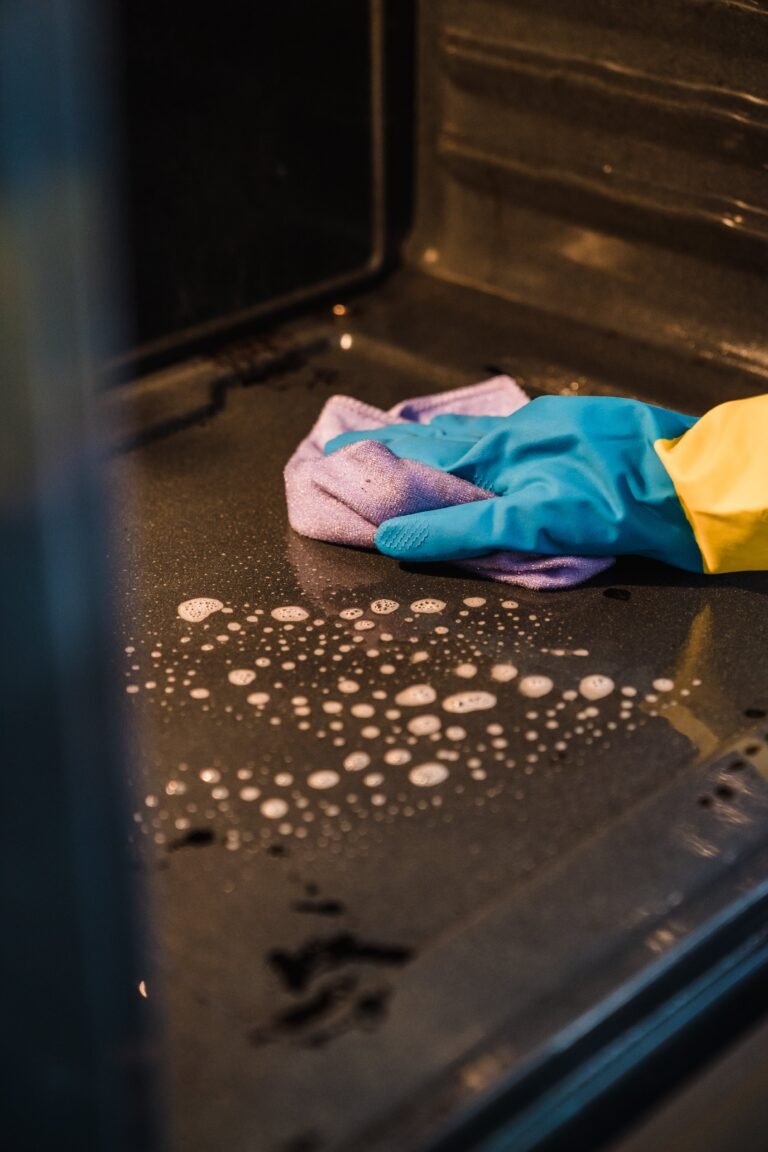
Kitchens collect grease and food residue in places you stop seeing after a year or two, and they are the room most likely to show up on an itemized statement. A few notes on the jobs that take the longest:
- The oven. Baked-on spills are easy to spot in a move-out photo. If you plan to run a self-clean cycle or use a heavy-duty cleaner, do it a few days before the final clean. Our oven and rack cleaning guide walks through each method and its safety notes.
- The refrigerator. Empty it completely, take out the shelves and drawers, wash them in warm soapy water and wipe the door gaskets. Our refrigerator cleaning guide covers the details, including odors.
- The dishwasher. Pull out the bottom rack, rinse the filter, wipe the door gasket and the bottom edge of the door, and leave it empty and dry. Our dishwasher cleaning guide walks through it.
- Grease near the stove. The range hood, its filter, the backsplash and the cabinet fronts closest to the stove build up a sticky film. Hot water with dish soap and a soft cloth handles most of it; give stubborn spots a few minutes of dwell time rather than scrubbing harder.
Bedrooms, living areas and the details everyone misses
Empty rooms show everything. Once the furniture is gone, the edges of the floor, the baseboards and the tops of door frames are suddenly visible. Dust from the top down: ceiling fans and light fixtures first, then vent covers, window sills and blinds, then baseboards, then floors. Our baseboard guide explains how to remove scuffs without taking paint off with them.
Sliding door and window tracks hold years of grit and are a common miss. Vacuum the loose debris first, then scrub and wipe; see how to clean sliding door and window tracks. When spot-cleaning walls, go gently and test a hidden area first, because scrubbing flat paint can leave a shiny patch that looks worse than the mark.
Check your lease for anything specific it asks for at move-out, such as carpet cleaning, and keep the receipt if you hire that out. Carpet shampooing or steam cleaning is separate specialist work.
Bathrooms: soap scum, mineral film and hidden spots

Bathrooms are judged on the details: haze on the shower glass, dark grout lines, a ring in the toilet, toothpaste on the mirror. Shower glass with hard water film is the slowest job, so start there and let the product dwell while you work on the vanity. Our guide to removing hard water stains from shower glass covers the methods that are safe for each surface. Skip acidic cleaners on natural stone, and clean inside the empty vanity and medicine cabinet, not just the fronts.
Use one product at a time and rinse between them. Never mix cleaners, especially bleach with ammonia or with acids such as vinegar, and run the exhaust fan or open a window in small bathrooms.
How do you document a move-out cleaning?
When you finish, walk through with your phone and take dated photos or a slow video of every room, including the inside of the oven, the refrigerator, cabinets and closets. Match the angles of any move-in photos. Keep receipts for cleaning you paid for, and check off each item on the landlord’s inspection list.
Then return the keys the way your lease specifies and give the landlord your forwarding address in writing so the itemized statement and any refund have somewhere to go. Your photos are your side of the record; since 2025 the landlord’s photos are part of theirs.
Should you clean it yourself or hire a move-out cleaning?
Doing it yourself makes sense when the unit is small, it was kept up during the lease, and you have a full day after the movers leave. Hiring help makes sense when you are short on time, the oven and bathrooms have years of buildup, or you are moving out of one home and into another the same week.
If you hire help, compare what is included rather than just the price. Ask whether the inside of the oven, the refrigerator, cabinets, drawers and closets are part of the job or extras, whether interior windows and tracks are covered, and what the provider does if something is missed. Providers differ: some include all of that in one flat move-out scope, others price rooms or appliances as add-ons.
How much does a move-out cleaning cost?
At Suddenly Clean, Move-In/Move-Out Cleaning starts at $400, our lowest price for the service, as of September 30, 2026. The price is a flat rate based on bedrooms, bathrooms and square footage, and the inside of the oven, refrigerator, cabinets and reachable interior windows are included rather than charged as add-ons.
Representative examples from our online booking system, as of September 30, 2026 (examples, not quotes):
- 2 bed / 1 bath, 1,000–1,499 sq ft: from $430
- 3 bed / 2 bath, 1,000–1,499 sq ft: from $470
- 4 bed / 3 bath, 2,000–2,499 sq ft: from $540
Homes with heavy buildup or unusually severe conditions take more work and can be priced higher; our booking system or our office confirms that before any extra work begins. For your exact flat-rate price, enter your home’s details on our booking page. For how prices compare across services and what moves them, see our guide to what house cleaning costs in San Diego.
How Suddenly Clean handles move-out cleaning
Our Move-In/Move-Out Cleaning is one complete scope for vacant or cleared homes, not a menu of add-ons. Our Vetted Cleaning Professionals clean every room top to bottom after your belongings are out, including:
- Inside the oven and refrigerator, the stovetop and range hood, and appliance exteriors
- Inside cabinets, drawers and closets, including shelves and rods
- Bathrooms: toilets, tubs, showers, mirrors, fixtures and vanities inside and out
- Baseboards, window sills and tracks, reachable interior windows, reachable vents, light fixtures and ceiling fans
- Doors, frames and switch plates, with spot-cleaning of walls near high-touch areas
- Carpets vacuumed and hard floors mopped throughout
It does not include the inside of the dishwasher, exterior windows, carpet cleaning, junk removal or repairs, and we do not move appliances or furniture, so the home should be empty before we arrive. You do not need to be there: we can coordinate access through a lockbox, gate code, or your landlord or property manager. Afterward we can provide a dated invoice or receipt showing the cleaning was completed. A cleaning receipt is not a guarantee about your deposit, and we cannot advise on lease or deposit matters. If you are leaving an apartment or condo, our apartment cleaning page explains how those are handled.
Every move-out cleaning is done by Vetted Cleaning Professionals, thoroughly vetted and held to Suddenly Clean’s service scope and standards. We are licensed and insured, and you see your exact flat-rate price online before you book.
Suddenly Clean serves homes throughout East County and surrounding San Diego communities. If your ZIP code is accepted, we currently service your area. You can check your ZIP code and see your price on our booking page. Whether you clean it yourself or bring in help, the goal is the same: a home that looks the way it did when you got the keys, and the records to show it.
Comments are closed