


How to Clean a Dishwasher: Filter, Spray Arms and Hard Water Film
To clean a dishwasher, pull out the bottom rack, remove and rinse the filter, clear the spray arm holes, wipe the door gasket and edges by hand, then run an empty hot cycle with a dishwasher cleaner or a cup of white vinegar. Most of the smell, grit and cloudy film people blame on the machine comes from a clogged filter and mineral buildup, and both take about half an hour to sort out.
It’s a good job to do before the holidays, when the dishwasher may run twice a day. Here’s the order we’d follow, plus what the manufacturers say about how often.
What you’ll need
- A soft brush (an old toothbrush works) and a non-scratch sponge
- Dish soap and warm water in the sink or a basin
- A paper clip, toothpick or tweezers for spray arm holes
- A microfiber cloth
- A dishwasher cleaner, or plain white vinegar and a glass measuring cup
- Your owner’s manual (or the model number, so you can look it up)
Start with the dishwasher cool. If it just ran, give it time: the water in the sump and the heating element in the tub floor can still be hot.
Step 1: Empty it and check the floor of the tub
Take out both racks if they slide off easily, or just the bottom one. Look at the floor of the tub and around the drain area for broken glass, bones, seeds, labels and fruit stickers. Pick them out by hand (wear gloves if anything sharp might be in there). GE Appliances suggests a quick look at the bottom of the tub after every load, which is the easiest way to keep debris from reaching the filter in the first place.
Step 2: Clean the filter
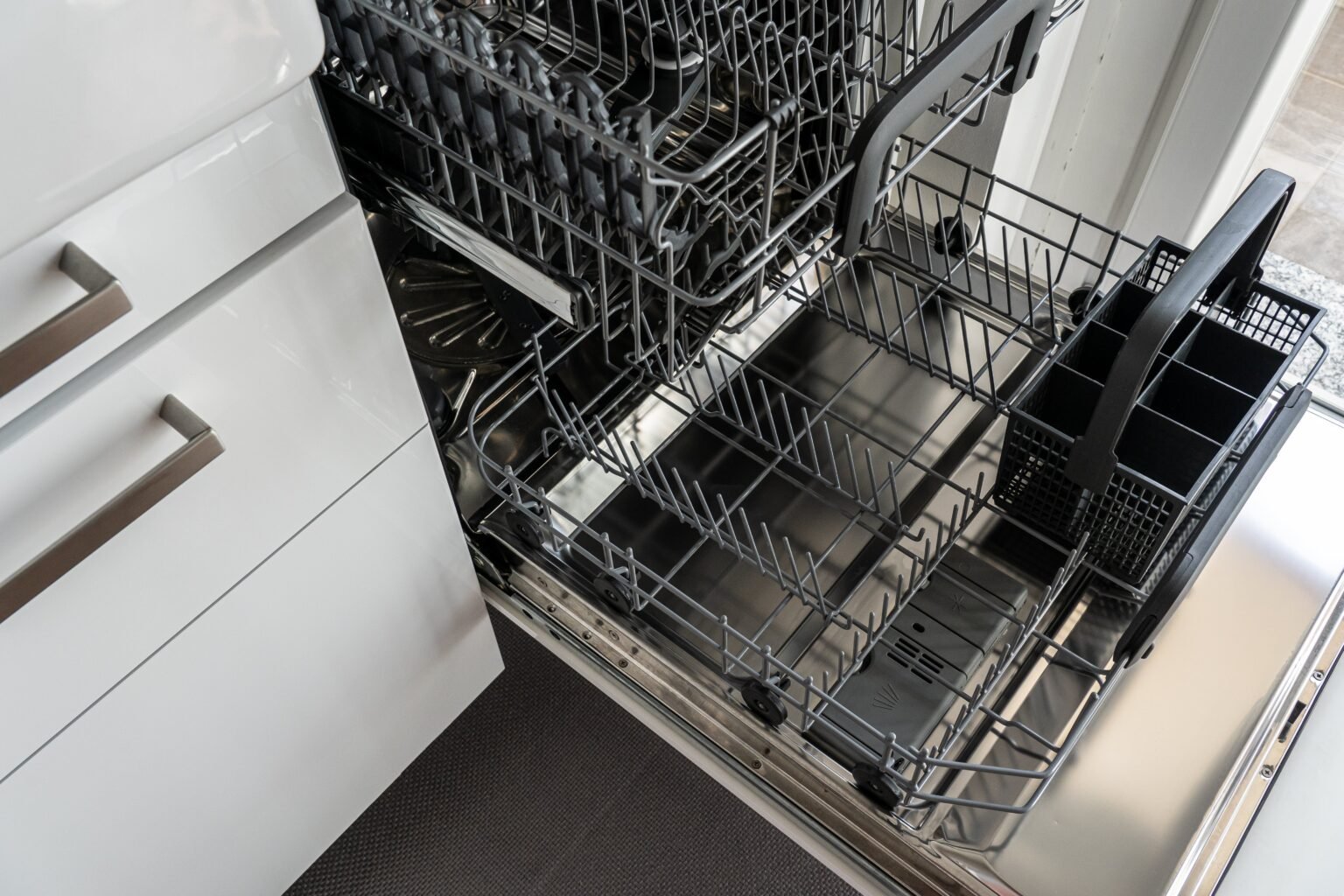
This is the step that makes the biggest difference. Many dishwashers have a removable filter that you’re expected to clean yourself (if yours doesn’t, the manual will explain how its filtration is maintained). It usually sits in the floor of the tub, under or beside the lower spray arm, and often comes in two parts: a cylindrical upper filter and a flat mesh screen under it.
- Twist the upper filter and lift it out, then lift out the lower screen. Your manual shows the direction and any locking tabs.
- Rinse both parts under warm running water to knock off loose food.
- Scrub stuck-on grease and white mineral crust with a soft brush and a little dish soap. Whirlpool specifically warns against wire brushes and scouring pads, which can tear the fine mesh.
- Wipe out the opening the filter sits in with a damp cloth.
- Put the parts back exactly as they came out and twist the upper filter until it locks. Whirlpool cautions that a loose filter can damage the dishwasher, so give it a gentle tug to make sure it’s seated.
If the mesh is torn or the frame is cracked, order a replacement part rather than reinstalling it.
Step 3: Clear the spray arms
Spin each spray arm by hand. It should turn freely. Then look at the small holes along the top: if any are plugged with grit, seeds or mineral scale, water can’t reach part of the rack, which is often why one corner comes out dirty.
- Push debris out of each hole with a paper clip, toothpick or tweezers. GE recommends exactly this kind of gentle poke.
- Many spray arms unclip or unscrew for a better rinse. Check your manual first, and don’t force a part that isn’t meant to come off.
- For heavy scale, Bosch suggests soaking removable spray arms in a vinegar solution, then washing them in soapy water. Rinse well before reinstalling.
Bosch recommends checking the spray arms at least every six months.
Step 4: Wipe the gasket, door edges and dispenser
A cleaning cycle never reaches some of the grimiest parts of a dishwasher, because they sit outside the spray. Do these by hand with warm soapy water and a microfiber cloth:
- The door gasket. Wipe the rubber seal all the way around, working into the folds. Whirlpool’s care instructions call for a thorough wipe of the door seals with a soft cloth or sponge and warm water.
- The bottom edge of the door. Drips run down the inside of the door and dry along the lower lip and hinges, where they turn sticky. A soft brush helps here.
- The detergent dispenser and rinse aid cap. Clear any caked detergent so the lid opens cleanly mid-cycle.
- Rack tracks and wheels. Wipe away food that sticks where the racks roll.
Skip abrasive pads and strong household cleaners inside the tub and on the gasket. GE notes they can harm the dishwasher’s finish.
Step 5: Run a cleaning cycle
With the filter back in place and the racks returned, run an empty cycle to dissolve the grease and mineral film you can’t reach. You have two reasonable options.
A dishwasher cleaner
A packaged dishwasher cleaner (tablet, pouch or bottle) is the route most manufacturers point to. Follow the label: place it where the label says, choose the hottest or longest cycle, and leave the dishwasher empty. Bosch suggests a cleaning cycle at least every two months; Whirlpool and GE suggest a cleaner about once a month.
White vinegar
Whirlpool’s method: put 2 cups of white vinegar in a glass or dishwasher-safe measuring cup on the bottom rack, add no detergent, and run a full cycle with an air-dry or energy-saving dry setting. Whirlpool also cautions that vinegar is an acid and using it too often could damage the dishwasher, so save it for an occasional deeper clean rather than every week.
Use one or the other, never both in the same cycle, and never add bleach to a vinegar or cleaner cycle. Mixing cleaning chemicals can release harmful fumes.
Cloudy glasses and San Diego hard water
A white film on glasses and on the tub walls is usually mineral buildup. San Diego’s water is hard: the City of San Diego reports in its 2025 water quality report that water from its three treatment plants averages about 14 grains per gallon (roughly 240 ppm), and Whirlpool recommends a water softener when hardness reaches 15 grains or more, so City water sits just under that line. Many East County homes are served by other water districts, so check your own district’s annual water quality report for your number.
Before you blame the water, try Whirlpool’s test: gently rub the cloudy spot on a glass with a little vinegar. If it wipes away, it’s mineral film, and regular cleaning cycles plus rinse aid will help keep it from building back up. If it won’t come off, it may be etching, which is permanent damage to the glass. Whirlpool lists overly soft water and too much detergent among the causes, so use pre-measured detergent packs or less powder, and turn the rinse aid setting down rather than up.
The same minerals collect on shower doors and fixtures. If you’re seeing them there too, our guide to removing hard water stains from shower glass covers the bathroom side, and our whole-home guide to hard water stains covers faucets, sinks, tile and the rest of the house.
How often to clean a dishwasher
Manufacturers don’t agree on a single schedule, and the right answer depends on how often you run it and whether you scrape plates first. A practical routine looks like this:
- After each load: glance at the floor of the tub for debris.
- Every two weeks to every few months: clean the filter. Bosch says at least every two weeks; Whirlpool says every three to six months for typical use, more often if you load dishes without scraping and run it daily.
- Monthly to every two months: wipe the gasket and door edges and run a cleaning cycle.
- Twice a year: check and clear the spray arms.
Signs it’s due sooner: a sour smell when you open the door, gritty dishes, food left on plates after a full cycle, or standing water in the bottom.
Finish with the outside
Wipe the control panel and door front last, with a barely damp microfiber cloth. On stainless steel, wipe with the grain and dry it so it doesn’t streak. Our guide to cleaning stainless steel appliances without streaks covers fingerprints and finish-specific cautions. Don’t spray cleaner directly onto the controls; spray the cloth instead.
A clean dishwasher is one more kitchen job off the list before guests arrive. If you’re working through the rest of the kitchen, our guides to cleaning the oven and racks and cleaning the refrigerator follow the same start-to-finish approach. The microwave is the other kitchen appliance that’s easy to skip; our guide on how to clean a microwave covers the steam method and the one part you shouldn’t scrub. Many dishwashers drain through the garbage disposal, so if the sink smells sour, our guide on how to clean a garbage disposal is worth a look. And before you run a wooden cutting board through a cycle, our guide to cleaning cutting boards explains which boards are dishwasher-safe and which do better washed by hand.
Where we can help
To be clear about scope, cleaning the inside of the dishwasher is not part of any Suddenly Clean service, so it’s a job worth knowing how to do yourself. On our recurring house cleaning visits, our Vetted Cleaning Professionals wipe down appliance exteriors, including the dishwasher, along with countertops, the sink and the rest of the kitchen. If you’d like that taken care of on a regular schedule, you can see your price and book online.
Comments are closed