

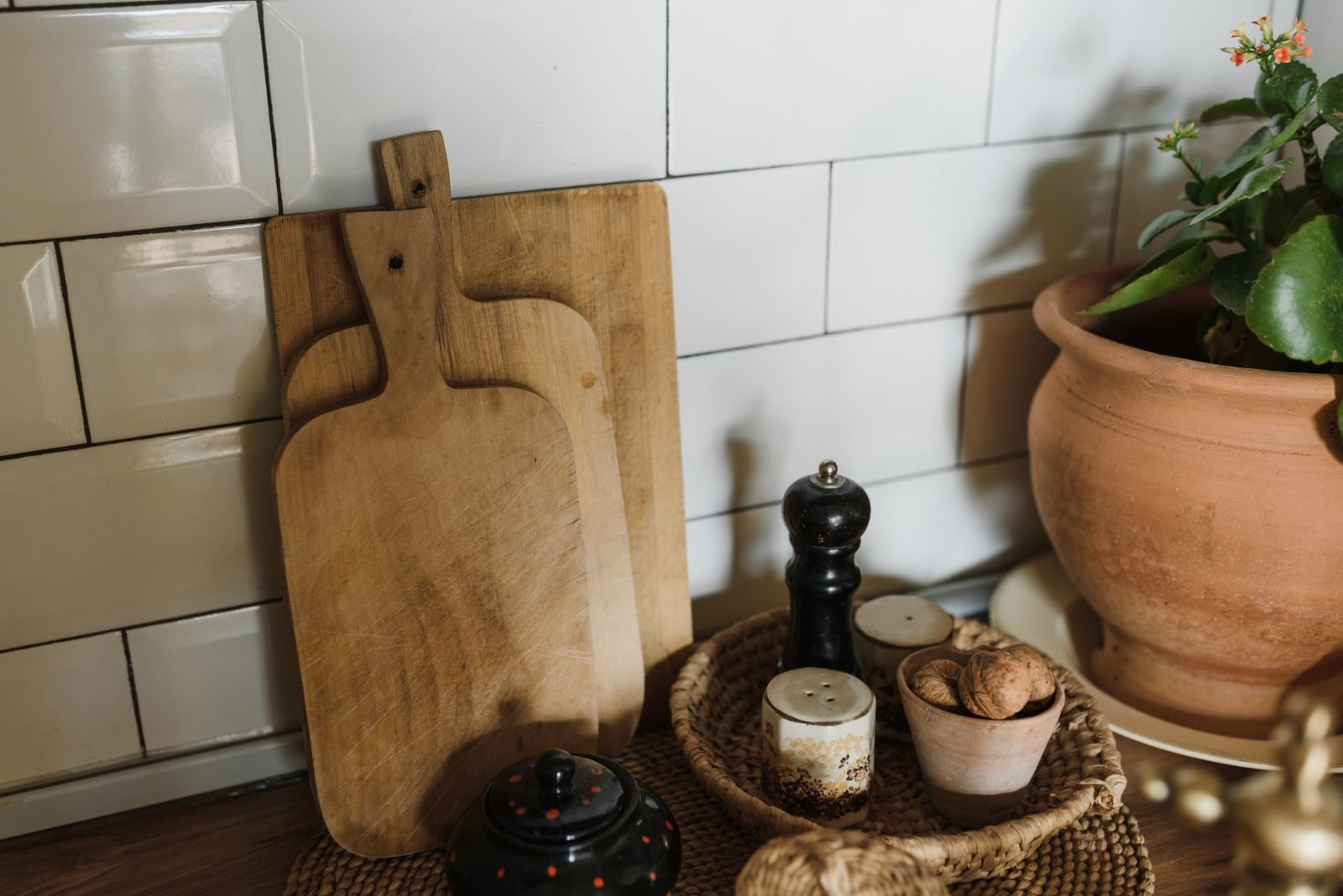
How to Clean a Cutting Board: Wood, Bamboo and Plastic
To clean a cutting board, scrape it, wash both sides and the edges in hot, soapy water, rinse with plain water and let it dry standing on its edge. After raw meat, poultry or seafood, wash first and then sanitize with a dilute bleach solution. Wood and bamboo boards need two extra habits that plastic does not: keep them out of soaking water, and oil them when they start to look dry. Here is how we approach each type, with the specifics that matter.
What you need
- Dish soap and hot water
- A stiff nylon brush or a non-scratch scrub pad
- Unscented liquid chlorine bleach (for sanitizing)
- Coarse salt and a lemon (for odors and light stains on wood)
- Food-grade mineral oil (for wood and bamboo)
- 200-grit sandpaper (only for deep stains on wood)
- Clean paper towels or a clean dish towel
How to clean a cutting board after everyday use
- Scrape it off. Push food scraps into the trash or compost with a bench scraper or the back of a knife so they do not end up in the sink.
- Wash with hot, soapy water. Scrub the cutting surface with a brush, paying attention to knife grooves, then wash the back and the edges. Juice and drips run off the edges and down the sides, and that is where residue tends to sit.
- Rinse with plain water. Rinse until no soap film remains.
- Dry it upright. Pat it dry with a clean paper towel or towel, then stand it on its edge so air reaches both sides. A wet board lying flat on the counter dries unevenly, which can warp wood.
This is the routine the University of California’s food safety program and Ohio State University Extension both describe, citing USDA guidance: hot soapy water after every use, a clear-water rinse, then air drying or patting dry with clean paper towels.
How do you clean a cutting board after raw meat or poultry?
Wash the board first with hot, soapy water to remove fat and residue, then sanitize it. Sanitizer works on a clean surface, not through grease. The University of California and Ohio State Extension both give the same mix: 1 tablespoon of unscented liquid chlorine bleach per gallon of water. Flood the surface, let it stand for several minutes, then rinse and dry.
- Mix the solution fresh in a bucket or sink and pour it over the board rather than soaking a wooden board in it.
- Use plain, unscented bleach, as both university sources specify.
- Never mix bleach with vinegar, ammonia or any other cleaner, and do not use one straight after the other without rinsing in between. Open a window or run the range hood while you work.
- Wear gloves if your skin reacts to bleach.
John Boos, which makes wood cutting boards, also lists a diluted vinegar rinse (one part vinegar to five parts water) as an option for a more thorough clean of wood. Use vinegar or bleach, not both.
Can cutting boards go in the dishwasher?
Plastic, acrylic and glass boards can go in the dishwasher, and the hot water and drying cycle do a good job on them. Laminated boards should stay out because, as the University of California notes, they can crack and split. Solid wood is where advice differs: the UC guidance says solid wood boards can go in the dishwasher, while John Boos states plainly that wood cutting boards are not dishwasher safe and should not be soaked or submerged, because changes in moisture can split the board. We wash wood and bamboo by hand and follow the maker’s care card when there is one. If your board came without instructions, hand washing is the safer choice. Our guide to cleaning a dishwasher covers the filter and spray arms if plastic boards are leaving residue behind.
How do you get stains and smells out of a wooden cutting board?
For odors such as garlic and onion, sprinkle coarse salt over the board and rub it in with the cut side of a lemon half. John Boos suggests leaving it for two to three minutes, then wiping the board clean with a damp cloth. Salt on a damp sponge also lifts light stains.
For a stain that will not come out, sand the area lightly with 200-grit sandpaper, working with the grain of the wood and never against it, then wipe off the dust and re-oil the board. Sanding also smooths shallow knife marks.
How do you oil a wooden or bamboo cutting board?
Oil keeps wood from drying out and cracking. Use food-grade mineral oil or a board oil made for the purpose. John Boos warns against cooking oils such as olive or vegetable oil on wood boards.
- Start with a clean, completely dry board.
- Pour a little oil on the surface and spread it with a clean cloth or paper towel, covering the top, bottom and edges.
- Let it soak in, ideally overnight, with the board standing on its edge.
- Wipe off any oil that is still sitting on the surface.
John Boos recommends oiling at least once a month, more often with heavy use or dry household conditions, and whenever the wood looks pale and dry. Ohio State Extension notes that rubbing bamboo boards with mineral oil helps them hold moisture too.
Why use separate boards for raw meat?
Keep one board for raw meat, poultry and seafood and a different one for bread, fruit and vegetables. Both the University of California and Ohio State Extension recommend this because it keeps bacteria from raw proteins away from food that will not be cooked, even when boards are washed between uses. It matters most on busy cooking days such as Thanksgiving, when a turkey, a salad and a bread board can all be in play at once. Different colors or a plastic board for meat and a wooden one for produce make the split easy to remember.
When should you replace a cutting board?
Replace a board when it is excessively worn or has deep grooves that are hard to clean, which is the line both university sources draw for plastic and wood alike. A plastic board with a fuzzy, scarred surface holds residue in the cuts. A wooden board with a crack running through it, or one that has warped and rocks on the counter, is also due for replacement. Light knife marks on wood can be sanded out; deep gouges usually cannot.
Keeping the rest of the kitchen ready
A clean board belongs on a clean counter. If your counters are stone, our guide to cleaning granite and quartz countertops explains why bleach and vinegar should stay off them, and our stainless steel sink guide covers the basin where the boards get washed. If you would rather hand the rest of the kitchen to someone else before the holidays, a Standard Cleaning from our Vetted Cleaning Professionals covers countertops, the sink and faucet, the outside of appliances and the microwave inside and out.
Comments are closed