

How to Clean Baseboards (Without Scrubbing Off the Paint)
The safest way to clean baseboards is to dust them first, then wipe them with a soft cloth wrung out in warm water and a few drops of mild dish soap, and dry them as you go. Most baseboard damage comes from the wrong tool rather than from dirt: too much water, abrasive pads, or heavy-duty sprays that dull the paint. Below is the method we use, plus what to do about scuffs, carpeted rooms, kitchen grease and older homes.
What you need
- A vacuum with a soft dust-brush attachment (and a crevice tool for carpeted rooms)
- Two microfiber cloths or non-abrasive sponges: one for washing, one for rinsing
- A bucket of warm water with a few drops of mild dish soap
- A dry, absorbent towel
- Baking soda, for scuffs that soap and water don’t lift
- A kneeling pad or folded towel for your knees
Check what your baseboards are made of
Most baseboards in newer homes are painted wood or painted MDF (medium-density fiberboard), usually in a semi-gloss or satin finish. Some older or custom homes have stained and varnished wood. The finish decides how firmly you can clean.
- Glossier paint is more forgiving. Benjamin Moore notes that the higher the sheen, the easier a painted surface is to clean, while flat, matte and eggshell finishes need a gentler touch.
- MDF dislikes standing water. Painted MDF is fine with a damp cloth, but water that gets into a chip, a nail hole or the cut bottom edge can raise the fibers. The Composite Panel Association recommends moisture-resistant MDF for bathrooms for that reason. Keep your cloth damp, not dripping.
- Stained wood needs less water still. A barely damp cloth followed by an immediate dry is enough. Skip anything abrasive.
- Freshly painted trim needs time. Sherwin-Williams and Benjamin Moore both advise waiting at least two weeks after painting before washing with soap and water, so the finish can cure.
How to clean baseboards, step by step
- Clean top to bottom. Baseboards come last in a room, after ceiling fans, shelves and window sills, because dust falls. If you’re also tackling the fan, start there with our guide to cleaning a ceiling fan. If the walls and the wall or ceiling vents need attention too, do them before the baseboards: see our guides to washing painted walls and cleaning air vents and return grilles. Door frames and switch plates come before the baseboards too; our guide to cleaning doors and light switches covers them.
- Clear the path. Pull furniture, cords and baskets a foot away from the wall so you can reach the whole run without working around obstacles.
- Dust or vacuum first. Run the dust-brush attachment along the top ledge, the face and the bottom edge where the baseboard meets the floor. Washing over loose dust just turns it into muddy streaks.
- Test a small hidden spot. Wipe a section behind a door with your soapy cloth and let it dry. Sherwin-Williams’ check is simple: if the paint still looks bright and no water marks remain, the method is safe for that finish.
- Wash in short sections. Wring the cloth until it is just damp and wipe two or three feet at a time: top ledge first, then the face, then the bottom edge. Let the soap do the work instead of scrubbing hard.
- Rinse. Go over the same section with your second cloth dampened in plain water to remove soap film, which otherwise attracts dust again.
- Dry right away. Follow with a dry towel before moving to the next section, paying attention to corners and the joint at the floor.
Scuffs, sticky spots and stubborn grime
For black scuff marks from shoes or vacuums, Sherwin-Williams suggests a paste of baking soda and water, rubbed gently and then wiped off with a damp cloth. Use light pressure; baking soda is a mild abrasive and can polish a flat finish if you lean on it.
Melamine foam sponges (sold as “magic erasers”) remove scuffs well because the foam is mildly abrasive. That is also the risk. Mr. Clean’s own instructions say to test a small area with light pressure first, and list high-gloss, satin and bare or polished wood among the surfaces the product is not recommended for, which covers most trim. If you use one, keep it as a last resort for a single mark, not for the whole run.
Benjamin Moore advises against glass cleaner and heavy-duty household sprays on painted surfaces, because their solvents can damage the finish. Use one cleaner at a time and never mix products.
If a mark won’t come off without rubbing through the paint, stop. A small touch-up with matching paint in the same sheen usually looks better than a scrubbed-dull patch.
Baseboards in carpeted rooms
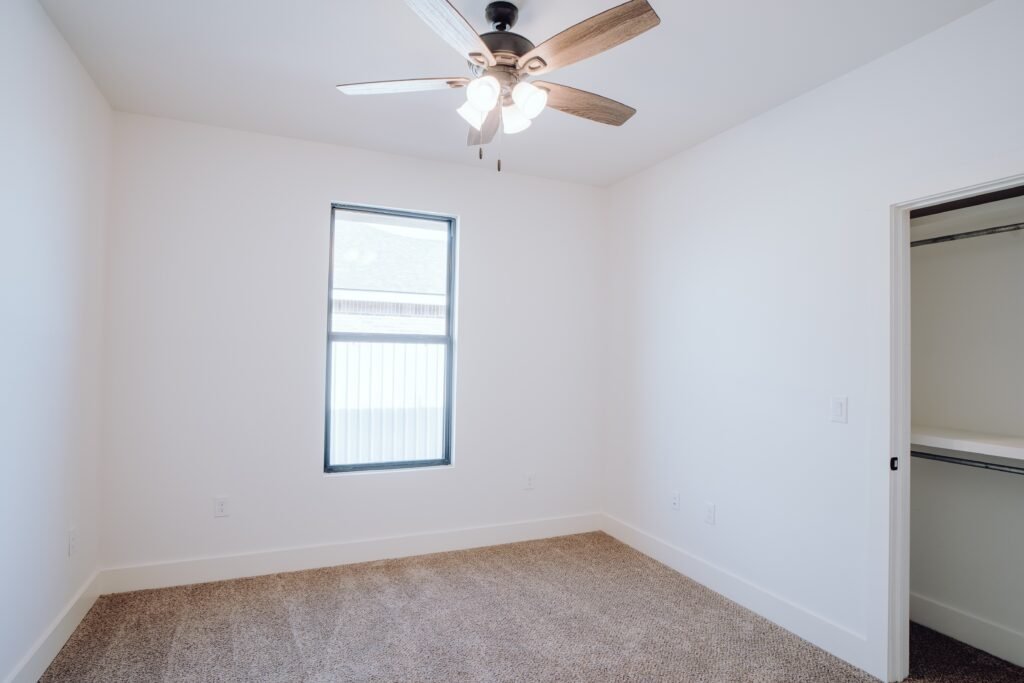
Carpet makes the bottom edge the hardest part, because dust packs into the gap where the carpet meets the wall. Vacuum that line with the crevice tool before you wipe. When washing, press the carpet edge down with one hand and wipe with the other, and keep the cloth on the drier side: water that drips into the carpet can wick into the pad and leave a ring along the wall. A folded towel laid along the carpet edge catches drips.
Kitchen and bathroom baseboards
Kitchen baseboards near the stove collect a thin film of cooking grease that grabs dust and turns sticky. Warm water with dish soap is the right tool here, since dish soap is made to cut grease; you may need two passes and a rinse. If the cabinets above look the same, our guide to cleaning greasy kitchen cabinets uses the same gentle approach.
In bathrooms, use a separate cloth for the baseboard around the toilet and wash it afterward rather than carrying it to other rooms. Bathroom baseboards see the most moisture, so check for swollen or cracked paint near the tub and toilet. Swelling usually means water has been getting in, which is worth fixing at the source rather than cleaning around.
Older homes: watch for chipping paint
If your home was built before 1978, older layers of paint on trim may contain lead. The EPA recommends wet cleaning (a damp cloth, sponge or mop) to keep dust down and says to clean up peeling, chipping or cracking paint right away with a wet wipe. Don’t sand, scrape or scrub through damaged paint on old trim. For repair or repainting work that disturbs painted surfaces in a pre-1978 home, the EPA advises hiring a certified lead-safe professional.
How to keep baseboards clean longer
- Run the vacuum’s dust brush along the top ledge every week or two when you vacuum floors. Dust that never builds up never needs scrubbing.
- Homes with a shedding dog or cat collect hair along the floor edge and the top ledge faster, so the weekly pass matters even more there. Our guide to keeping pet hair under control covers brushing, furniture, floors and filters.
- Use doormats at entries and ask for shoes off if your household is open to it; most scuffs come from footwear.
- Keep vacuum heads and mop buckets off the trim. Many dents and black marks come from the cleaning itself.
- When you next repaint, a semi-gloss or satin trim paint will wipe clean more easily than a flat finish.
When to hand it off
Baseboards are one of the jobs people put off longest, mostly because the work is on your knees. If they are overdue throughout the house, a one-time Deep Cleaning includes dusting and wiping baseboards along with vents, blinds and other buildup-prone details. With Recurring House Cleaning, routine baseboard dusting is part of every visit, so they don’t get to that point again. Moving? Baseboards are included in every Move-In/Move-Out Cleaning. Leaving a rental? Our move-out cleaning guide for California renters covers what else to clean before you hand back the keys.
If you are booking a clean before holiday guests arrive, our guide on how to prepare for house cleaners covers what to do (and skip) before the visit. You can see your exact price and book on our booking page.
Comments are closed