

How to Remove Hard Water Stains Around the House (East County Guide)
To remove hard water stains, use a mild acid: white vinegar or a citric acid cleaner dissolves the calcium and magnesium deposits that ordinary cleaners can’t. Spray or soak the spot, give it 10 to 30 minutes, scrub with a non-scratch pad, rinse with plain water and dry. That method works on glass, porcelain, stainless steel and most faucets. It is the wrong choice for natural stone and some specialty finishes, so check the surface before you start.
Hard water is a whole-home issue here, not just a shower-door problem. The same white crust shows up on faucets, shower heads, toilets, sinks, dishwasher glasses and kettles. This guide explains how hard San Diego’s water actually is, how to tell mineral buildup from soap scum, what to use on each surface, and how to keep spots from coming back. Where we already have a detailed guide for one fixture, we link to it.
Is San Diego water hard?
Yes. City of San Diego tap water falls in the U.S. Geological Survey’s “very hard” range, which starts above 180 milligrams per liter: the City’s 2025 water quality report lists averages of about 14 grains per gallon at its three treatment plants. East County districts publish their own figures, and Helix Water District’s 2025 numbers sit in the hard to very hard range as well.
The specifics, so you can compare with your own bill:
- City of San Diego (2025 report): average total hardness of 237, 242 and 243 parts per million at the Alvarado, Miramar and Otay treatment plants, or about 13.8 to 14.2 grains per gallon. Treated water the City buys from the County Water Authority averaged 145 ppm (8.5 grains).
- Helix Water District (2025 report): water from its own treatment plant averaged 206 mg/L (12.0 grains per gallon), ranging from 155 to 250. Purchased water averaged 146 mg/L (8.5 grains).
- The USGS scale: 0 to 60 mg/L is soft, 61 to 120 moderately hard, 121 to 180 hard, and more than 180 very hard.
Much of the region’s supply is imported from the Colorado River and the State Water Project; Helix reports its 2025 sources as 51 percent Colorado River, 29 percent State Water Project and 20 percent local. If you’re served by another district, such as Padre Dam or Otay, look up its annual water quality report (sometimes called a Consumer Confidence Report). Your number may be different, but if spots reappear on glass within days of cleaning, minerals are almost certainly the reason.
How can you tell hard water stains from soap scum?
Hard water stains are white or chalky, feel rough or gritty when dry, and sit where water evaporates: around faucet bases, on glass, at the waterline of a toilet. Soap scum is grayer and slick or waxy, and it builds where soap splashes. Most showers have both bonded together, which is why a two-step approach works best.
A quick test: rub the spot with a cloth dampened with dish soap and warm water. If it wipes away, it was mostly soap residue. If the white haze stays put, it’s mineral and needs an acid. When both are present, wash first with dish soap to cut the oily layer, then treat what remains with vinegar or a descaler.
What removes hard water stains?
Minerals dissolve in mild acid, so the core method is the same nearly everywhere:
- Clean off the loose grime first. Warm water and a little dish soap remove the soap film sitting on top of the minerals, so the acid can reach them.
- Apply the acid. Use distilled white vinegar (the standard 5 percent kind) straight or diluted 1:1 with water, or a store-bought descaler or hard water remover labeled for that surface. On vertical surfaces, lay a vinegar-soaked paper towel over the spot so it stays wet.
- Give it time. Ten minutes for light spots, up to 30 for crusty buildup. Acid works through contact time, not scrubbing pressure.
- Scrub gently. A non-scratch pad, a soft brush or an old toothbrush for edges and around faucet bases.
- Rinse and dry. Rinse with plain water so no acid stays on the surface, then dry with a microfiber cloth. Drying is what keeps new spots from forming right away.
Heavy buildup usually takes two or three rounds rather than one long scrub. Always test a commercial product in a hidden spot first and follow its label.
What should you never use on hard water stains?
The fastest way to damage a surface is using the right chemistry in the wrong place. Keep these rules in mind:
- Never mix vinegar or any acid with bleach. The Washington State Department of Health warns that bleach mixed with acids releases chlorine gas. Don’t mix cleaners at all, and rinse between products.
- No acids on natural stone. Marble, travertine, limestone and many granites can etch or lose their finish with vinegar or acidic cleaners; stone suppliers such as MSI advise against vinegar on granite. Use a pH-neutral stone cleaner instead, and see our granite and quartz countertop guide.
- Check specialty finishes. Matte black, brushed gold and other coated fixtures don’t all tolerate acid. Fixture makers disagree, so read the care guide for your brand before soaking anything.
- No abrasive pads or powders on glass, acrylic or coated fixtures. Scratches dull the surface and give minerals more to grip.
- Don’t leave acid on grout. Cement grout doesn’t like repeated acid exposure. Rinse it off promptly, as our grout cleaning guide explains.
Hard water stains room by room
The basic method stays the same, but each fixture has its own quirks. Here’s the short version for each, with links to our step-by-step guides.
Shower glass
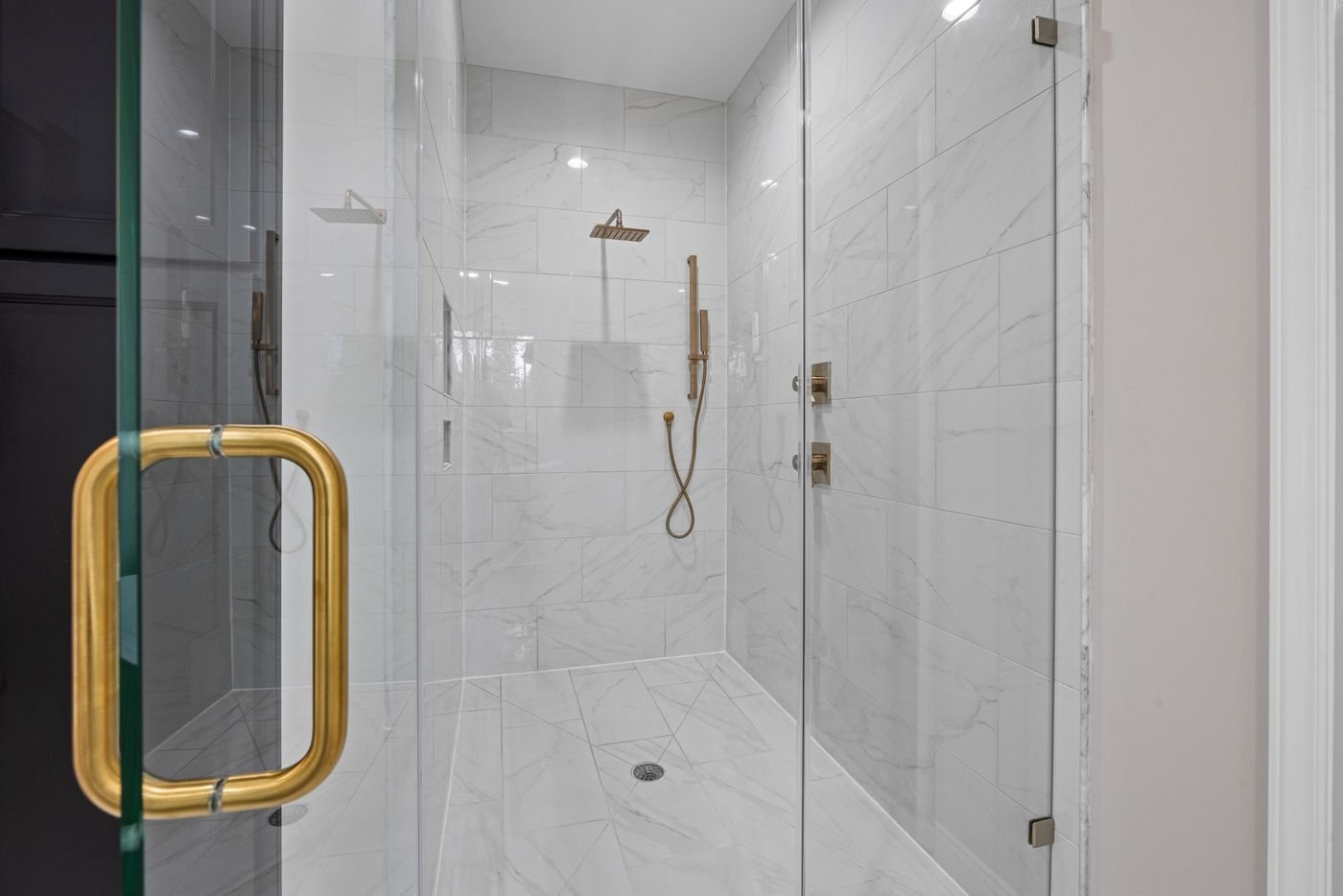
Glass shows minerals first because every droplet dries in plain view. Warm vinegar, 10 to 30 minutes of contact, a non-scratch pad and a squeegee handle most cloudy glass. If the glass has a factory protective coating, follow the maker’s cleaning instructions. Our full guide to removing hard water stains from glass shower doors covers coated glass, stubborn spots and how to tell buildup from permanent etching.
Shower heads and faucet aerators
Uneven spray or blocked nozzles usually mean scale inside. Soaking the head in diluted vinegar and rubbing the rubber nozzles clears most of it, but manufacturers’ soak guidance varies by finish. See how to clean a shower head and faucet aerators for the full method and which brands advise against soaking.
Faucets and fixtures
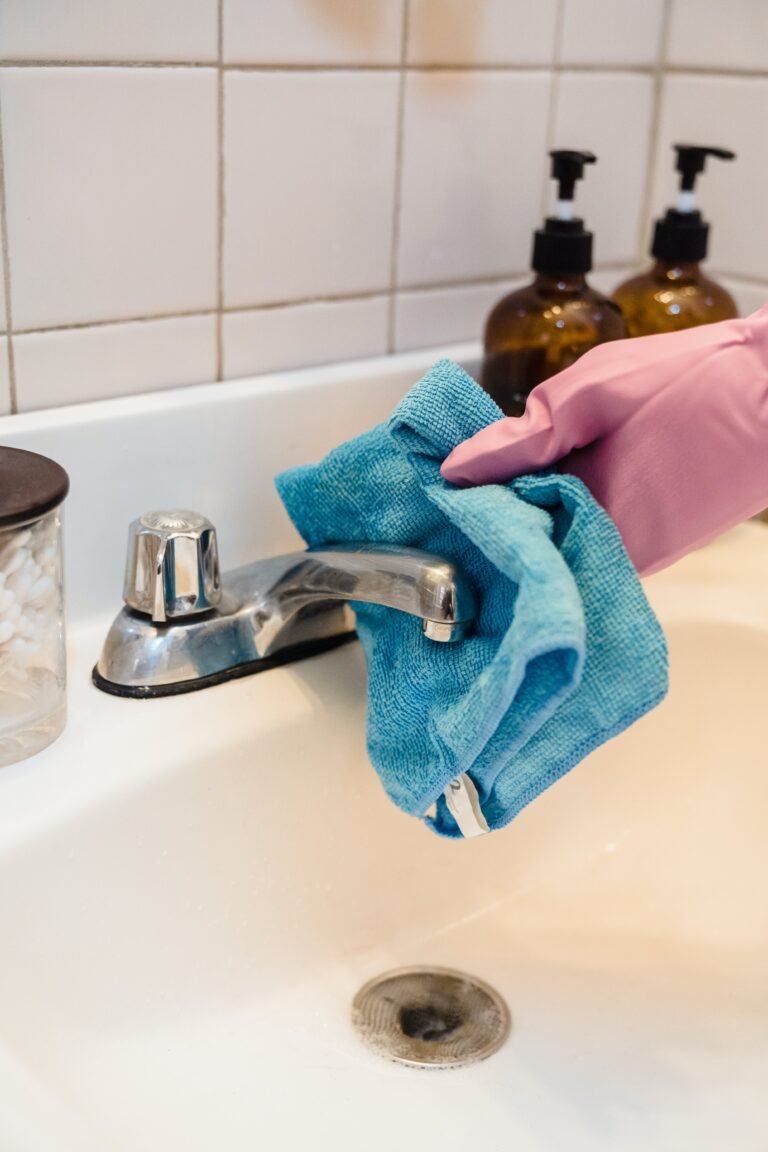
For the white ring around a faucet base, wrap the area in a vinegar-soaked cloth or paper towel for 10 to 15 minutes, then work the edge with an old toothbrush, rinse and buff dry. Polished chrome generally handles this well; coated finishes need the care-guide check first. On a recurring visit, the vanity, sink and faucet are scrubbed and washed as part of every bathroom.
Tubs and tile
The chalky line at the waterline of a tub is usually minerals mixed with soap. Acrylic and fiberglass need soft tools only, and enameled cast iron should not be scoured. Our bathtub cleaning guide covers each tub material.
Toilets
A brown or gray ring at the waterline is often mineral scale stained by everything that passes over it. An acid-based toilet bowl cleaner and a nylon brush remove most rings; a wet pumice stone is an option for vitreous china only. Never combine a bowl cleaner with bleach. Details are in how to clean a toilet.
Sinks
Bathroom sinks collect spots around the drain and overflow; kitchen sinks show white haze on stainless steel. Vinegar is fine on porcelain and stainless (rinse well), but not on a stone vanity top. See our guides to cleaning a bathroom sink and vanity and cleaning a stainless steel sink.
Dishwasher and glassware
Cloudy glasses that come out spotted are often a hard water problem, not a dirty dishwasher. Cleaning the filter, running a cleaning cycle and using rinse aid help. Our dishwasher cleaning guide explains how to tell mineral film from etching on glassware.
Kettles and coffee makers
A white crust inside an electric kettle is mineral scale. Fill it partway with equal parts white vinegar and water, bring it to a boil, let it sit, then empty and rinse with plain water several times. For coffee makers and espresso machines, follow the manufacturer’s descaling instructions, since many specify their own descaler or cycle. Our guide to cleaning a coffee maker walks through descaling a drip machine, including what to do when the manual rules out vinegar.
Mirrors
Mirrors get splash spots too, but keep hard water removers and acids away from the edges, where liquid can creep behind the glass and damage the silvering. Our guide to cleaning a mirror without streaks covers the safe way.
How do you keep hard water stains from coming back?
You can’t change what comes out of the tap without treatment equipment, but you can stop minerals from drying on your surfaces. Spots form when water evaporates, so removing water before it dries prevents most buildup.
- Squeegee shower glass and tile after each shower. It takes under a minute.
- Wipe faucets and sinks dry with a microfiber cloth at the end of the day.
- Run the bathroom fan during and after showers so surfaces dry faster.
- Use rinse aid in the dishwasher. It helps water sheet off glasses instead of drying in spots.
- Clean on a schedule. Weekly light cleaning keeps minerals soft and easy to remove. Once they’ve built up for months, they take far more time and acid.
- Consider water treatment. Whole-home softeners and filters change the water itself. That’s a decision for a licensed water treatment professional or plumber, and some areas have rules about salt-based systems, so ask about local requirements.
The USGS notes that hard water also means scale in equipment and a need for more soap and detergent. So the effects reach beyond the bathroom into water heaters, laundry and appliances, too. For the washer, our guide to cleaning a washing machine covers the inlet hose screens where scale collects.
When is it etching instead of buildup?
If a surface still looks cloudy after it’s completely clean and dry, and you can’t feel any roughness, the minerals may have permanently etched it. This happens most on glass and natural stone after years of buildup or after harsh cleaners. Etching can’t be cleaned off. Glass may need professional restoration or replacement, and etched stone is a job for a stone restoration specialist. The shower glass guide linked above walks through how to tell the two apart before you decide.
How Suddenly Clean handles hard water buildup
Our Vetted Cleaning Professionals approach hard water the way this guide describes: identify the surface first, start with the mildest method that works, test in an inconspicuous spot, never mix products, and rinse and dry so fixtures are left spot-free rather than just wet. We take extra care with natural stone and coated fixtures, where a common cleaner can do lasting damage.
What each service covers, from our published checklists:
- Recurring house cleaning: tub and shower scrubbed, including the door and top lip; vanity, sink and faucet scrubbed and washed; mirrors cleaned streak-free; toilet cleaned inside and out. Regular visits keep minerals from building into crust.
- Deep cleaning: shower walls and bathtub scrubbed; tiles, grout and edges cleaned; sinks and countertops deep cleaned. It is designed for kitchen and bathroom buildup that needs more detailed attention than a standard cleaning provides.
Cleaning can’t restore etched glass or stone, and fixture repair or water treatment equipment is work for glass, stone and plumbing specialists, not part of a house cleaning. Homes with heavy buildup may need extra time, and additional pricing may apply depending on condition; our booking system or office confirms it with you first.
Suddenly Clean is licensed and insured, and you see your exact flat-rate price online before you book. Suddenly Clean serves homes throughout East County and surrounding San Diego communities. If your ZIP code is accepted, we currently service your area. You can check your ZIP and price on our booking page.
Comments are closed